

The best binoculars for backyard bird watching depend on how far away your birds actually are. A feeder just beyond the window can demand closer focusing than a bird in the far hedge, while a small garden may also offer butterflies and insects at much shorter distances. Before choosing a pair, measure the nearest place you regularly watch and consider whether you observe in bright daylight or under shaded trees. This guide compares five binoculars for those different garden situations, from a specialist close-focus compact to full-size models with broader views and larger objectives. We look at minimum focus, field of view, eye relief, weight and price so you can choose for your own viewing spot. The quick verdict gives a starting point, and the table makes the practical differences easier to compare.
Affiliate Disclosure: We may earn a commission at no extra cost to you when you make a qualifying purchase through affiliate links in this guide. Buying buttons open Amazon.com. Read our full affiliate disclosure.
Best Binoculars for Backyard Bird Watching: quick comparison
On smaller screens, swipe across the table to compare all features and buying options.
| Image | Product | Best for | Main tradeoff | Where to buy |
|---|---|---|---|---|
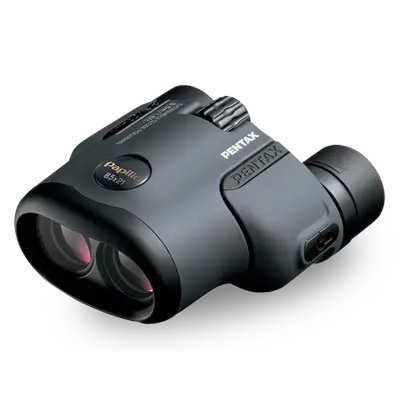 | Pentax Papilio II 8.5×21 | Butterflies and very close garden life | Papilio II is not a waterproof design. | Check PriceAmazon |
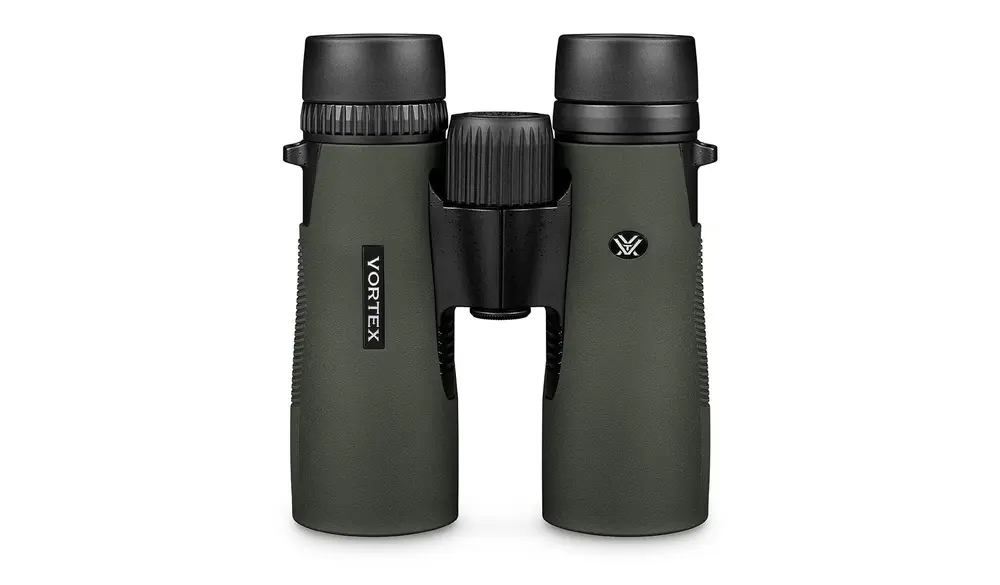 | Vortex Diamondback HD 8×42 | Feeder birds at short range | 21.8 oz body is bulkier than compact hiking formats. | Check PriceAmazon |
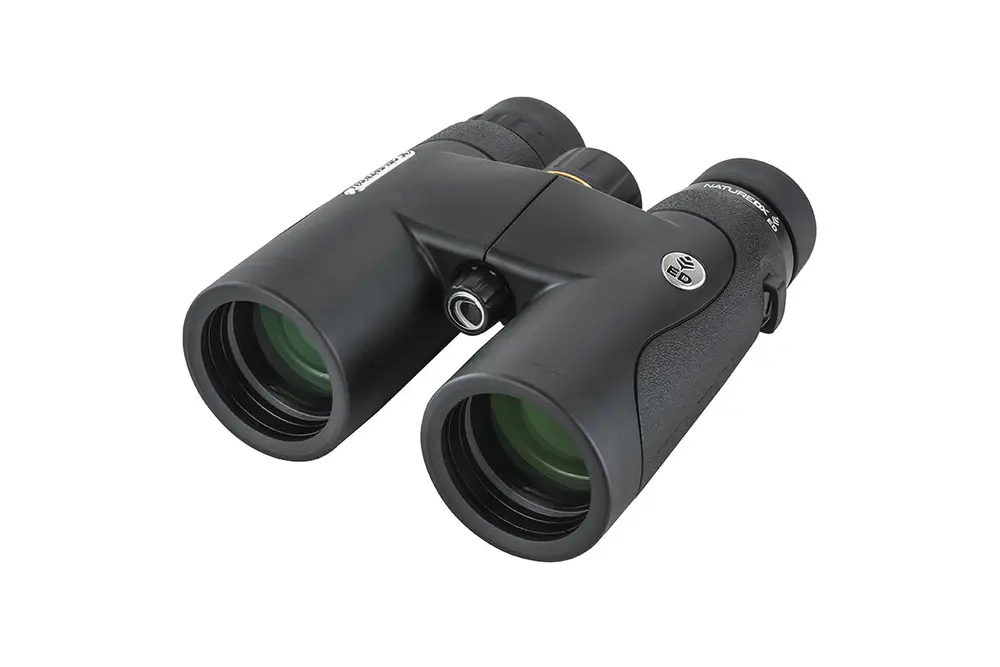 | Celestron Nature DX ED 8×42 | Close focus with ED optical design | 24.9 oz manufacturer-listed weight adds to the carrying load. | Check PriceAmazon |
 | Nikon MONARCH M7 8×42 | Moving birds across a larger garden | 23.6 oz is a full-size carrying commitment. | Check PriceAmazon |
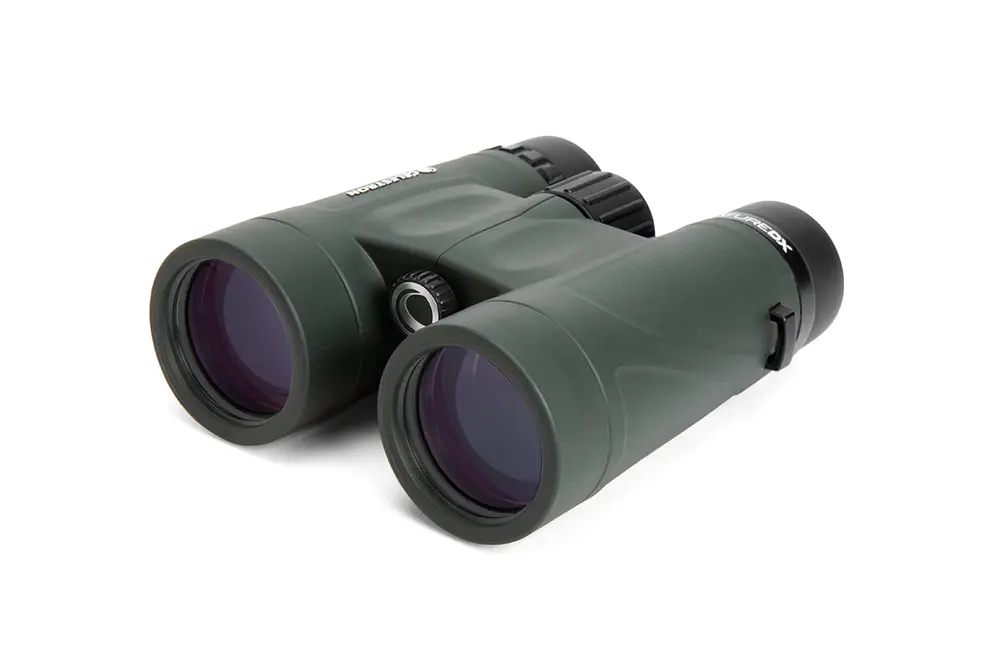 | Celestron Nature DX 8×42 | Budget-minded everyday garden viewing | 17.5 mm eye relief requires a personal fit check. | Check PriceAmazon |
Open Amazon for the current price and availability. Confirm the exact model, condition and package contents, including any separately required eyepiece, tripod or accessories. Tax and shipping may affect the total.
How we chose these models
Backyard viewing can mean a feeder a few steps away, butterflies beside a path, or birds moving through tall trees. These five models were selected to cover those different distances. The Papilio is the specialist near-viewing option; the four 8×42 choices provide different balances of close focus, field width and optical construction for broader garden use.
- Measure the nearest useful viewing distance before comparing minimum focus.
- Match field width to moving birds and the size of the garden.
- Keep the daylight specialist distinct from larger binoculars used in shade or away from home.
These comparisons use manufacturer documentation and published model specifications. We have not conducted hands-on product tests. See how we review optics for the research and correction process.
01 / Butterflies and very close garden life
Pentax Papilio II 8.5×21
The distinctive advantage is a minimum focus of roughly 0.5 metres, making it a specialist choice for observing butterflies, flowers and insects at comfortable distances without approaching them too closely. Its small 21 mm objectives suit bright daylight better than dim dusk conditions.
Amazon.com
Product image: Pentax.The Papilio has a different job from the full-size options below: inspecting nearby insects and flowers. Start with the closest point in your garden you want to observe. If most birds are across a large lawn or under a shaded canopy, compare the larger objectives of the 8×42 alternatives before choosing the specialist close-focus design.
The narrow objectives and specialist close-focus emphasis do not make it an all-purpose substitute for a full-size 8×42 when watching distant birds late in the evening.
Papilio II 8.5×21 is a specialist for butterflies and other nearby garden subjects, not a substitute for a wide-field 8×42 in every situation. Test whether both eyes comfortably merge the image at its unusually close focusing distance, then look toward a more distant feeder. A short minimum-focus number is useful only if it fits your real observation position without requiring you to step into planting beds.
Reasons to choose it
- 0.5 m close focus for nearby insects and small subjects.
- Compact body weighing approximately 290 g.
What to weigh up
- Papilio II is not a waterproof design.
- Small 21 mm objectives and 8.5x power favor daylight use.
02 / Feeder birds at short range
Vortex Diamondback HD 8×42
The maker lists about five feet of close focus and a broad field, which can make a feeder just outside a window reachable while leaving enough view to follow sudden movement. The versatile 8×42 format is useful away from the garden too.
Amazon.com
Product image: Vortex.The Diamondback is the option to compare when the same pair must handle a nearby feeder and longer walks. Measure the distance through the viewing position you actually use. A short focusing specification matters only if it reaches that spot; the wider 8×42 format then gives the pair a role beyond close garden observations.
Check the exact SKU, eyecup design and carrying comfort. A large body may be unnecessary for someone who only watches in bright daylight from a chair.
Diamondback HD 8×42 is relevant when the nearest subjects are feeder birds rather than insects at arm’s length. Its full-size body can provide a steadier grip for some people, but the eyecups and eye relief need testing with actual glasses. Compare the minimum focus to the feeder distance from your window and evaluate whether the field stays easy to use when a bird moves quickly between branches.
Reasons to choose it
- 5 ft close focus for nearby subjects.
- 393 ft field at 1,000 yards in an 8×42 format.
What to weigh up
- 21.8 oz body is bulkier than compact hiking formats.
- 17 mm eye relief still needs a personal glasses-on check.
03 / Close focus with ED optical design
Celestron Nature DX ED 8×42
Its published 6.5-foot close focus and roughly 393-foot field fit a backyard where subjects alternate between near shrubs and trees. ED glass is intended to address colour fringing, though the label alone does not establish measured superiority.
Amazon.com
Product image: Celestron.The Nature DX ED sits between a specialist insect binocular and a general full-size birding choice. Its reason to remain on this shortlist is the combination of garden-friendly focusing and ED objectives. Compare that combination with the standard Nature DX if cost matters more than an optical feature whose benefit you have not personally evaluated.
The 24.9-ounce maker-listed weight makes it more of a full-size option than a windowsill compact. Separate this ED model from the standard Nature DX when checking shopping listings.
Nature DX ED 8×42 offers a different balance of close focus, objective size and optical design. At a fixed garden viewpoint, assess whether it can focus on a flower bed and then shift smoothly to a tree farther away. The ED designation is about one aspect of colour correction; it is not a guarantee that this model has the best overall contrast or edge detail in your garden’s lighting.
Reasons to choose it
- ED optical design with 6.5 ft close focus.
- 393 ft field and 17.8 mm listed eye relief.
What to weigh up
- 24.9 oz manufacturer-listed weight adds to the carrying load.
- Do not confuse this ED version with standard Nature DX.
04 / Moving birds across a larger garden
Nikon MONARCH M7 8×42
The maker lists a notably wide field of 145 metres at 1,000 metres and 2.5 metres close focus. The combination makes it worth evaluating for birds moving through varied layers of trees, while ED glass and adjustable eyecups offer other points to assess.
Amazon.com
Product image: Nikon.The MONARCH M7 is most relevant when birds cross a larger garden and are easy to lose between branches. Compare its field width with the shorter-focus options, then decide which problem occurs more often at your viewing spot: finding a moving bird or focusing on something almost within arm’s reach.
It is substantially more costly than many starter models and does not focus as close as the Papilio. A wide manufacturer field figure does not prove edge sharpness or actual fit.
MONARCH M7 8×42 is most compelling when your garden includes tall trees and birds regularly move across a wide scene. Its broad manufacturer-published field may help reacquire movement quickly, but the actual usable width depends on how the eyecups fit the observer. Compare it with a narrower pair from the same window, paying attention to framing and focus speed rather than assuming a wider number means all-around optical superiority.
Reasons to choose it
- Broad 435 ft field at 1,000 yards.
- ED glass with a locking diopter and repellent lens coatings.
What to weigh up
- 23.6 oz is a full-size carrying commitment.
- 17.1 mm eye relief may fit differently from longer-eyepoint models.
05 / Budget-minded everyday garden viewing
Celestron Nature DX 8×42
The standard Nature DX provides approximately 6.5-foot close focus and a published field around 388 feet at 1,000 yards for common feeder and garden situations. It may be a more economical approach than buying specialist equipment for occasional use.
Amazon.com
Product image: Celestron.The standard Nature DX is the practical comparison point for someone buying mainly for ordinary feeder birds. Check its fit first, then decide whether the ED version’s different optical construction or the Papilio’s much closer focus solves a problem you actually have. A more specialized model need not be the better garden purchase.
Its non-ED version should not be confused with Nature DX ED. Fit with glasses and the precise SKU remain important, and stock or price may vary between retailers.
Nature DX 8×42 belongs here as a straightforward lower-cost comparison for everyday garden birds. The key ownership question is whether the instrument fits your hands and focuses comfortably over your actual feeder-to-tree distances. Check the non-ED product code and accessories instead of accepting details from the ED version. A modest pair that is comfortable and used frequently can deliver more practical value than a more ambitious one left indoors.
Reasons to choose it
- 6.5 ft close focus for garden subjects.
- 388 ft field for finding garden birds.
What to weigh up
- 17.5 mm eye relief requires a personal fit check.
- Standard Nature DX does not use the ED variant’s optical design.
What to consider before buying
Measure the feeder distance before purchasing
Measure from the location where your eyes normally sit to the bird feeder, not merely from the edge of the room or the glass. If the feeder is six feet away, an instrument whose published minimum focus is ten feet will be frustrating even when its optics are otherwise excellent. Allow some margin because manufacturers may measure under particular conditions and because your normal position can shift. This makes closest focus a meaningful buying criterion rather than just a technical curiosity.
Birds beyond the feeder require a different view
Feeder birds may come close, but garden birdwatching also involves birds at treetops or perched on a distant boundary. A compact close-focusing model is excellent for nearby insects and birds but may be less comfortable at dusk or across an open field. An 8×42 often provides a useful compromise. Decide whether most observation occurs within a few metres or at much longer ranges; that distinction is more informative than an undifferentiated best-overall label.
Window glass changes observation
A window can introduce reflections, tint and distortion, particularly through double glazing or angled panes. A binocular cannot eliminate the optical effects of the glass in front of it. Turn off bright room lights and avoid aiming through strongly reflected sections where possible. An open window may provide a clearer view when safe, but do not lean out or disturb wildlife. If you suspect a particular binocular looks unusually soft, compare its view outside before blaming the instrument.
Field of view and finding movement
Birds often move quickly between feeder, hedge and tree. A broad true field makes it easier to acquire them without repeated searching. Check the published linear field at the same distance for every contender, and remember that edge sharpness is a different matter from width. A model may claim a broad field but lose practical usefulness if the eyecups prevent you from viewing the complete circle with your glasses.
Why short focus matters for butterflies
Butterflies and dragonflies offer detailed patterns at distances much closer than typical distant-bird observation. The Pentax Papilio II was developed with close viewing in mind, but its small objective lenses bring different low-light and handling tradeoffs. Observing from a respectful distance is essential: avoid approaching so aggressively that insects abandon flowers or birds leave feeding areas. A calm observer often gets a better view than someone pursuing the shortest possible focus.
The tradeoff between compact and full-size
Compact binoculars can live conveniently near a garden window and are easier to raise repeatedly. Full-size 8×42 models may be more forgiving of eye placement and can be preferable in shade. However, objective diameter alone cannot guarantee a brighter or sharper observed image, since coatings and transmission matter. Compare comfort with the actual model, including how the focus wheel works from a seated position and whether the binocular balances well in your hands.
Glasses and eye relief
Published eye relief can help select binoculars for spectacle wearers but cannot determine suitability by itself. Retract eyecups, adjust barrel spacing and look for the full circular field without pressing uncomfortable edges against your frames. Someone wearing thick spectacles may need a different eyepiece design from another user. Our eye relief guide explains the complete procedure.
Focusing speed from near to far
A feeder visitor may fly to a branch at the back of the garden in seconds. Test how quickly and smoothly the instrument can move from a nearby target to a distant one. Close focus is helpful, but the mechanism’s travel and resistance also affect the experience. A focus wheel that demands an awkward change of grip can cause you to lose the bird. These handling judgments require personal or independent hands-on testing; manufacturer specifications alone do not settle them.
A garden-specific comparison method
Choose two or three observation positions and record the distance to the closest feeder, nearest shrubs and distant tree. Test a full-size binocular and, if relevant, a compact alternative at each position. Note how quickly you can identify a bird, whether the eyecups fit with glasses and how tiring it is to hold the instrument for several minutes. Repeat at a reasonably bright time and in typical shade. This method reveals meaningful differences without claiming laboratory measurements.
Waterproofing is useful even at home
A sheltered porch can still be humid, and rain can begin without warning. Inspect the maker’s water-resistance statement and avoid treating a waterproof claim as a promise of damage-proof construction. Wipe moisture from the exterior and allow the equipment to dry before storing it in an enclosed case. Lens caps and a secure strap reduce accidental problems. Garden use may feel gentle, but repeated exposure to moisture deserves attention.
Avoid disturbing feeding wildlife
Your equipment should help you observe birds without forcing them to change their behaviour. Watch from a consistent distance, reduce unnecessary movements near active feeders and avoid bright lights directed at roosting animals. Where feeders are used, follow local wildlife-health guidance about cleaning and appropriate feeding practices. Better observation often comes from a predictable routine, not from moving ever closer to a nervous bird.
When a camera may be better
If you mainly want photographs rather than a direct view, a camera with suitable optics may be the better tool. Phone adapters can work with binoculars, but aligning a camera and keeping the image steady is inconvenient for moving small birds. A spotting scope is useful for fixed distant targets but commonly less convenient for rapidly switching between near feeder and nearby branches. Decide whether identifying and observing or recording images is the main objective.
How to check price and warranty
Compare the exact model generation, authorised seller details, return period and regional warranty. A tempting online listing may refer to a different magnification or the older non-ED version of a similar series. Never treat a manufacturer’s suggested retail price as a guarantee of a current Amazon offer. Prices and inventory can change; check the retailer’s page before ordering.
Which product for which garden
Use the Papilio II if butterflies and extremely nearby natural history dominate. Consider the Diamondback HD or Nature DX variants when a feeder is only several feet away. Investigate the MONARCH M7 when tracking movement in a more spacious garden and distant treeline matters most.
Choosing between the five options
A practical shortlist is not a contest to maximize a single specification. Decide first whether your primary need is butterflies and very close garden life, feeder birds at short range, close focus with ed optical design, moving birds across a larger garden, budget-minded everyday garden viewing. Remove models that do not suit your principal viewing distance, daylight conditions or eyewear. Compare the remaining alternatives for true field, fitting comfort, weight, documented weather resistance and warranty.
Make the binoculars work from your garden viewing spot
Check a seated view as well as a standing one
Many backyard sightings happen from a chair rather than during a walk. Check whether you can lift the binoculars, reach the focus wheel and maintain a comfortable view from that actual position. A pair that feels balanced while standing in a shop can sit differently when your elbows or arms are supported. Avoid leaning on the binoculars or pushing the eyepieces against your face to steady them. Choose a relaxed position that leaves the view easy to adjust as a bird moves.
Follow a complete garden sighting
Think beyond the first moment when a bird lands at the feeder. It may move to the nearby hedge, then to a tree at the back of the garden. A useful pair should let you follow that sequence with manageable focus changes. Practice the movement on stationary landmarks before comparing models on brief bird visits. This also helps separate two different problems: a binocular that cannot focus near enough, and one that reaches the distance but is awkward for you to operate.
Set up a shared pair deliberately
If several people in the household will use the binoculars, let each person check eye spacing, eyecup position and focus setup. Keep the instructions available so that the diopter is adjusted correctly rather than changed at random whenever the view looks soft. A comfortable shared pair can make garden observation easy to enjoy, but it needs to fit the users as well as the subjects. Do not choose solely from the preference of the first person who looks through it.
Keep access convenient and storage sensible
Choose a dry, protected place that is easy to reach when a bird appears. A closed bag stored in another room may discourage casual use, while an exposed windowsill can leave equipment vulnerable to heat, moisture or accidental knocks. Keep the strap and covers arranged so that raising the binoculars does not involve untangling cords. After viewing from a damp porch or garden chair, check the exterior and let the case dry before putting everything away. Follow the model’s storage instructions for longer gaps between use.
Buy for observation or photography first
If identifying and enjoying birds is the main goal, prioritize a comfortable direct view and quick handling. If photographs are essential, plan that equipment separately before buying a binocular mainly for its possible phone attachment. A clear distinction between those goals can prevent an expensive purchase that is inconvenient for both. You can still keep a simple notebook of markings, behavior and dates without turning every fleeting garden sighting into a camera setup.
Before you choose
Frequently asked questions
How close do binoculars need to focus for garden birds?
They must focus at least as close as your nearest regular viewing target. Measure from your eyes at the window or chair to the feeder or branch. Leave a little flexibility for birds landing nearer, rather than choosing a model whose stated minimum exactly matches the usual feeder distance.
Can I watch birds through a closed window?
You can, but window glass, reflections and glare may reduce the view. Try a position with less reflection and avoid judging the binocular's optical quality solely through household glazing. If opening a window is safe and will not disturb wildlife, compare the view with and without the glass in the way.
Are pocket binoculars enough for backyard birdwatching?
They can suit bright daytime use and short sessions, especially if convenience means you keep them nearby. For frequent viewing under trees or longer observation sessions, a larger pair may be more comfortable. Minimum focus and fit are more important than simply choosing the smallest body.
What makes the Papilio different from ordinary birding binoculars?
The Papilio II is designed for unusually close observation and can focus much nearer than the general-purpose models in this guide. That makes it interesting for insects and other small garden subjects. It remains a specialist choice with small objectives and should not be confused with a sealed full-size outdoor binocular.
Should I move a feeder closer to get a better view?
Plan feeder placement around bird welfare and local guidance, including the risks around windows, predators and disease, rather than only your binoculars. Choose optics that work from a suitable existing viewing position. If you need local advice on feeder placement, consult a relevant bird-conservation organization.
Is a wide field of view useful in a small garden?
Yes, because birds can cross a short space quickly or move between nearby branches. A wider view can help you keep track of the bird and surrounding landmarks. Check that the field remains visible with your glasses on, since an uncomfortable eyepiece can reduce the useful portion you actually see.
Sources and buying information
Product details come from manufacturer documentation for the models listed. Use the Amazon buying links for the current offer, seller, condition and package contents.
Related practical guides
About the author
Simon Jack
Simon Jack is the named author of FieldLens Guide's research-based binocular, spotting scope and wildlife observation articles. His published editorial approach focuses on verifying model-specific manufacturer specifications, explaining optical tradeoffs in plain language, and matching equipment to real birdwatching, hiking and nature-observation needs. These articles do not claim hands-on product tests unless explicitly documented.