
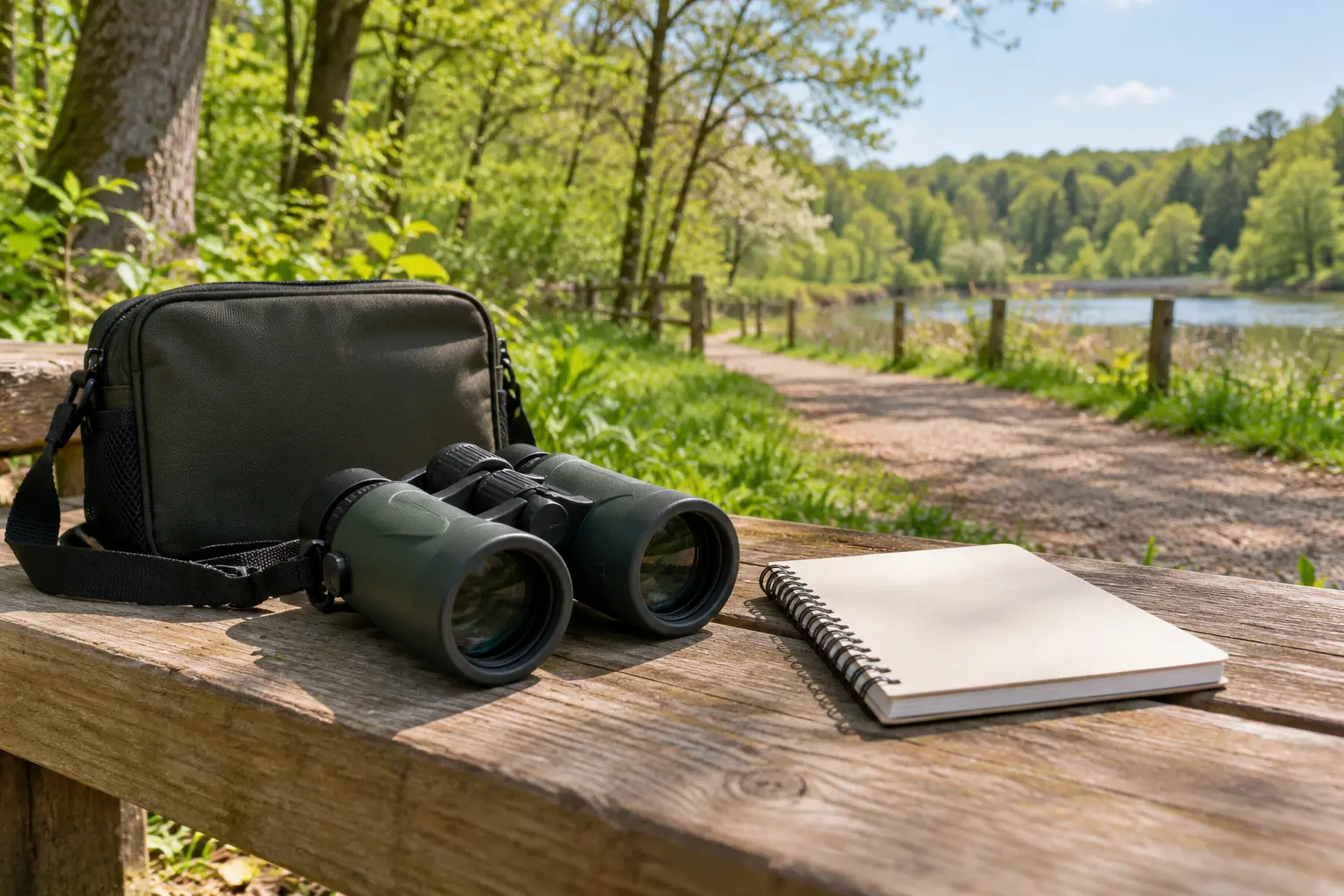
The best binoculars for beginners are easy to aim, comfortable to look through and suited to the places you will actually use them. A first pair for woodland birds has different priorities from one for long hikes or distant animals in open country. Starting with those settings helps you avoid paying for magnification, bulk or features that do little for your everyday viewing. This guide compares five models that cover those common first purchases, including full-size 8×42 binoculars, a smaller hiking option and a 10x choice for more distant subjects. We explain the tradeoffs in field of view, close focus, eye relief, weight and buying options. Begin with the quick verdict, then use the table and product sections to choose a manageable first pair that fits your eyes, hands and budget.
Affiliate Disclosure: We may earn a commission at no extra cost to you when you make a qualifying purchase through affiliate links in this guide. Buying buttons open Amazon.com. Read our full affiliate disclosure.
Best Binoculars for Beginners: quick comparison
On smaller screens, swipe across the table to compare all features and buying options.
| Image | Model | Eye relief | Field / 1,000 yd | Close focus | Best use | Where to buy |
|---|---|---|---|---|---|---|
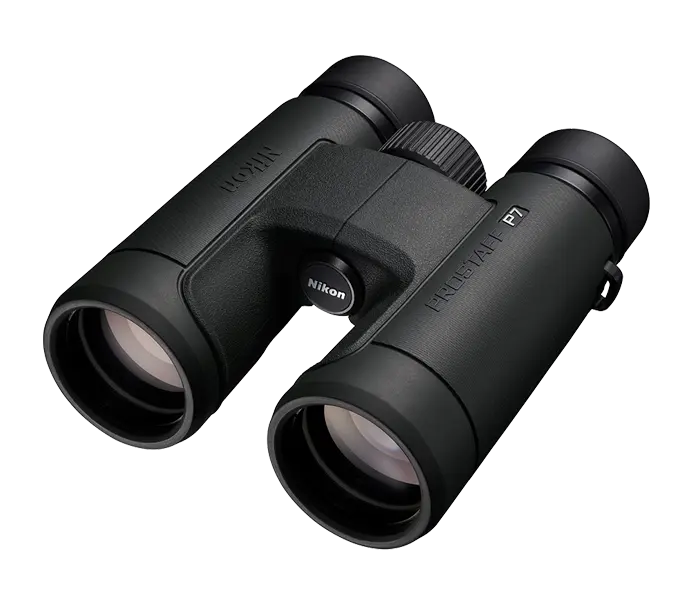 | Nikon PROSTAFF P7 8×42 | 20.2 mm | 377 ft | 9.8 ft | Woodland beginners | Check PriceAmazon |
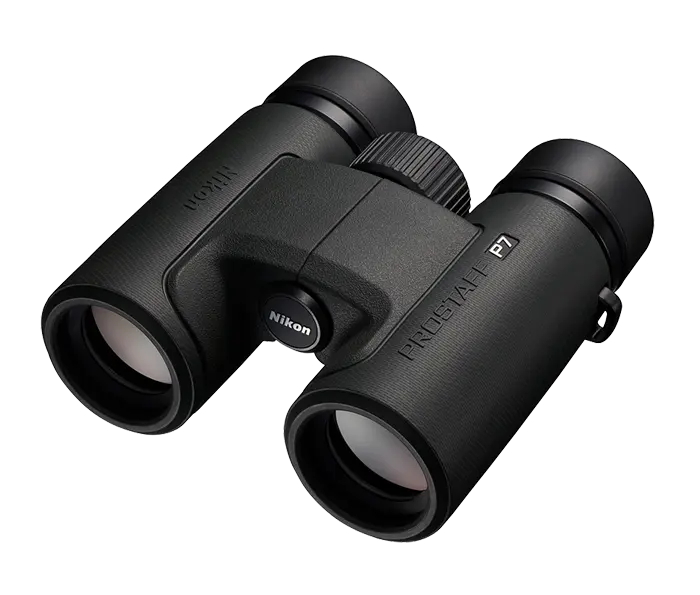 | Nikon PROSTAFF P7 8×30 | 15.4 mm | 456 ft | 8.2 ft | Daylight hikers | Check PriceAmazon |
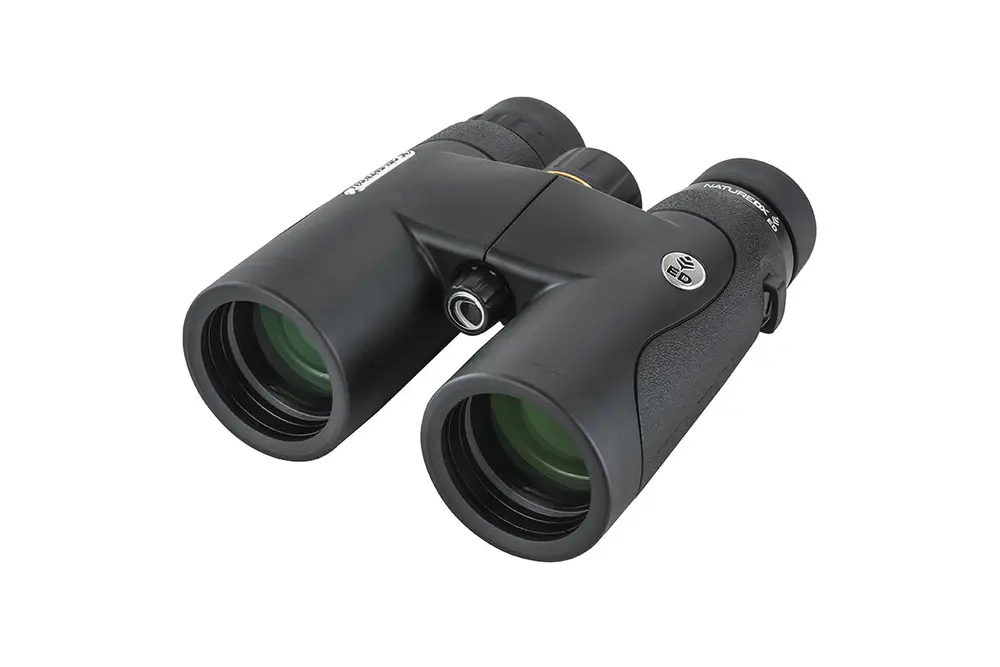 | Celestron Nature DX ED 8×42 | 17.8 mm | 393 ft | 6.5 ft | Backyard wildlife and butterflies | Check PriceAmazon |
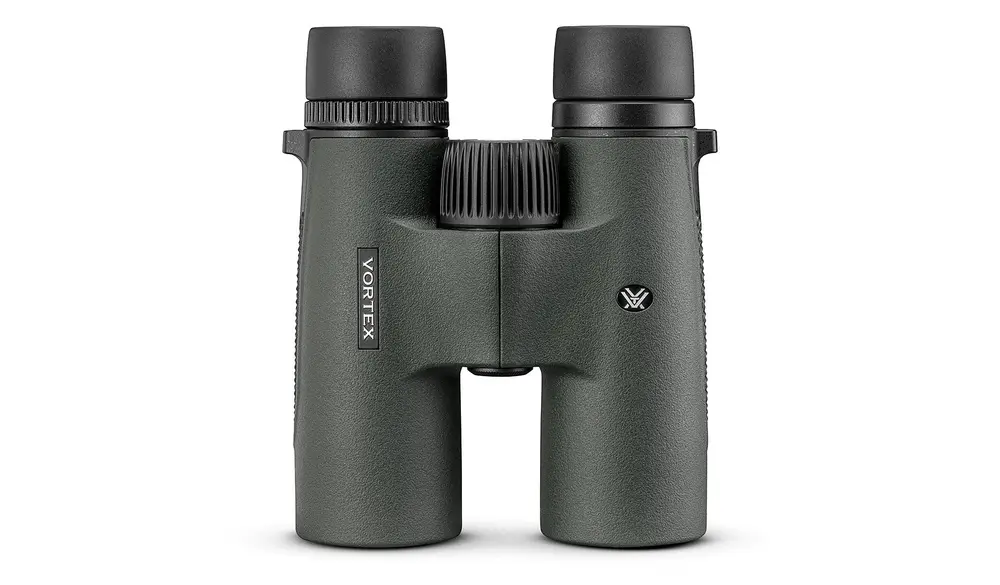 | Vortex Triumph HD 10×42 | 17 mm | 334 ft | 15.3 ft | Open-country distant viewing | Check PriceAmazon |
 | Opticron Oregon 4 PC Oasis 8×42 | 22 mm | 366 ft | 7.5 ft | Glasses wearers seeking long eye relief | Check PriceAmazon |
Open Amazon for the current price and availability. Confirm the exact model, condition and package contents, including any separately required eyepiece, tripod or accessories. Tax and shipping may affect the total.
How we chose these models
The shortlist deliberately includes four 8x models and one 10x alternative rather than treating all beginner binoculars as the same purchase. The P7 appears in compact and full-size forms, the Nature DX ED adds a close-focus option, the Triumph addresses more distant open-country subjects, and the Oregon Oasis provides another full-size fit to compare. This makes the first decision about where and how the binoculars will be used.
- Start with a manageable field and magnification for learning to find birds.
- Compare the complete size, weight and eye relief of the 30 mm and 42 mm choices.
- Keep the higher-power alternative for readers whose subjects justify its narrower view and greater shake sensitivity.
These comparisons use manufacturer documentation and published model specifications. We have not conducted hands-on product tests. See how we review optics for the research and correction process.
01 / Woodland beginners
Nikon PROSTAFF P7 8×42
Its 8×42 configuration is versatile, and published 20.2 mm eye relief makes this a particularly relevant starting point for glasses wearers. Nikon includes a locking diopter, useful once the user has correctly adjusted the binocular for each eye. The 377-foot field provides room for finding birds in foliage. The published 20.8-ounce weight is relatively modest for a conventional full-size binocular.
Amazon.com
Product image: Nikon.Close focus is limited to 9.8 feet, making it less appealing than some alternatives for butterflies or nearby feeder birds.
Reasons to choose it
- 20.2 mm listed eye relief.
- Locking diopter and oil- and water-repellent lens coatings.
What to weigh up
- 9.8 ft minimum focus limits very nearby subjects.
- 377 ft field is narrower than several wide-field 8×42 alternatives.
02 / Daylight hikers
Nikon PROSTAFF P7 8×30
The most distinctive selling point is a published 456-foot field at 1,000 yards. That can help new birdwatchers locate small moving subjects without constantly scanning back and forth. At 17.1 ounces the smaller body is attractive to anyone walking long trails or packing for travel. Eight-times magnification avoids the extra hand movement associated with many higher-powered formats.
Amazon.com
Product image: Nikon.Its 15.4 mm eye relief requires particular scrutiny from people wearing glasses. Smaller 30 mm objectives yield a narrower calculated exit pupil than comparable 42 mm models, which can affect viewing ease or potential light delivery in some conditions. It is not a direct measurement of visual brightness.
Reasons to choose it
- Wide 456 ft field at 1,000 yards.
- Compact 8×30 format with a locking diopter.
What to weigh up
- 15.4 mm eye relief may be restrictive with some glasses.
- 8.2 ft close focus is not an insect-specialist distance.
03 / Backyard wildlife and butterflies
Celestron Nature DX ED 8×42
The six-and-a-half-foot minimum focusing distance makes this model suitable for investigating nearby garden subjects as well as ordinary birdwatching. Celestron also lists ED objective glass, intended to reduce colour fringing, alongside phase-coated prisms and a 393-foot field. Its adjustable eyecups offer flexibility for different users, although actual eyeglass compatibility remains personal.
Amazon.com
Product image: Celestron.At 24.9 ounces it is heavier than the two Nikon options. The ED designation does not guarantee greater real-world sharpness than every conventional binocular. It must also be distinguished from the standard Nature DX model; accessories, coatings and prices can differ.
Reasons to choose it
- ED optical design with 6.5 ft close focus.
- 393 ft field and 17.8 mm listed eye relief.
What to weigh up
- 24.9 oz manufacturer-listed weight adds to the carrying load.
- Do not confuse this ED version with standard Nature DX.
04 / Open-country distant viewing
Vortex Triumph HD 10×42
A beginner who primarily observes distant waterbirds or animals across an open valley may find ten-times magnification useful. Vortex publishes 334 feet of field at 1,000 yards and a 22.9-ounce mass. The instrument is marketed as rugged and straightforward, and its manufacturer describes lifetime warranty coverage subject to the current terms.
Amazon.com
Product image: Vortex.Ten-times magnification generally makes handheld shaking more apparent, while the narrower field can make moving birds harder to find. Its 15.3-foot minimum focusing distance is poorly suited to insects or birds very near a viewing window. Do not buy extra magnification unless your typical observation distances justify it.
Reasons to choose it
- 10x magnification for distant open-country subjects.
- A 42 mm objective in an uncomplicated outdoor design.
What to weigh up
- 334 ft field is less expansive than wider 8x birding options.
- 15.3 ft close focus is unsuitable for very close subjects.
05 / Glasses wearers seeking long eye relief
Opticron Oregon 4 PC Oasis 8×42
The published 22 mm eye relief is generous, making this an interesting alternative for beginners with prescription frames. Opticron lists phase-corrected prisms, fully multicoated optics, a 7.5-foot minimum focusing distance and nitrogen-filled waterproof construction. The eight-times configuration also provides a more general-purpose format than the Vortex ten-times model.
Amazon.com
Product image: Opticron.At 24.2 ounces it is not a featherweight. U.S. The older Oregon 4 PC was discontinued; shoppers must verify that a listing really refers to the newer Oasis generation.
Reasons to choose it
- 22 mm eye relief is worth shortlisting with glasses.
- 8×42 format with 7.5 ft close focus.
What to weigh up
- 24.2 oz body is not a compact travel choice.
- 366 ft field trades some scene width for other priorities.
What to consider before buying
Start with your real observation setting
A beginner who mainly observes woodland songbirds will have different needs from someone looking across a lake. Dense foliage rewards a wide field of view and quick focusing because the subject may only remain visible for seconds. Open plains and distant shorebirds create a case for somewhat greater magnification, provided you can keep the image steady. Garden wildlife and butterflies make close focus more important. List the places where you will use the binoculars most often before looking at product ratings. Select the format for ordinary outings, not a rare situation you might encounter once.
Choosing between 8x and 10x
Eight-times magnification is an excellent baseline for general handheld birdwatching. The view is typically easier to hold steady, and many 8x binoculars provide comparatively generous true fields. Ten-times magnification increases apparent subject size, but may make involuntary hand movement more visible. It does not necessarily resolve extra detail when the instrument is shaking or when heat shimmer distorts distant scenery. Trying both on a real moving subject is more informative than comparing the magnification number alone. The 8×42 versus 10×42 guide explains these decisions.
Understand objective lens size
The second number in a binocular description refers to the objective diameter in millimetres. An 8×42 has eight-times magnification and 42 mm lenses; an 8×30 uses smaller 30 mm objectives. At equal magnification, larger objectives usually require more physical space and can produce a larger exit pupil. That does not guarantee better optical quality or brightness under every condition. A smaller instrument can be the smarter purchase when its weight encourages regular use. If hiking portability is paramount, compare dimensions and handling rather than assuming the biggest lens is best. For a younger viewer, use the separate guidance on choosing binoculars for children; a compact adult model may not fit a smaller face.
What field of view really tells you
Field of view describes the width of the visible landscape at a defined distance, such as 1,000 yards. A beginner may find it easier to locate a bird inside a broad field than inside a narrow one, particularly when the bird flies or moves among branches. The published Nikon P7 8×30 figure of 456 feet is therefore noteworthy. But width does not describe how sharp the field looks near its edge, how much distortion occurs, or whether a person wearing glasses can see the entire circle. Compare consistent units and practical viewing comfort.
Do not overlook close focus
The minimum focus figure indicates the shortest distance at which the instrument can bring a subject into focus. For feeder birds near a window or butterflies resting on flowers, a six- or seven-foot minimum can be valuable. For wildlife across a marsh, it may have little relevance. A binocular that focuses close is not necessarily sharper than one with a longer minimum distance. Focus smoothness and the comfort of combining the two images also matter. See our explanation of close focus for further buying guidance.
Eye relief is essential for glasses
If you wear glasses while observing birds, check whether the eyecups retract far enough to show the complete circular field. Published eye relief is a helpful comparison number, but it cannot account for every spectacle frame and facial shape. The P7 8×42 and Opticron Oasis have relatively generous figures, whereas the P7 8×30 requires closer fit checking. Test with the actual glasses you wear outdoors; losing the edge of the view can erase the value of a nominally wide field. Our eye-relief guide details the adjustment sequence.
How to focus your first pair correctly
Before judging image quality, adjust the hinge so you see one circular field through both eyes. Choose a detailed stationary object. Follow the binocular manufacturer’s instructions to focus one eye with the central wheel and set the diopter adjustment for the other eye. Once the individual settings are correct, use the main focus wheel to move between viewing distances. Practise spotting a branch with your naked eye and then lifting the binoculars without losing the subject. Good setup and technique can make a modest instrument much more useful.
Weight, size and fatigue
A binocular carried for several hours should be convenient enough that you actually bring it outdoors. Weight measurements help, but body balance, strap comfort and grip also make a difference. A smaller binocular may fit a daypack pocket, while a heavier one can be more pleasant to hold if the shape suits your hands. If you wear gloves, try turning the focus wheel with them. Consider a supportive harness if ordinary neck straps become uncomfortable. A product that looks impressive on a specification sheet does not provide much value when it stays at home.
Waterproofing and protection
Waterproof and nitrogen-filled are common product descriptions, yet manufacturer test standards and warranty terms vary. Read the exact manual before exposing the binoculars to heavy rain or immersion. Do not confuse water resistance with drop protection, and do not use a waterproof claim as an excuse to store wet equipment carelessly. Protect lens surfaces with their caps during transport, and remove grit gently before wiping glass. A modest carrying case and secure strap can be more valuable than accessories advertised mainly for appearance.
ED glass and coatings in context
Some binoculars include extra-low-dispersion glass or phase-corrected prism coatings. These technologies can reduce certain image defects and improve contrast when properly incorporated into an optical design. They are not, by themselves, proof that a particular model beats every non-ED competitor. The exact layout of the optical elements, quality of construction and manufacturing consistency also matter. Whenever a seller claims superior performance, seek independent observations from a controlled comparison rather than relying on words such as HD, premium or crystal-clear.
Understanding exit pupil
Exit pupil is approximately objective diameter divided by magnification. An 8×42 yields a 5.25 mm exit pupil, an 8×30 yields 3.75 mm and a 10×42 yields 4.2 mm. The figure helps explain light delivery and ease of eye positioning, but it is not a laboratory measure of total light transmission. Your eye’s pupil also changes with ambient conditions. When choosing for daytime hiking, a smaller format may be perfectly practical. Read our exit-pupil guide to interpret the number correctly.
How to compare manufacturers without brand bias
Use a consistent comparison table with magnification, objective diameter, eye relief, field of view, close focus, weight, and published environmental protection. Check figures against the exact manufacturer’s model page rather than a retailer listing that may merge variants. Note the warranty and where servicing is available. A model may suit a beginner particularly well because it is easy to adjust, not because its brand is better known. When two candidates appear similar, the comfort of holding and focusing them can be the deciding factor.
A careful first-purchase checklist
Decide how and where the binoculars will be used. Eliminate formats too heavy for regular carrying and those that do not focus at your usual subject distance. If you wear spectacles, test whether you can see the full field without strain. Confirm the exact variant, current price, return terms and local warranty eligibility. Look for credible independent reviews that identify their sample and methodology. If you cannot test in person, choose a merchant with transparent returns. Do not let online star ratings substitute for the fit of the equipment to your own requirements.
Final recommendation
For broad woodland use, the Nikon P7 8×42 is a logical starting comparison; its 8x format and eye relief give it clear practical strengths. For long daytime hikes, the lighter, wider-field P7 8×30 serves a different need. Close garden observation brings the Celestron Nature DX ED to the shortlist, while open-country distance makes the Vortex 10×42 relevant. Opticron’s Oasis provides an alternative with generous published eye relief, subject to U.S. availability verification. None is a hands-on-tested winner here; choose by genuine viewing need and individual fit.
Before you choose
Frequently asked questions
What magnification should a beginner choose?
Start with 8x for ordinary birdwatching and mixed outdoor use. It gives useful detail while making hand shake less apparent than higher powers. Choose 10x when distant subjects are the main purpose and you have confirmed that you can hold the view comfortably; a larger number is not automatically easier to use.
Should my first binoculars be compact or full-size?
Choose for carrying habits and light conditions. A compact pair is attractive if you will bring it on every daytime walk. An 8×42 can be a better starting point for frequent wildlife observation in shade, provided its weight and grip are comfortable enough that you will actually carry it.
Do beginners need ED glass?
ED glass is a design feature intended to reduce color fringing, especially around high-contrast edges. It can be useful, but comfortable eye placement, easy focusing and an appropriate field of view deserve attention first. Compare complete binoculars rather than treating one glass label as a guarantee of the best purchase.
Why do I see black circles or a double image?
First check hinge spacing and eyecup position using the manual. Your eyes need to sit in the correct place behind both eyepieces. If a doubled image persists after correct setup, stop trying to force your eyes to merge it and ask the retailer or manufacturer to check the binoculars.
Can one pair work for both birds and butterflies?
Yes, if it focuses close enough for the insects you want to watch. Compare minimum focus with your usual viewing distance. A general birding model may be convenient for a bird in the next tree but unable to focus on a butterfly immediately beside your feet.
How can I compare two beginner models fairly?
Use the same targets in similar light, with both pairs adjusted for your eyes. Start at a comfortable distance, check edge visibility and then try a nearer subject. Spend time on focus control and carrying comfort as well as fine detail; a brief glance at an indoor display can miss a poor fit.
Can an adult beginner pair suit a child as well?
Check the actual fit rather than assuming that a shared pair works for both. The hinge must adjust to the user's eye spacing, and the body needs to be manageable in their hands. Let the child try ordinary nearby and distant targets with appropriate supervision. A smaller, easier-to-hold model may be more useful than sharing a full-size pair that cannot provide one comfortable view. Follow the manual's safety guidance, particularly its warning against viewing the sun.
Sources and buying information
Product details come from manufacturer documentation for the models listed. Use the Amazon buying links for the current offer, seller, condition and package contents.
Related practical guides
About the author
Simon Jack
Simon Jack is the named author of FieldLens Guide's research-based binocular, spotting scope and wildlife observation articles. His published editorial approach focuses on verifying model-specific manufacturer specifications, explaining optical tradeoffs in plain language, and matching equipment to real birdwatching, hiking and nature-observation needs. These articles do not claim hands-on product tests unless explicitly documented.