
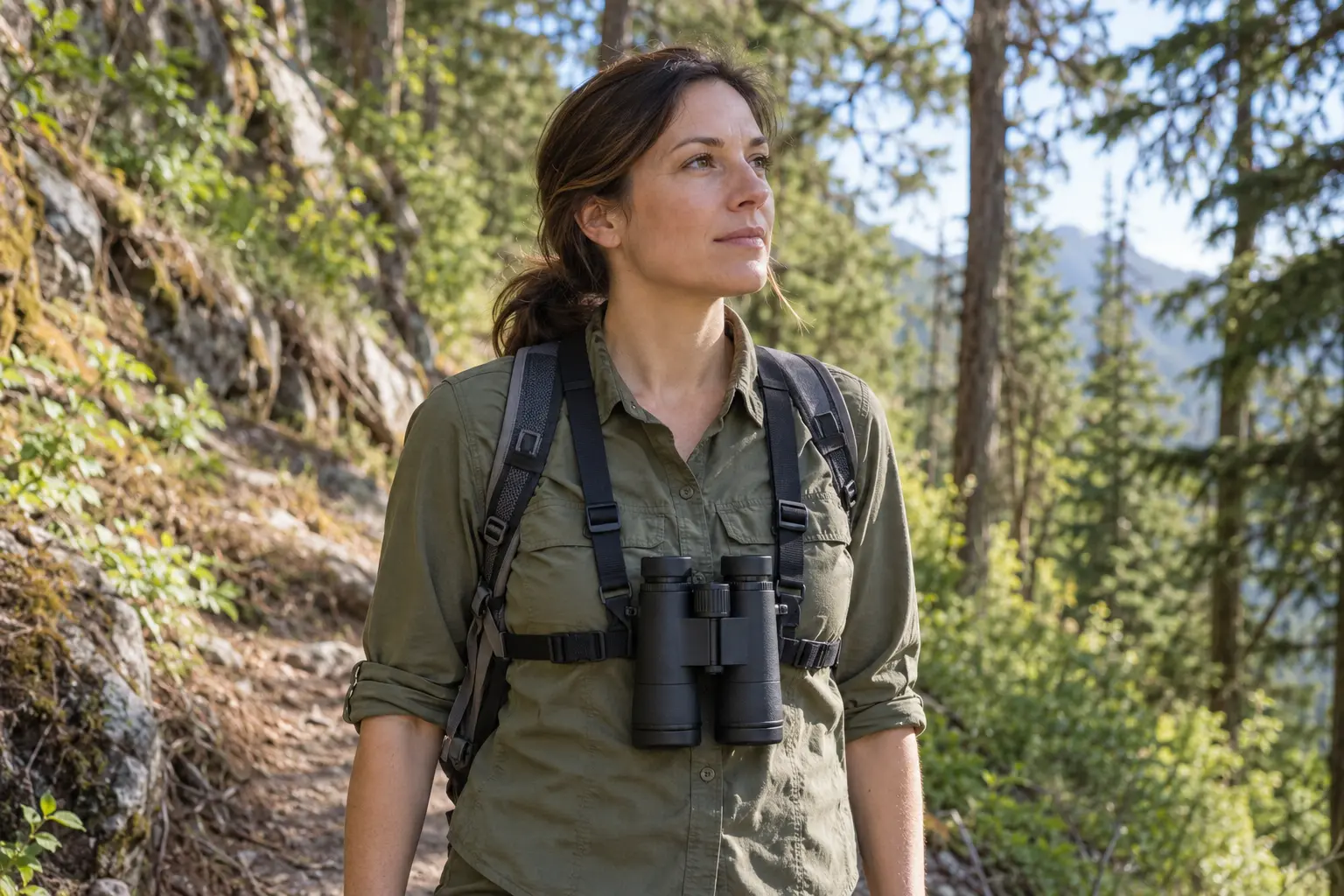
The best binocular harnesses for bird watching keep your binoculars comfortable to carry and quick to reach without creating a new problem around your backpack straps. An open harness distributes weight with little extra bulk, while an enclosed chest pouch adds protection from brush and dust but occupies more space against your body. That choice matters more than simply buying the most padded or most expensive model. This guide compares five carrying systems for short park walks, long birding outings and compact travel kits. We consider suspension style, pouch fit, access, weather protection, weight and price, with particular attention to how each works alongside the equipment you already use. Start with the quick verdict, then check the actual dimensions of your binoculars, including eyecups and covers, before choosing a pouch or strap arrangement.
Affiliate Disclosure: We may earn a commission at no extra cost to you when you make a qualifying purchase through affiliate links in this guide. Buying buttons open Amazon.com. Read our full affiliate disclosure.
Best Binocular Harnesses for Bird Watching: quick comparison
On smaller screens, swipe across the table to compare all features and buying options.
| Image | Harness | Carry style | Main tradeoff | Where to buy |
|---|---|---|---|---|
 | OP/TECH USA Bino/Cam Harness | Simple low-cost weight distribution | No enclosed weather or dust pouch. | Check PriceAmazon |
 | Rick Young Outdoors Basic Ultra-light Bino Harness | Minimal elastic shock-cord system | No protective chest enclosure. | Check PriceAmazon model search |
 | KUIU Ultralight Bino Harness | Four-ounce compact binocular pouch | Pouch dimensions must fit the complete binocular body. | Check PriceAmazon model search |
 | Vortex GlassPak Sport Binocular Harness | Weather-oriented quick-access chest protection | Pouch adds bulk around backpack chest straps. | Check PriceAmazon |
 | Vortex GlassPak Pro Binocular Harness | Padded full-coverage modular protection | More cost and bulk than an open harness. | Check PriceAmazon |
Open Amazon for the current price and availability. Confirm the exact model, condition and package contents, including any separately required eyepiece, tripod or accessories. Tax and shipping may affect the total.
How we chose these accessories
Two open suspension systems and three enclosed pouches make the main carrying decision visible. OP/TECH and Rick Young address weight distribution with exposed binoculars; KUIU and the two Vortex systems add different levels of enclosure, padding and storage. We compare the harness as part of a complete walking setup, not as an accessory that fits every binocular automatically.
- Measure the binoculars with eyecups, caps and covers in place before choosing a pouch.
- Check access alongside backpack and sternum straps.
- Separate open-harness comfort from the protection and bulk of an enclosed system.
These comparisons use manufacturer documentation and published model specifications. We have not conducted hands-on product tests. See how we review optics for the research and correction process.
01 / Simple low-cost weight distribution
OP/TECH USA Bino/Cam Harness
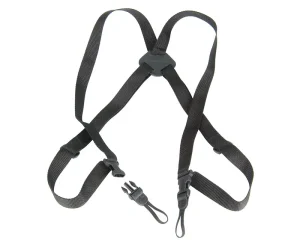
OP/TECH’s Bino/Cam Harness is a strap-style support available in elastic and non-stretch webbing versions. The maker lists an adjustable one-size design, two Uni-Loop quick-disconnect attachments and a recommended comfort load up to 15 pounds. It does not include a protective binocular pouch; the optical instrument rests against the body.

Amazon.com
Product image: OP/TECH USA.For a birder who already uses lens caps and wants less neck pressure than a basic narrow strap, the primary value is comfortable weight distribution without carrying a bulky chest case. The optional elastic version holds binoculars closer during walking yet lets them stretch upward for viewing. The webbing option changes the feel for those who dislike elastic suspension. Quick connectors may make it convenient to remove the binoculars for tripod use or storage.
A casual park birder or traveler looking to reduce neck strain at modest cost without enclosing the optics in a large case.
This is not a rain cover or dust-protection system. A binocular can still rub against a jacket, backpack strap or surrounding vegetation, and lens caps remain important. The stated comfortable-load capacity is not a recommendation to suspend heavy field equipment on every outing. A connector must be correctly fitted to compatible attachment points, and a simplistic one-size claim cannot guarantee a comfortable fit for every body.
Select webbing or elastic intentionally and confirm that the Uni-Loop connectors can be secured to the actual binocular attachment points.
Reasons to choose it
- Open design keeps binoculars immediately accessible.
- Webbing and elastic versions allow different carrying preferences.
What to weigh up
- No enclosed weather or dust pouch.
- Version choice changes suspension feel and price.
02 / Minimal elastic shock-cord system
Rick Young Outdoors Basic Ultra-light Bino Harness
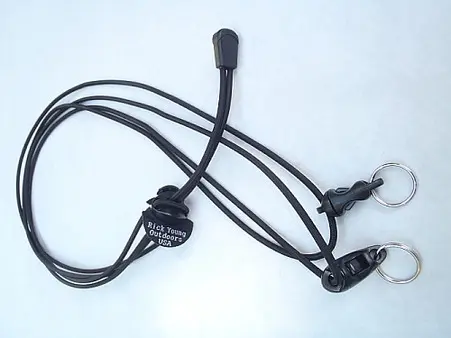
Rick Young’s Basic Ultra-light Bino Harness uses an adjustable shock-cord carrying arrangement instead of broad flat straps. The maker describes five carrying positions, quick single-point adjustment and compact wrapping around the binoculars for storage. The design does not surround the instrument with a weather-protective pouch and is intended to stay lightweight and unobtrusive.
Opens an Amazon search for this model.
Product image: Rick Young Outdoors.For a walker who repeatedly raises binoculars for quick sightings, the low-profile arrangement can avoid the bulk of a full chest pack. The elastic cord keeps the optics close to the body during movement while allowing them to reach the eyes. A compact system may also feel less hot in warm weather than a heavily padded harness, though personal comfort varies with clothing and physique.
Day hikers who prioritize the least complicated strap arrangement and usually carry compact or mid-size binoculars in fair weather.
The shock-cord design is still an elastic suspension system; it can create bounce depending on fit, instrument mass and movement. The cord itself does not protect eyepieces from grit, drizzle or impacts. Some observers may prefer broader straps because narrow cords can feel different on the shoulders.
Try the correct carrying configuration with your jacket and pack, and ensure the binoculars sit high enough not to swing into obstacles.
Reasons to choose it
- Minimal shock-cord design with a single-point adjustment.
- Compact wrapping arrangement for storage.
What to weigh up
- No protective chest enclosure.
- Elastic tension and bounce depend on fitting and walking style.
03 / Four-ounce compact binocular pouch
KUIU Ultralight Bino Harness
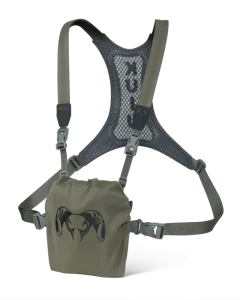
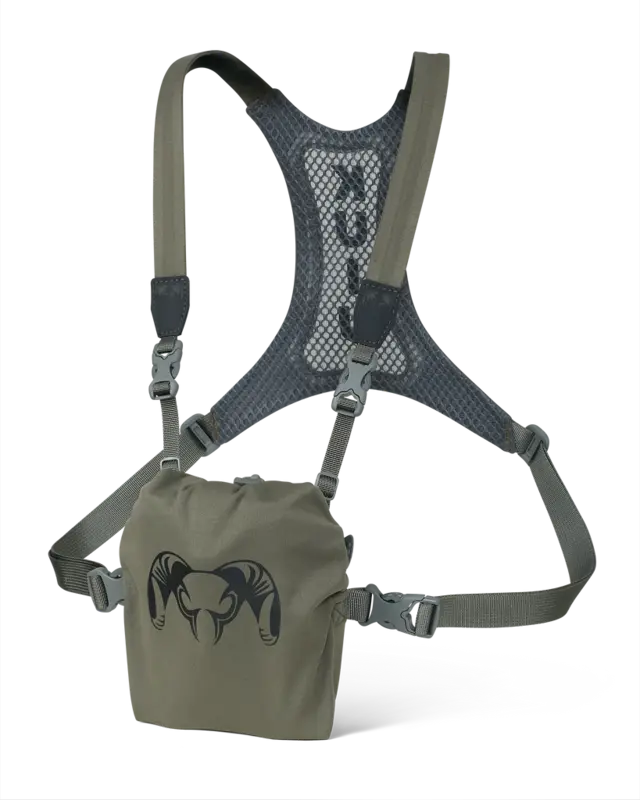
KUIU lists the Ultralight Harness at 4 ounces (113 g) with a stretch pouch measuring approximately 6.25 × 5 × 2 inches. It uses adjustable shoulder straps, a vented mesh back panel, a cord-lock pouch opening and quick-detach bino straps. The brand describes it as best suited to compact binoculars, and also supplies an alternate elastic clip-in holder if the pouch is not needed. The product is marketed primarily to hunters, but its carrying mechanism can be considered for wildlife observation.
Opens an Amazon search for this model.
Product image: KUIU.The minimal pouch offers an intermediate choice between an exposed neck strap and a large, heavily padded chest case. For compact 8×25 or some 8×32 binoculars, a soft holder may reduce rubbing against clothing and keep the optics close to the chest. The mesh backing is relevant on warm trails. Detachable straps can also help if binoculars are occasionally mounted on a tripod or handed to another observer.
A birdwatcher using truly compact binoculars who wants a small chest pouch without carrying the bulk of a premium enclosure.
The published pouch dimensions must be checked against the actual binoculars. It should not be assumed to fit full-size 10×50 models or unusually wide Porro prism housings. Stretch material is not equivalent to a rigid waterproof case, even if the maker highlights outdoor suitability. Some hunting-oriented accessories and camouflage options add little value to casual birdwatchers, so avoid paying for capabilities you will not use.
Measure the binocular body with eyecups and caps fitted, then compare all three dimensions with the pouch specification rather than assuming objective size predicts fit.
Reasons to choose it
- 113 g pouch system intended for compact binoculars.
- Mesh back panel and quick-detach binocular straps.
What to weigh up
- Pouch dimensions must fit the complete binocular body.
- A small pouch is not a universal fit for larger optics.
04 / Weather-oriented quick-access chest protection
Vortex GlassPak Sport Binocular Harness
The GlassPak Sport is a separate Vortex model from the original GlassPak and GlassPak Pro. The maker specifies adjustable straps and an all-weather design intended to keep binoculars secure while allowing fast access. The manufacturer describes a lightweight protective system for outdoor users, though the actual fit depends on the size variant and binocular body.

Amazon.com
Product image: Vortex.For people walking through brush or experiencing frequent drizzle, a quick-access chest pouch can offer more protection than open shock cords. The binoculars remain at the front of the body rather than bouncing against the hip. Opening the pouch briefly for observation may be more convenient than unzipping a full equipment bag at every bird. The Sport aims for a balance between rapid access and a less elaborate arrangement than a fully modular premium harness.
A mobile wetland or woodland birder who wants optics protected during walks but still available quickly when a bird appears.
A pouch adds front-of-body volume and can interfere with backpack chest straps or camera equipment. Manufacturer all-weather language should not be interpreted as unlimited waterproof protection, especially around openings. The exact selected size and contents should be checked against the current Vortex size chart. The Sport is not interchangeable with the GlassPak Pro, which uses a more extensive modular system.
Try it with the backpack you normally wear, confirming that its position does not crowd shoulder straps, sternum buckles or jacket zippers.
Reasons to choose it
- Enclosed front-of-body carrying with quick access.
- Adjustable straps in a simpler system than the GlassPak Pro.
What to weigh up
- Pouch adds bulk around backpack chest straps.
- Choose the size for your binoculars, covers and eyecups.
05 / Padded full-coverage modular protection
Vortex GlassPak Pro Binocular Harness
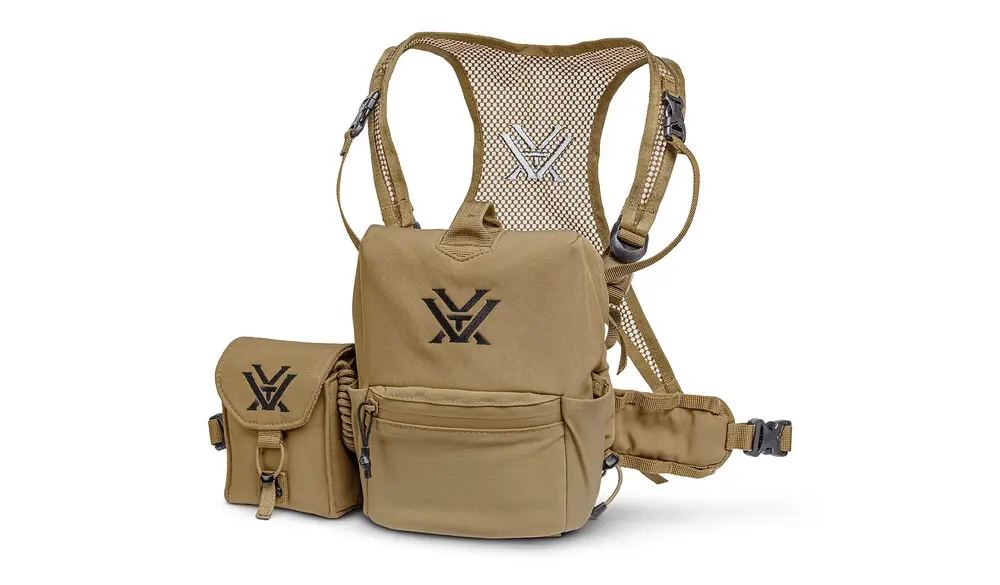
Vortex’s GlassPak Pro is a padded, weather-resistant full-coverage binocular harness offered in sizes intended for smaller and larger optics. The manufacturer describes accessory attachment points and reinforced protection from scratches or bumps. The more extensive enclosure and modular carrying arrangement distinguish it from strap-only options or the simpler GlassPak Sport.
Amazon.com
Product image: Vortex.For long outings with expensive full-size binoculars, the additional padding and enclosure may be worth considering where brush, dust and knocks are recurring problems. Modularity can help an observer carry a small notebook, cleaning supplies or an accessory pouch in a stable position. People who keep their optics out for only brief sightings may appreciate being able to re-cover them quickly after a view.
A frequent birdwatcher carrying valuable full-size binoculars through mixed weather and rough vegetation, where protection and organization matter more than the lowest weight.
A premium padded chest pack weighs more and occupies more space than minimalist straps. The design originates in hunting, and some accessory features may be unnecessary for birdwatching. Weather resistance is not permission to submerge the case or store binoculars wet. You must select the correct size and decide whether its bulk interferes with a backpack, camera bag or other equipment before paying the premium.
Check the actual binocular height and width against the correct Vortex size guide and confirm that any extra modular pouches are genuinely needed.
Reasons to choose it
- Padded enclosure with modular accessory attachment.
- Size choices for different binocular bodies.
What to weigh up
- More cost and bulk than an open harness.
- Additional attachments can make a light birding kit cumbersome.
What to consider before buying
Why a harness can be useful for birding
A standard neck strap concentrates the load around the neck and may allow binoculars to swing while walking. A well-fitted harness redistributes some of that load and keeps the instrument nearer the chest, where it can be raised for a quick sighting. The practical benefit depends on binocular weight, body shape, clothing and walking style. A harness is not automatically necessary for every short garden session, and a comfortable broad neck strap may suit light binoculars perfectly well. The purpose is easier access and carrying, not adding another impressive accessory.
Open harness versus enclosed chest pack
This is the main purchasing decision. OP/TECH and Rick Young offer exposed straps that keep optics readily accessible but do not shield them against rain or dust. KUIU’s minimal pouch creates some coverage for compact binoculars, while Vortex’s Sport and Pro emphasise enclosed carrying. An enclosure may be useful in rough terrain, but opening and closing it can slow quick bird sightings. Choose protection according to actual weather and habitat rather than assuming the most expensive pouch is the best for everyone.
Binocular size and pouch compatibility
An 8×25 pocket model, an 8×42 roof prism and a bulky 10×50 Porro may have significantly different dimensions. Manufacturer harness size labels such as small, large or universal do not fully describe fit. Check the actual binocular height, width and depth with eyecups and lens caps in place, then compare with the pouch’s internal usable dimensions. If the fit is too tight, forcing the lid closed can damage caps or make quick access frustrating. A harness that fits the wrong model is not a good recommendation at any price.
Weight distribution and posture
The aim is to let shoulders, back and torso share carrying load rather than concentrating it on the neck. But incorrect strap adjustment can cause the optics to hang too low, bounce into the abdomen or pull awkwardly across the shoulders. Start with a position high enough to remain stable but low enough to lift the eyepieces without resistance. Adjust while wearing the same jacket and backpack used outdoors. If pain or restricted breathing occurs, change the fit or select another carrying system; more straps do not guarantee better ergonomics.
Quick access to moving birds
Woodland birds may remain visible for only a few seconds. A harness that requires two hands and several buckles to open can be inconvenient even if it offers excellent protection while walking. Practise bringing the binoculars from their resting position to your eyes while looking toward a stationary branch. Then practise replacing them without tangling the tethers. Minimal cords offer immediate access but more exposure; chest pouches trade a short opening motion for protection. The right balance depends on how frequently the binoculars are used during a typical walk.
Backpack strap interference
A binocular chest harness and a hiking backpack can occupy the same shoulder and sternum areas. Test them together before a long trip. A comfortable standalone harness may become awkward once a backpack’s sternum buckle presses on its chest pouch. Adjust straps to avoid restricted breathing and unwanted pressure points. If you use a camera harness too, look for overlapping clips and swinging equipment. The most practical birding setup may involve fewer straps rather than adding multiple specialised systems without testing how they fit together.
Warm-weather comfort
Heavy padded enclosures and wide shoulder straps can trap heat during summer walking. Some harnesses include vented mesh or very light cords intended to reduce bulk. KUIU documents a mesh-backed design, while Rick Young emphasises its minimalist cord arrangement. Personal comfort varies, and a breathable claim is not an independent temperature measurement. Try carrying the setup over a representative walk rather than judging from a product photo. A harness you remove after twenty minutes because it feels too hot has not solved the carrying problem.
Weather protection and its limits
Rain and dust are real considerations for wetland and woodland birders. A protected pouch can shield the instrument from incidental splashes and vegetation, but gaps around its lid and fabric seams mean it may not be waterproof in every condition. Read the maker’s precise description rather than interpreting all-weather language as a sealed dry bag. Remove wet binoculars and allow the exterior and pouch lining to dry appropriately after a trip. Never leave damp optics sealed in a fabric chest case for long-term storage.
Quiet access for wildlife observation
Quiet operation can matter when watching close mammals or birds in sensitive areas, though keeping a respectful distance matters far more. Check whether buckles, lid tabs and tether clips make noises when handled, and practise operating them calmly. Do not assume a product originally designed for hunting is automatically ideal for birdwatching: the activities overlap in carrying optics, but birdwatchers may prioritise frequent rapid views and unobtrusive colours. Choose a system that lets you observe without needless movement near wildlife.
How to protect eyecups and lens caps
The eyepiece end of binoculars can collect dust and skin oils when resting against clothing. An open harness should be used with appropriate protective caps during travel when conditions warrant. Enclosed cases may reduce exposure but do not replace cleaning or proper dry storage. Never cram binoculars into a pouch so tightly that the twist-up eyecups are forced against the case. Keep the instrument in a position that prevents the objective lenses from striking hard items when you lean forward or sit down.
Tethers and accidental drops
Many chest pouches include retaining straps or clips so binoculars remain attached when lifted. A strap-only harness relies on the integrity of its connectors. Inspect attachment points before each outing and follow the manufacturer’s instructions for secure mounting. Do not substitute improvised knots or incompatible clips for a rated connection. A tether may reduce the chance of a fall, but can still catch on branches or restrict movement. Choose lengths that allow comfortable viewing while preventing excessive swinging, and keep loose cord ends controlled.
Comparing entry and premium prices
The difference between an inexpensive open harness and a premium padded case reflects more than brand reputation. Materials, coverage, stitching, adjustable attachments and accessory storage can change the design substantially. But a casual walker with light binoculars may see little benefit from a complex enclosure. Conversely, an observer regularly hiking through brush with expensive optics may value extra protection. Buy for actual conditions rather than treating price as a proxy for comfort. Manufacturer prices change and should be checked alongside current retailer offers.
A ten-minute fitting trial
Load the binoculars exactly as they will be carried, including eyecups and caps. Adjust the harness over normal outdoor clothing, then walk, sit, lean forward and raise the binoculars several times. Check whether the instrument hits your chest or abdomen and whether tethers interfere with focusing. Put on a backpack and repeat. Try opening the pouch while looking toward a target and closing it without trapping straps. Such a trial reveals more about suitability than an abstract load rating or comfort claim.
Harnesses designed for hunting can still serve birders
Several strong binocular harness products are marketed primarily to hunters because that market frequently carries optics while walking. Their hardware can still be relevant to nature observation, but some ammunition or rangefinder holders may have no value for a birder. Do not pay a premium for modules you will never use. More importantly, do not confuse a protected chest pack with an optical stabilisation device; it keeps binoculars controlled while carried but does not remove hand shake while viewing.
A lightweight 8×32 versus full-size 10×50
A light 8×32 carried on a comfortable strap may need little additional support for casual birding. A heavier 10×50 can benefit more from a harness that distributes mass and limits movement. But the body shape matters too: broad Porro barrels may not fit an enclosure designed around slim roof-prism binoculars. Check the exact dimensions and attachment configuration before selecting a pouch size. The aim is to keep the equipment accessible and protected without making the total carrying system heavier than necessary.
Warranty, maintenance and availability
Check whether a harness warranty covers stitching, buckles and connector components, and whether replacement tether parts can be obtained. Inspect the product after muddy or wet trips and follow approved cleaning instructions. A model’s presence on its official manufacturer website does not guarantee a matching Amazon offer at the stated price. This comparison uses published product information, rather than independent endurance testing. Current U.S. merchant stock should be verified before ordering and during periodic content reviews.
Final recommendations by use case
Choose OP/TECH if low cost and strap comfort are the priority. Rick Young’s shock-cord design suits people who want minimal bulk during active walks. KUIU Ultralight is particularly relevant for compact binocular owners wanting a tiny pouch. Vortex GlassPak Sport provides a protected fast-access option, while GlassPak Pro caters to larger or more valuable binoculars carried through demanding terrain. No model has been declared a field-tested universal winner; check fit, weather exposure and backpack compatibility before committing to a purchase.
Before you choose
Frequently asked questions
Is a binocular harness better than a neck strap?
It can distribute the carrying load across your upper body and keep the binoculars in a more controlled position, but comfort depends on fit. A neck strap may remain simpler for short sessions. Try the carrying arrangement with your binoculars and usual clothing rather than assuming every harness improves every outing.
Should I choose an open harness or a chest pouch?
Choose an open system when minimal bulk and immediate access matter most. Choose a pouch when you want more protection from brush, dust or incidental weather between sightings. A pouch adds a step before viewing and takes chest space, so compare it with the backpack straps and other equipment you wear.
How do I check pouch size?
Measure your binoculars with eyecups, covers and any attached accessories in the position used for carrying. Compare all three dimensions with the exact pouch size. Check whether the lid closes naturally and whether removing the binoculars catches on the opening; a loose or overly tight fit can both be inconvenient.
Can I use a harness with a hiking backpack?
Often, but the two strap systems must work together comfortably. Check sternum-strap position, shoulder padding and where buckles sit. Raise and lower the binoculars repeatedly while wearing the loaded pack, then walk a short distance to look for rubbing, restricted movement or a pouch pressing into the backpack straps.
Does a binocular pouch make the contents waterproof?
Do not assume it does. A weather-oriented fabric or cover may reduce exposure without creating a waterproof enclosure. Follow the stated protection of both pouch and binoculars. After a wet outing, dry the carrying system as well as the optics so that moisture is not trapped during storage.
How tight should I adjust the harness?
It should keep the binoculars controlled while allowing you to lift them naturally without excessive tension. Test bending, walking and reaching with your normal clothing. Recheck clips and tethers as the instructions require, and make sure loose cords do not interfere with movement or catch on vegetation.
Sources and buying information
Product details come from manufacturer documentation for the models listed. Use the Amazon buying links for the current offer, seller, condition and package contents.
Related practical guides
About the author
Simon Jack
Simon Jack is the named author of FieldLens Guide's research-based binocular, spotting scope and wildlife observation articles. His published editorial approach focuses on verifying model-specific manufacturer specifications, explaining optical tradeoffs in plain language, and matching equipment to real birdwatching, hiking and nature-observation needs. These articles do not claim hands-on product tests unless explicitly documented.