
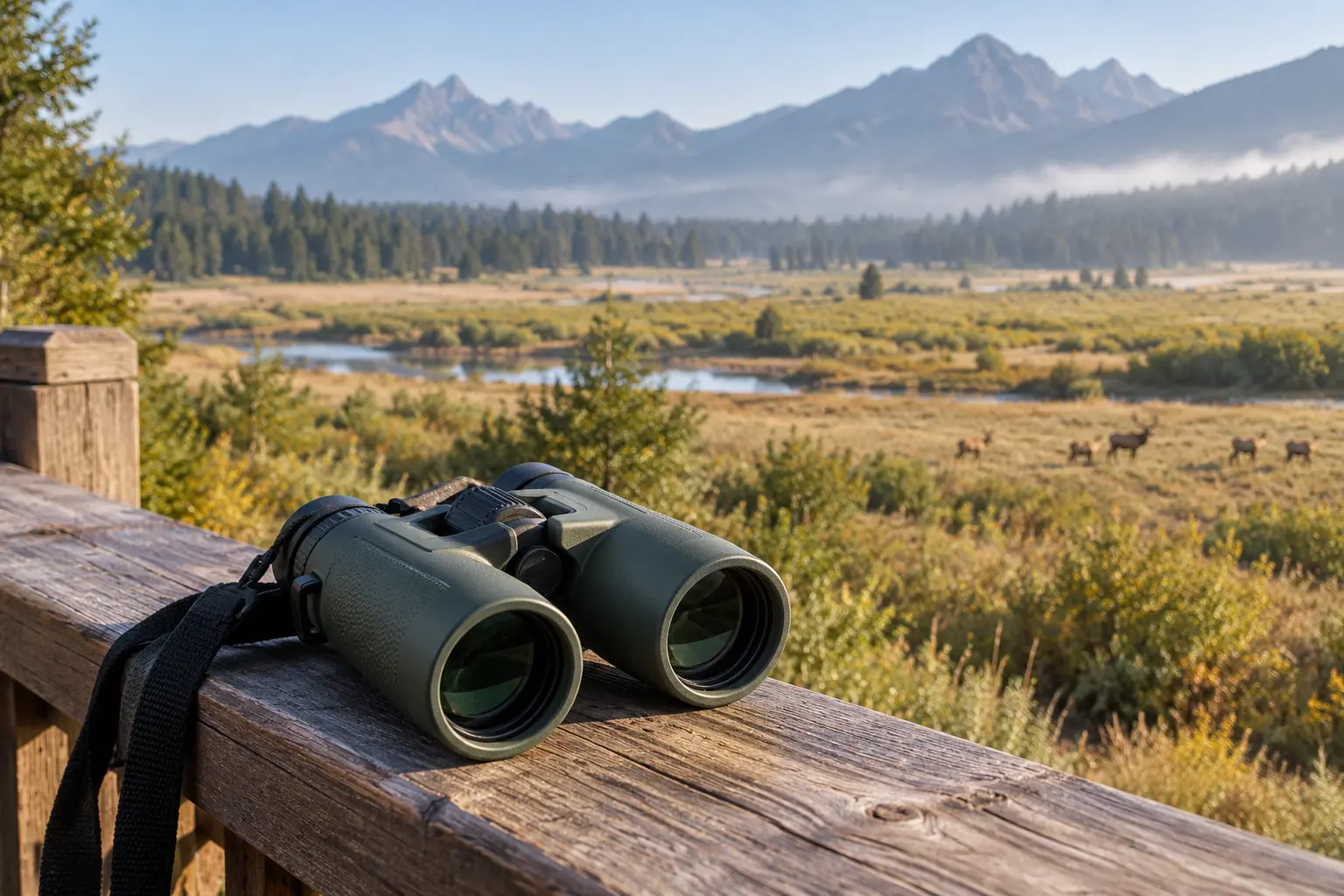
The best binoculars for wildlife watching help you find an animal, follow its movement and examine useful detail from an appropriate distance. Dense woodland favors a view that is easy to search, while open grassland can make extra magnification more useful. Long sessions also bring eye relief, grip and carrying weight into the decision, especially if you wear glasses. This guide compares five models across those situations, including wide-field 8×42 binoculars and a 10×42 alternative for more distant subjects. We explain their differences in field of view, close focus, eye relief, outdoor construction and buying options to help you choose for the places you observe. Use the quick verdict to identify a likely starting point, then match the table and product tradeoffs to your usual habitat and observation style.
Affiliate Disclosure: We may earn a commission at no extra cost to you when you make a qualifying purchase through affiliate links in this guide. Buying buttons open Amazon.com. Read our full affiliate disclosure.
Best Binoculars for Wildlife Watching: quick comparison
On smaller screens, swipe across the table to compare all features and buying options.
| Image | Model | Field / 1,000 yd | Eye relief | Best role | Where to buy |
|---|---|---|---|---|---|
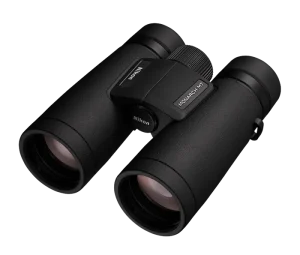 | Nikon MONARCH M7 8×42 | 435 ft | 17.1 mm | Wide-field woodland and mixed-habitat observation | Check PriceAmazon |
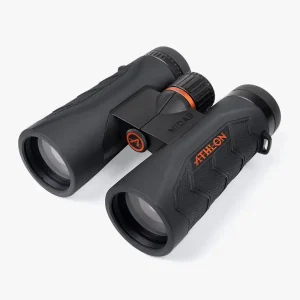 | Athlon Midas G2 UHD 8×42 | 426 ft | 17.2 mm | Closer mixed wildlife and varied viewing positions | Check PriceAmazon |
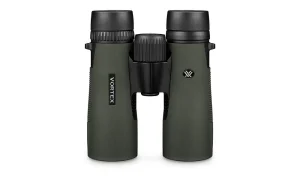 | Vortex Diamondback HD 10×42 | 330 ft | 15.0 mm | Distant open-country mammals and stationary subjects | Check PriceAmazon |
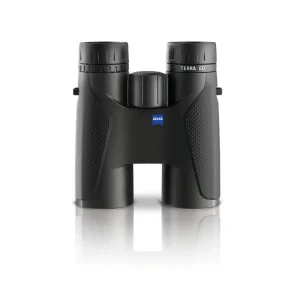 | ZEISS Terra ED 8×42 | 375 ft | 18.0 mm | Longer-eye-relief all-purpose observation | Check PriceAmazon |
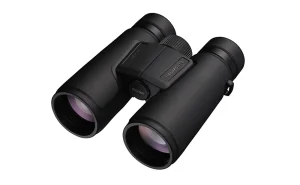 | Nikon MONARCH M5 8×42 | 335 ft | 19.5 mm | Eye-relief-first conventional wildlife viewing | Check PriceAmazon |
Open Amazon for the current price and availability. Confirm the exact model, condition and package contents, including any separately required eyepiece, tripod or accessories. Tax and shipping may affect the total.
How we chose these models
Four 8×42 choices and one 10×42 alternative keep this guide focused on handheld wildlife observation. The Vortex higher-power option addresses distant subjects, while the 8x models provide different balances of field, eye relief, close focus and optical construction. Specialist pocket travel and low-light questions are handled in their own guides rather than being treated as the same buying problem.
- Match magnification to both subject distance and the ability to hold the view steady.
- Compare field width for locating an animal before inspecting detail.
- Check fit, weather protection and carrying needs for the locations where observation is permitted.
These comparisons use manufacturer documentation and published model specifications. We have not conducted hands-on product tests. See how we review optics for the research and correction process.
01 / Wide-field woodland and mixed-habitat observation
Nikon MONARCH M7 8×42
Nikon publishes an unusually broad 435-foot field at 1,000 yards for the MONARCH M7 8×42, alongside 17.1 mm eye relief and an 8.2-foot minimum focusing distance. This combination is appealing when a bird or mammal moves among branches or through uneven vegetation. A broad real field lets the observer retain more of the surrounding scene, increasing the chance that an animal remains within the view while changing position. The 23.6-ounce body is a manageable conventional full-size format rather than an ultralight travel instrument.

Amazon.com
Product image: Nikon.Nikon identifies ED glass, dielectric high-reflective multilayer coatings, phase correction on its roof prisms and nitrogen-filled waterproof construction. The benefit worth investigating is the handling of moving subjects: start with eight-times magnification, find an animal by a landmark and see whether the field width makes follow-up easier. A comfortable grip and smooth focusing action can contribute as much as the published optical figures to useful observations.
The M7 costs more than some basic 8×42 binoculars, and its wide field does not guarantee edge-to-edge clarity for every person’s eyes. Glasses wearers should test whether the 17.1 mm relief and eyecup geometry allow a full circular image. For wildlife almost always watched from a stationary distant ridge, a ten-times format may offer additional apparent image scale. The M7 is our wide-field comparison benchmark, not a claimed firsthand-tested universal winner.
Before buying, check Nikon product code 16765, not another M7 magnification. Compare with the 8×30 version only if reduced carry weight matters more than the larger exit pupil. A user who walks in woods during daylight may prefer this broad eight-times field, while an observer using a distant vehicle turnout might place a higher priority on magnification or eyeglass clearance.
Reasons to choose it
- Broad 435 ft field at 1,000 yards.
- ED glass with a locking diopter and repellent lens coatings.
What to weigh up
- 23.6 oz is a full-size carrying commitment.
- 17.1 mm eye relief may fit differently from longer-eyepoint models.
02 / Closer mixed wildlife and varied viewing positions
Athlon Midas G2 UHD 8×42
Athlon’s Midas G2 UHD 8×42 is another wide-field choice, with 426 feet at 1,000 yards and a 6.5-foot nearest focus. That unusually close figure is relevant to people who alternate between birds in a nearby tree and animals farther into a meadow. The maker lists a 23.3-ounce weight, 17.2 mm eye relief and an interpupillary range of 57–74 mm. These numbers give a clear basis for comparing fit and handling against similarly sized models rather than relying on a vague ultra-high-definition label.

Amazon.com
Product image: Athlon.The manufacturer specifies UHD glass, dielectric-coated prisms, a magnesium chassis, exterior protection coatings and argon purging. A real field test would involve comparing the same shaded tree, distant animal outline and high-contrast branch through this model and competing binoculars in consistent light.
Its 426-foot field is slightly narrower on paper than Nikon M7’s 435 feet, but that small geometric difference does not tell you which instrument will feel more comfortable or render the edges better. Price, eyecup feel, focusing resistance and warranty service may be more important.
Consider this model if garden and trail viewing overlap, especially when you enjoy butterflies, bird feeders and small wildlife encountered at short distances. For remote mountain observations the close-focus advantage may matter very little, so the final decision should instead emphasize steadiness, objective size and true field. Confirm SKU 113009 and the correct 8×42 rather than the similarly named 10×42.
Reasons to choose it
- 426 ft field and 6.5 ft minimum focus.
- 8×42 design with UHD glass and argon purging.
What to weigh up
- 23.3 oz is a full-size carrying load.
- 17.2 mm eye relief does not guarantee fit with every frame.
03 / Distant open-country mammals and stationary subjects
Vortex Diamondback HD 10×42
The Diamondback HD 10×42 differs from the two eight-times choices by putting more apparent image scale into a relatively light body. Vortex specifies a 330-foot field, 15.0 mm eye relief, five-foot close focus and a weight of 21.3 ounces. On a broad grassland where an animal stands far from the observer, ten-times magnification may help examine its head shape or markings without walking closer. This is a legitimate use case, but extra magnification also makes normal hand motion more apparent and reduces the scene available for locating a moving subject.

Amazon.com
Product image: Vortex.The model includes a roof-prism HD optical design, phase-corrected and dielectric-coated prisms, full multicoatings and a waterproof gas-purged body according to Vortex. The maker also promotes a lifetime VIP warranty, which should be read in its current form for the buyer’s region. Those claims help describe build and support, but do not substitute for independent side-by-side measurements of optical performance. A practical trial should compare whether the subject looks more identifiable at 10x while the instrument is held naturally rather than braced against an ideal fixture.
The most important caution is the 15.0 mm eye relief: some spectacle wearers will find that enough, while others lose part of the field. The 330-foot view is materially narrower than the 8×42 Nikon and Athlon candidates. If your wildlife encounters are fast-moving songbirds or animals emerging briefly in thick vegetation, you may spend more time relocating subjects through this higher-power optic. It is better suited to open areas and deliberate long-distance scans.
Check Vortex SKU DB-215 for the exact model and distinguish it from the Diamondback HD 8×42. A 10×42 can be a sensible purchase when you frequently stop at scenic overlooks or wildlife observation platforms and can brace your elbows or use a suitable support. Never approach a large mammal merely because you cannot resolve detail.
Reasons to choose it
- 10x magnification for distant open-country subjects.
- 5 ft close focus in a 21.3 oz body.
What to weigh up
- 15 mm eye relief may restrict the field with glasses.
- 330 ft field is narrower than the wide-field 8×42 choices.
04 / Longer-eye-relief all-purpose observation
ZEISS Terra ED 8×42
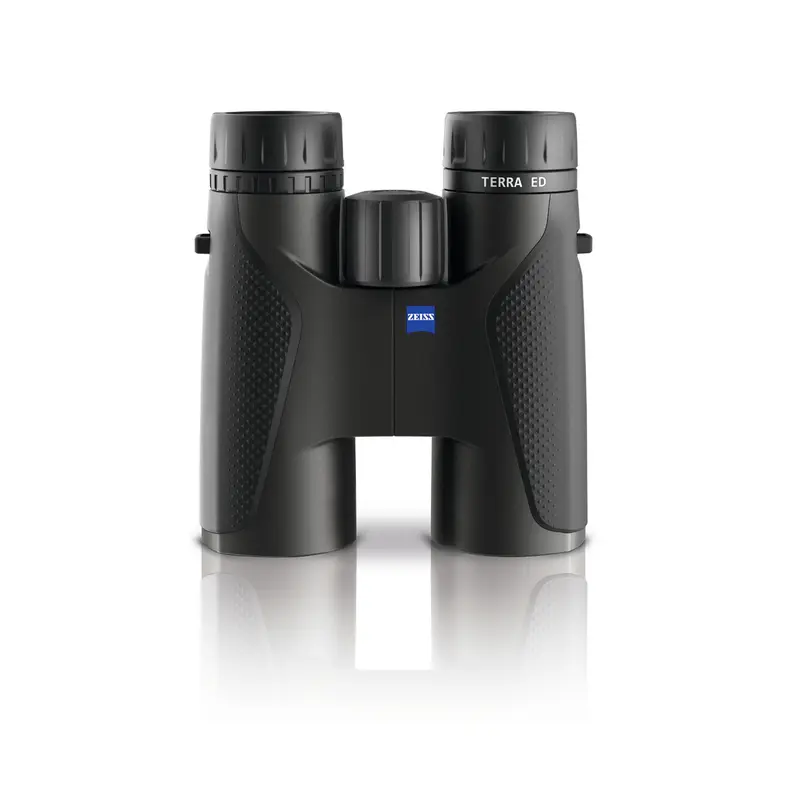
ZEISS lists an 8×42 Terra ED with 375 feet of field at 1,000 yards, 18 mm eye relief, a 5.3-foot closest focus and 25.6-ounce weight. Its field is narrower than Nikon’s M7, but the documented 18 mm relief makes it worth considering when eyeglass comfort is high on the priority list. The five-foot-class focusing ability is also valuable to mixed wildlife observers who enjoy nearby insects or birds. This model should be compared on actual eye placement and handling rather than assuming the best product has the widest nominal field.
Amazon.com
Product image: ZEISS.The manufacturer describes 88 percent light transmission for the current Terra ED 8×42 technical specification, along with nitrogen filling and weather resistance. That published transmission figure applies to the maker’s own testing statement and should not be casually compared with theoretical geometric brightness numbers from other brands. The instrument weighs slightly more than the Nikon and Athlon models, so a long walk may reveal a meaningful carrying compromise. A supportive strap or chest harness can help with transport, though it does not stabilize the view itself.
Someone who wears thick spectacles should try the eyecups with their normal frames to check whether the entire field is visible without pressure. Eighteen millimetres is a useful starting specification, not a universal promise of fit. A narrower field can be less convenient in dense forest when a bird moves quickly, but it may matter little on a stationary observation platform. At 25.6 ounces, the Terra is not the best solution for a person who values minimum backpack weight above all else.
Consult the current ZEISS page for the correct Terra ED 8×42; the 8×32 and pocket 8×25 versions have materially different field, mass and exit pupil figures. Consider this as a comfort-led alternative when you spend long sessions looking from a hide or park bench and appreciate a moderate close-focus range. Do not infer that a named brand guarantees better resolution without a controlled comparison.
Reasons to choose it
- 18 mm eye relief and 5.3 ft close focus.
- Full-size 8×42 format with nitrogen filling.
What to weigh up
- 25.6 oz adds weight on longer walks.
- 375 ft field is narrower than the widest alternatives here.
05 / Eye-relief-first conventional wildlife viewing
Nikon MONARCH M5 8×42
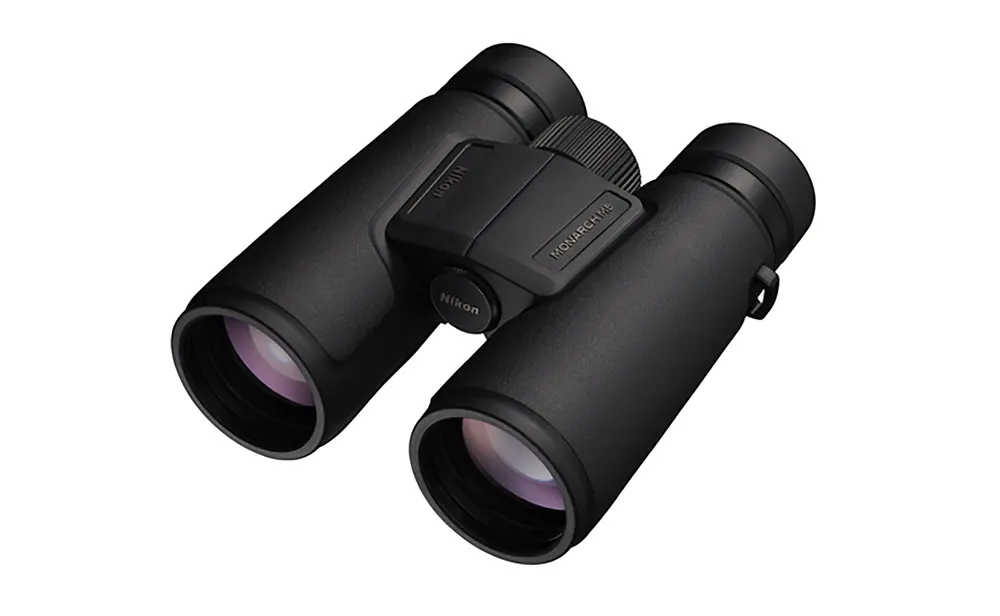
Nikon’s MONARCH M5 8×42 offers a different prioritization from the wide-field M7. The maker lists a 335-foot field at 1,000 yards but a generous 19.5 mm eye relief, an 8.2-foot closest focus and a 22.2-ounce mass. If you wear glasses and primarily watch stationary animals rather than following rapid movement, the larger eye-relief figure could be more valuable than maximum scene width. The M5 also has a relatively modest body weight compared with some premium 8×42 competitors.
Amazon.com
Product image: Nikon.Nikon documents ED glass, dielectric high-reflective multilayer and phase coatings, a reinforced polycarbonate housing, twist-adjustable eyecups, nitrogen filling and waterproof sealing. It is important not to conflate the M5 with the older MONARCH 5 model or assume every Nikon binocular uses the same coatings. The M5 serves as a practical example of how two optics with identical 8×42 format can have substantially different fields and eye relief. That difference affects comfort and wildlife tracking in ways product rankings often overlook.
The 335-foot field is significantly narrower than Nikon M7’s 435-foot field, and the close focus is longer than ZEISS Terra’s five-foot-class figure. These are genuine tradeoffs, not defects. If you mainly observe long-distance shorebirds or open-country mammals, the M5 may still feel comfortable for slow scanning. If fast-moving wildlife is central, its narrower field may make subject acquisition harder. Nikon’s published waterproof claim also includes limits, and the binocular is not designed for underwater usage.
Verify the exact 8×42 item and current authorized U.S. seller before purchase; its U.S. specification page distinguishes 8×42 from 10×42 and 12×42. Consider the M5 as an eyeglass-focused and potentially lower-cost alternative to the M7, then try both in person when possible. A longer eye-relief number cannot guarantee usable full-field vision until eyecup and frame shape have been checked.
Reasons to choose it
- 19.5 mm eye relief in a 22.2 oz 8×42 body.
- ED glass and nitrogen-filled waterproof construction.
What to weigh up
- 335 ft field is relatively narrow for following movement.
- 8.2 ft close focus is less flexible than the shortest-focusing options.
What to consider before buying
How we define wildlife watching
This guide concerns observing wild birds and mammals in parks, forests, grasslands and protected reserves without approaching or disturbing them. The main challenge is acquiring moving subjects at varied distances and seeing enough information to recognize behaviour or visible field marks. It is not a guide to hunting equipment, and it does not claim that ordinary binoculars provide night vision or thermal imaging. We selected models with different real fields, eye relief, close-focus ranges and carrying weights so that choices relate to actual observation rather than an arbitrary numbered ranking.
Why field of view is central to this guide
A wide real field shows more branches, foliage and landscape around the subject. When an animal moves, that context makes it easier to follow without losing orientation. Nikon M7’s 435-foot field and Athlon’s 426 feet are notably broader than Nikon M5’s 335 feet and Vortex Diamondback’s 330 feet at the same standardized distance. These figures describe width, not sharpness at the edge. A glasses wearer unable to see the entire image may not benefit from the nominal width. Assess field and comfort together, especially for woodland observation.
Eight-times versus ten-times for different mammals
Eight-times magnification is often convenient for forest wildlife, parks and near-to-medium distances because the handheld image is relatively forgiving. Ten-times can make faraway mammals appear larger in open terrain, but also amplifies hand shake and often narrows the field. A deer moving through scrub presents a different optical challenge from a distant antelope standing on a ridge. If the subject changes position rapidly, a broad 8x field may be more useful than additional apparent size. Our magnification comparison explains how to test this tradeoff fairly.
Close focus is not only for butterflies
A six-foot minimum focus can be helpful if a bird sits near an observation window or a small mammal appears beside a trail. It does not mean you should approach wildlife to take advantage of that specification. The Athlon and ZEISS models show how some general-purpose 8×42 binoculars combine useful short focus with longer-range functionality. For distant grassland observation, close focus may not matter at all. Choose according to the nearest subjects you normally see from a permitted, safe position, not an imaginary extreme.
The role of eye relief
Eye relief describes where the viewer’s pupil should be behind the eyepiece to see the full field. Glasses may prevent the eyes from reaching that point. Nikon M5’s 19.5 mm and ZEISS Terra’s 18 mm are worth testing, whereas Vortex’s 15 mm may be less forgiving for some faces. But none of those numbers guarantees a comfortable full image, because eyecup depth and frame shape matter. Try the binoculars with your usual prescription glasses. Our glasses-fit guide covers the setup.
Understanding exit pupil without exaggeration
An 8×42 binocular has an approximate exit pupil of 42 divided by eight, or 5.25 mm, while a 10×42 gives 4.2 mm. This can influence eye-position tolerance and how much light may reach a sufficiently dilated pupil. The value does not establish the actual transmission, contrast or perceived brightness of a complete instrument. Coatings and construction also matter. Under bright daylight, the viewer’s own pupil may be smaller than either nominal exit pupil. Treat the calculation as a useful dimension rather than a quality score.
Weight and time carried
A model around 21 ounces may feel substantially different from one above 25 ounces by the end of a long walk, although balance and grip shape are important too. The Diamondback HD 10×42 is relatively light on paper, while the ZEISS Terra 8×42 is heavier. A binocular harness can distribute carrying weight, but does not remove normal handheld shake when you raise the instrument. Plan according to whether most of your day is walking, waiting at a hide or occasionally checking wildlife from a vehicle.
Why coatings do not decide the winner
ED or UHD glass, dielectric prism coatings and phase-correction layers describe aspects of the optical design. They can affect colour fringing, contrast and transmission when implemented well. They do not independently prove that one brand’s binocular is sharper than another. A responsible buyer should combine primary specifications with trustworthy sample-specific independent reviews and, if possible, a side-by-side trial under the same conditions.
Waterproof claims need context
Weather-resistant construction matters for wildlife viewing in dew, rain and humidity. Nikon’s published MONARCH sealing claim explicitly limits the specified immersion conditions and says the devices are not designed for underwater use. Different brands may use different ratings and tests. Do not treat nitrogen or argon purging as unlimited protection against impact or internal damage. After a wet outing, dry the exterior according to the maker’s instructions and store the binoculars appropriately. Care and secure carrying are part of long-term reliability.
How to follow a moving animal
First locate the animal with unaided vision, choose a nearby landmark and raise binoculars to the same point. Use a relaxed stance and keep your elbows supported where comfortable. Rather than chasing the subject with sweeping arm movements, turn your upper body smoothly while maintaining context in the field. If it disappears, lower the instrument and reacquire it without magnification. This technique often helps more than switching immediately to higher power. Our steadiness guide gives practical posture and support options.
Choose a safe observation distance
The U.S. National Park Service urges visitors to use binoculars and zoom lenses instead of moving close to wildlife. Requirements depend on the park, animal and season, so check specific rules rather than relying on a single universal distance. If wildlife reacts to your presence or approaches, follow local safety guidance and create more space where appropriate. No product on this list should be marketed as a tool for approaching dangerous animals more aggressively. Ethical observation improves the likelihood of seeing natural behaviour and protects people and wildlife.
A use-case purchasing checklist
For woodland observation, prioritize a wide usable field and manageable power. For observers wearing glasses, test eye relief and eyecups before buying. For open-country wildlife at long distance, decide whether ten-times magnification remains steady enough to offer useful extra detail. If you carry optics all day, check the actual weight and strap. Then compare the exact manufacturer variant, warranty and retailer return policy. Do not let a single high ranking replace the practical fit of the instrument to your viewing conditions.
Our recommendation framework
For a moving animal in forest cover, the Nikon M7 and Athlon Midas G2 are strong comparison candidates because of their broad documented fields. For greater apparent image scale in open views, compare the Vortex Diamondback HD 10×42, provided the narrower field and shorter eye relief suit you. ZEISS Terra 8×42 and Nikon M5 8×42 offer alternative eyeglass-comfort tradeoffs. None is a verified lab-test winner. Decide by field, focusing, actual viewing position, carry weight and fit before looking at brand reputation.
When a spotting scope is more appropriate
Sometimes binoculars provide insufficient detail on a very distant stationary bird or mammal. A spotting scope mounted on a stable tripod can offer higher apparent magnification, but adds bulk, setup time and a narrower high-power field. If you mostly observe small fast-moving animals, binoculars may remain the more useful tool. For a fixed hide overlooking an estuary or distant open range, a scope can complement the binoculars. Our equipment comparison explains how the two instruments work together.
Final buying perspective
The best wildlife binoculars are the ones you can actually use calmly and comfortably at a safe distance. A wide field can be more valuable than maximum magnification in forest cover; longer eye relief can outweigh field width for a glasses wearer; and a stable ten-times view may be worthwhile for open terrain. Published specifications narrow the options, but do not provide a complete optical test. Confirm prices, availability and return policies for the exact models, then prioritize the binocular that fits your normal observations over a marketing superlative.
Before you choose
Frequently asked questions
Are 8x or 10x binoculars better for wildlife?
Start with 8x for mixed habitats, woodland and moving animals where a manageable view is useful. Consider 10x for more distant subjects in open terrain if you can hold the image steadily. Compare field of view and comfort as well as magnification; extra image scale is only helpful when you can use it.
How much field of view do I need?
There is no single threshold that suits every observer. A broader field can help you find movement and retain surrounding landmarks, while a narrower model may offer other benefits such as longer eye relief. Compare actual views with your usual glasses and focus on how quickly you can relocate a subject.
Will higher magnification let me approach wildlife safely?
Magnification helps you observe from farther away; it does not establish a safe approach distance. Follow local guidance and species-specific restrictions, and move away if your presence changes an animal's behavior. Use optics to preserve distance rather than to justify approaching an animal that should be left undisturbed.
Do wildlife binoculars need a close-focus specification?
It matters if you also enjoy nearby birds, insects or other small subjects. A model with a relatively distant minimum focus can be less versatile in a garden or beside a trail. For mainly distant mammals, field of view, steadiness and carrying comfort may deserve greater priority.
Can these binoculars work at dusk?
They can be used while there is enough natural light for a useful view, but daylight binoculars are not night-vision devices. Objective size, exit pupil, optical design and your eyes all affect the result. Do not assume an HD or ED label establishes a measured low-light advantage over another model.
When should I use a spotting scope instead?
A supported spotting scope can help examine distant, relatively stationary subjects from a fixed viewpoint. Binoculars remain convenient for walking, searching a broad scene and following movement. Consider adding a scope when distance is the recurring limitation, rather than choosing ever-higher handheld magnification without checking stability.
Can one pair cover both local wildlife and travel?
Yes, if its size and viewing characteristics suit both uses. Start with the habitat and light conditions you encounter most often, then consider whether you will carry the same pair throughout a travel day. A full-size model may work well for local observation but spend too much time in the bag on a longer itinerary. Check your own balance of observation time, pack space and carrying comfort before prioritizing one specification.
Sources and buying information
Product details come from manufacturer documentation for the models listed. Use the Amazon buying links for the current offer, seller, condition and package contents.
About the author
Simon Jack
Simon Jack is the named author of FieldLens Guide's research-based binocular, spotting scope and wildlife observation articles. His published editorial approach focuses on verifying model-specific manufacturer specifications, explaining optical tradeoffs in plain language, and matching equipment to real birdwatching, hiking and nature-observation needs. These articles do not claim hands-on product tests unless explicitly documented.