
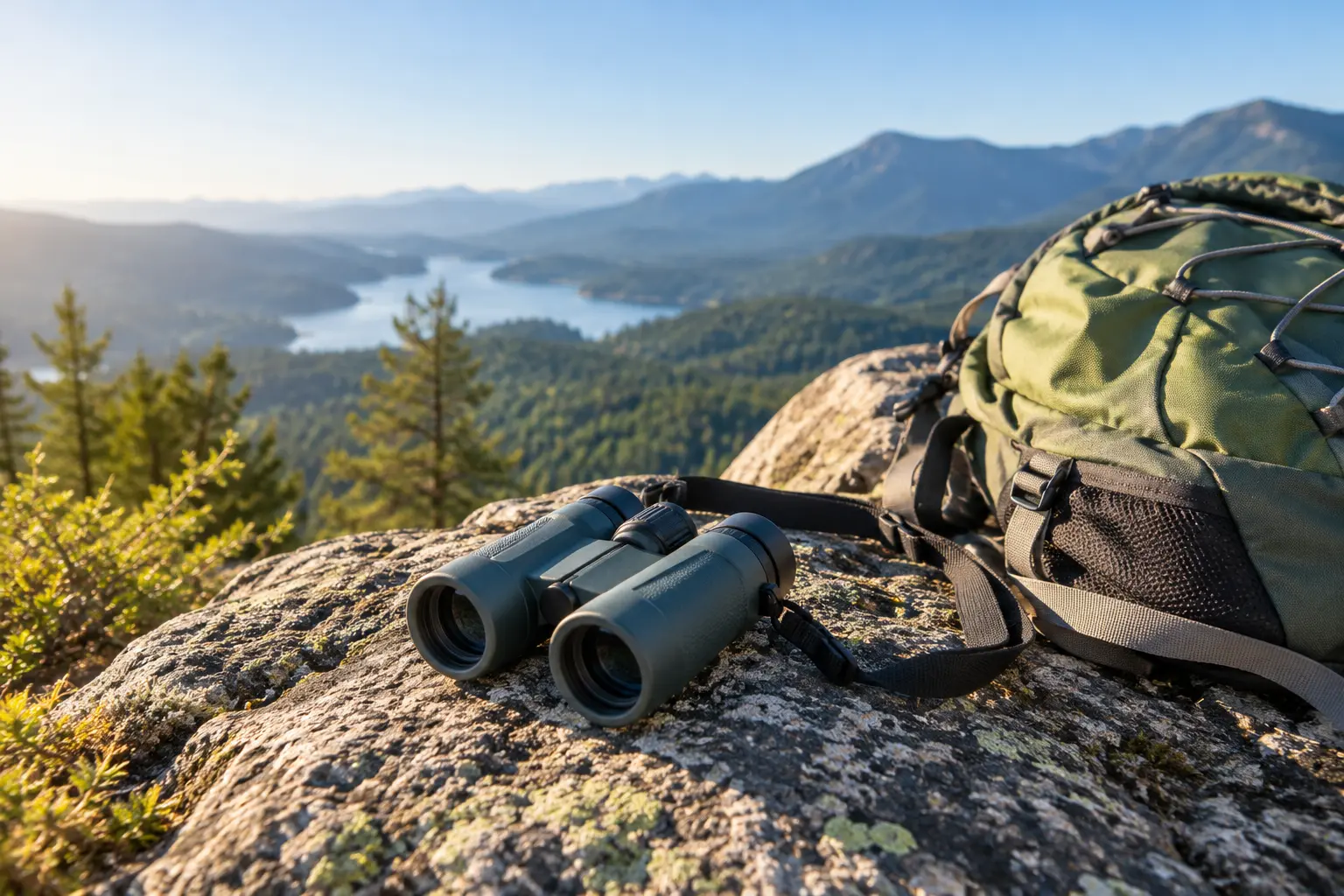
The best binoculars for hiking are the pair you can carry comfortably and reach quickly when wildlife appears. An all-day route rewards a compact body, but the smallest binocular is not always the easiest to hold or use in shaded woodland. Your choice changes if you mainly scan bright mountain scenery, stop frequently for birds or enjoy close views of insects beside the trail. This guide compares seven models across pocket, mid-size and full-size formats, explaining what you gain or give up in field of view, eye relief, close focus, weight and weather protection. Amazon buying links let you check the current cost alongside those practical differences. Use the quick verdict to identify your likely format, then check the table and product sections against the routes and light conditions you expect most often.
Affiliate Disclosure: We may earn a commission at no extra cost to you when you make a qualifying purchase through affiliate links in this guide. Buying buttons open Amazon.com. Read our full affiliate disclosure.
Best Binoculars for Hiking: quick comparison
On smaller screens, swipe across the table to compare all features and buying options.
| Image | Binocular | Ideal hiking use | Weight | View at 1,000 yd | Eye relief | Where to buy |
|---|---|---|---|---|---|---|
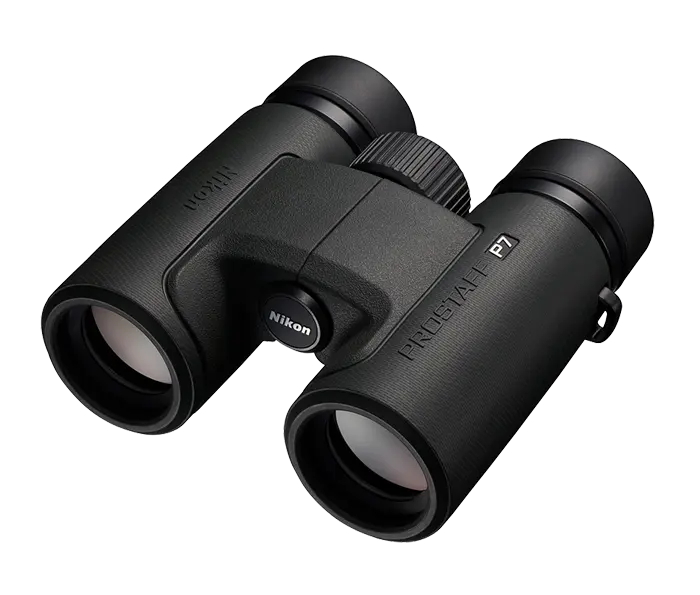 | Nikon PROSTAFF P7 8×30 | Wide-field general hiking | 17.1 oz | 456 ft | 15.4 mm | Check PriceAmazon |
 | Nikon MONARCH M7 8×30 | Premium woodland observation | 16.4 oz | 435 ft | 15.1 mm | Check PriceAmazon |
 | Celestron TrailSeeker ED 8×32 | Weather-ready nature hikes | 17.6 oz | 410 ft | 15.6 mm | Check PriceAmazon |
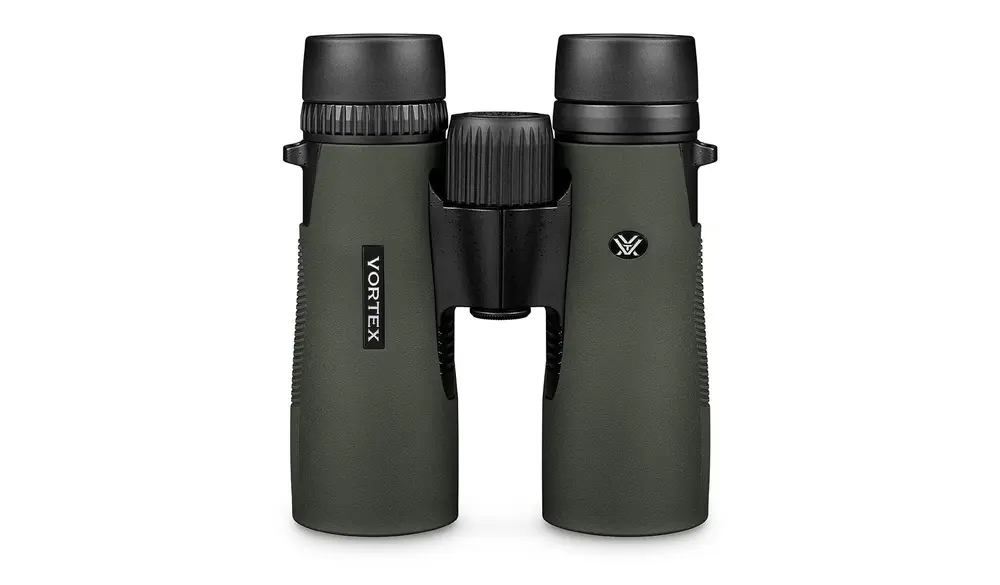 | Vortex Diamondback HD 8×42 | Full-size shaded wildlife viewing | 21.8 oz | 393 ft | 17 mm | Check PriceAmazon |
 | ZEISS Terra ED Pocket 8×25 | Pocket travel and daypack | 10.9 oz | 357 ft | 16 mm | Check PriceAmazon |
 | Vortex Vanquish 8×26 | Light casual hiking | 12.7 oz | 352 ft | 15 mm | Check PriceAmazon |
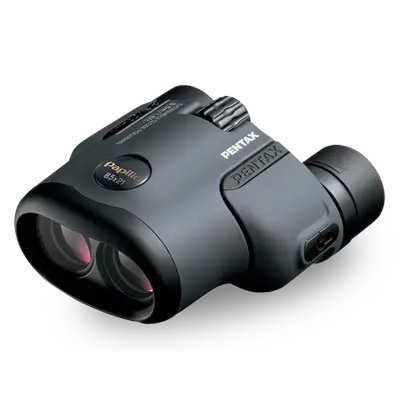 | Pentax Papilio II 8.5×21 | Very close insects and flowers | Approx. 10.2 oz | Approx. 315 ft | 15 mm | Check PriceAmazon |
Open Amazon for the current price and availability. Confirm the exact model, condition and package contents, including any separately required eyepiece, tripod or accessories. Tax and shipping may affect the total.
How we chose these models
The seven choices cover three walking patterns: brief daylight sightings with a pocket pair, regular wildlife stops with compact 30–32 mm models, and more sustained viewing with an 8×42. The Papilio adds a separate close-subject role for insects and flowers. We compare published size, weight, field and focusing limits rather than assuming that the lightest instrument is the best one for every route.
- Include the case and carrying arrangement when deciding what to pack.
- Match objective size to the light in which you usually stop.
- Choose a specialist close-focus model only when nearby subjects are part of the walk.
These comparisons use manufacturer documentation and published model specifications. We have not conducted hands-on product tests. See how we review optics for the research and correction process.
01 / Wide field for moving trail birds
Nikon PROSTAFF P7 8×30
Nikon publishes a light 17.1-ounce body and a broad 456-foot field at 1,000 yards. The combination is worth trying if the objective is to find moving woodland birds while keeping bulk below a conventional full-size 8×42. Eight-times magnification makes handheld scanning manageable for many walkers.
Amazon.com
Product image: Nikon.The P7 is a useful comparison baseline when walking remains the main activity and binoculars come out for brief stops. Put its field width and carrying weight alongside the M7 before spending more on optical features. For regular close insect viewing, compare the specialist Papilio instead of assuming a broad distant view also means short focusing.
Its 15.4 mm eye relief needs careful evaluation with glasses, and the 30 mm objectives have a smaller exit pupil than similar 42 mm formats. Avoid treating a published field width as a measure of edge sharpness.
PROSTAFF P7 8×30 earns a trail role through a notably broad field in a relatively light body. Try following a bird from one branch to another without lowering the binoculars; that tests the field advantage more meaningfully than an optical marketing label. The published eye relief is shorter than on many full-size models, so confirm your glasses can still access enough of the image before treating low carrying weight as the deciding factor.
Reasons to choose it
- Wide 456 ft field at 1,000 yards.
- Compact 8×30 format with a locking diopter.
What to weigh up
- 15.4 mm eye relief may be restrictive with some glasses.
- 8.2 ft close focus is not an insect-specialist distance.
02 / Compact premium birdwatching
Nikon MONARCH M7 8×30
Nikon’s compact MONARCH M7 format combines ED glass with an 8×30 optical size and broad published field. It is worth comparing with PROSTAFF P7 because buyers may value different control feel, coatings and optical correction rather than simply the objective size.
Amazon.com
Product image: Nikon.Choose between this M7 and the P7 by how central birdwatching is to the walk. Both occupy a compact 8×30 format; the M7’s ED glass and closer focus offer different reasons to shortlist it. Those differences deserve more attention on a slow wildlife walk than on a route where the binoculars may stay packed.
It costs more than many basic travel models. The buyer needs to confirm weight, exact version and current U.S. listing; ED glass by itself does not guarantee the clearest image in every condition.
MONARCH M7 8×30 is an alternative for hikers who want a broad eight-times view but carry optics for hours. Compare its grip, balance and focus feel directly with the P7 rather than assuming the premium model must win. If you plan to observe in weak light regularly, consider whether a 30 mm objective is a suitable compromise against the additional weight of 42 mm optics.
Reasons to choose it
- ED glass and a 435 ft field at 1,000 yards.
- 465 g body with 6.6 ft close focus.
What to weigh up
- 15.1 mm eye relief needs careful fitting with glasses.
- A substantial price step above the PROSTAFF P7 8×30.
03 / Jacket-pocket travel convenience
ZEISS Terra ED Pocket 8×25
The 8×25 pocket configuration is designed around portability. It is a plausible alternative for hiking where equipment weight and pack space are critical, and its compact folding body can be easier to stow than 8×42 binoculars.
Amazon.com
Product image: ZEISS.Pocketability is the Terra’s strongest reason to remain in the comparison. Check its folded shape against the pocket or pouch you will actually use, then consider the smaller exit pupil in your usual light. If you frequently stop in shaded woodland, the larger options below deserve a separate comparison before you prioritize folded size.
A 25 mm objective gives a calculated exit pupil of roughly 3.1 mm at 8x, which changes eye positioning and light delivery compared with full-size formats. Verify eye relief and exact generation before deciding.
ZEISS Terra ED Pocket 8×25 emphasizes minimal storage burden. Pack it in the actual pocket or day bag you would use and time how easily it can be removed safely for a sighting. Its small objective creates a narrower nominal exit pupil than an 8×32, so eye placement and glasses fit are especially worth checking. The pocket design suits frequent daylight travel more clearly than stationary dusk observation.
Reasons to choose it
- Folding 8×25 body for small pockets and bags.
- 16 mm eye relief and nitrogen-filled construction.
What to weigh up
- Small exit pupil changes dim-light flexibility.
- The grip and eyecup fit need checking in person.
04 / Simple compact option
Vortex Vanquish 8×26
The reverse-Porro 8×26 design offers a distinct ergonomic and optical layout from small roof-prism pocket models. It is useful to investigate for short daylight walks and occasional nature observation when a compact package is valued.
Amazon.com
Product image: Vortex.The Vanquish offers an alternative grip and barrel arrangement to the small roof-prism choices. Compare how that shape fits your hands, jacket pocket and backpack straps. Its useful role is a compact daylight instrument; the format alone does not establish an image-quality advantage over the other trail choices.
Its architecture and shape will not suit every pocket, and compact magnification cannot replace careful fit and eye-relief testing. Confirm current production and availability for the exact 8×26 before ordering.
Vortex Vanquish 8×26 serves a compact, relatively simple observation role, with a body geometry unlike straight roof-prism pocket models. Test whether the eyepiece spacing and grip suit your hands before prioritizing the listed weight. On a windy overlook, brace your elbows safely and compare the image stability with another eight-times option. Use the precise product generation and manufacturer specifications rather than assuming all small Vortex binoculars share one optical arrangement.
Reasons to choose it
- Compact 8×26 reverse-Porro design.
- 352 ft field in a 12.7 oz body.
What to weigh up
- 15 mm eye relief needs checking with glasses.
- Small objective format favors daylight portability.
05 / Lightweight insects and trail flowers
Pentax Papilio II 8.5×21
A very short approximately 0.5-metre focus is the standout advantage for hikers who pay attention to butterflies, flowers and small insects along the trail. The small objectives allow an easily carried tool suited to bright conditions.
Amazon.com
Product image: Pentax.The Papilio is for a walk that includes deliberate stops for nearby insects, flowers and other small details. Keep it separate from the general-purpose distance-viewing decision. Compare its nearest-focus capability with the size of its objectives and your typical light, rather than assuming that the smallest body must be the most versatile hiking option.
Its 8.5x magnification and 21 mm lenses mean this is not the first choice for dim woodland birding. It has a specialist close-observation purpose rather than being a substitute for an all-round 8×42.
Pentax Papilio II 8.5×21 is a hiking choice only for a particular kind of route—flower-rich trails and nearby insects—rather than distant raptors across a valley. Its unusually short focus can make it worthwhile even with small objectives. Try observing a nearby blossom from an established path, then compare its usefulness for distant birds. Confirm the exact 8.5×21 variant and its weather limitations before putting it into a rainy-hike packing list.
Reasons to choose it
- 0.5 m close focus for nearby insects and small subjects.
- Compact body weighing approximately 290 g.
What to weigh up
- Papilio II is not a waterproof design.
- Small 21 mm objectives and 8.5x power favor daylight use.
06 / Well-documented rain protection for hikers
Celestron TrailSeeker ED 8×32
The TrailSeeker ED 8×32 widens this comparison beyond very compact binoculars. Celestron lists a 17.6-ounce body, a 410-foot field at 1,000 yards, 15.6 mm eye relief and a 6.5-foot close-focus distance. For many hikers this is a practical size between a folding pocket optic and a large 8×42. It can handle both distant birdwatching and nearby insects more flexibly than binoculars with much longer minimum-focus distances. The 32 mm objectives create a nominal 4 mm exit pupil at eight-times magnification, although actual image brightness depends on more than this geometric measurement.
Amazon.com
Product image: Celestron.Where it stands apart is its published environmental specification. Celestron documents IPX7 protection, described as one metre of water exposure for thirty minutes, and nitrogen filling. Its magnesium-alloy body, rubber outer covering, ED lenses and phase- plus dielectric-coated prisms are also identified by the maker. IPX7 does not mean the binocular is designed for underwater viewing, and it does not eliminate the need for safe storage after rain or mud.
The drawbacks are practical. It does not fold as small as a true 8×25 pocket design; at 17.6 ounces, the total carrying kit can be appreciably heavier after a case and harness are added. The 410-foot field is wide enough for many purposes but narrower than Nikon’s published PROSTAFF P7 8×30 field. The 15.6 mm eye relief might also be insufficient for some prescription glasses. Test the eyepieces and use the waterproof hiking comparison if rain is your main selection criterion.
Reasons to choose it
- Defined IPX7 protection: 1 m for 30 minutes.
- 32 mm ED objectives in a mid-size body.
What to weigh up
- 15.6 mm eye relief needs a glasses-on fit check.
- 499 g is more weight than a pocket model.
07 / Full-size alternative for long wildlife stops
Vortex Diamondback HD 8×42
An 8×42 belongs in a true hiking overview because some walkers spend more time watching wildlife than moving between viewpoints. Vortex lists its Diamondback HD 8×42 at 21.8 ounces, with a 393-foot field at 1,000 yards, 17 mm eye relief and a 5-foot close-focus distance. The larger objectives produce a nominal 5.25 mm exit pupil at 8x, versus roughly 3.1 mm for an 8×25. This indicates more geometric pupil headroom, not a measured brightness advantage over every smaller binocular, since glass design and transmission vary.
Amazon.com
Product image: Vortex.The 42 mm format can be worth considering when hikes include shaded forest, early outings or patient wildlife observation from a safe vantage point. Vortex describes fully multicoated optics, gas purging, O-ring sealing and rubber armor, but none of those specifications proves a product survived a particular drop or exceeded competitors in a controlled test. The published eye relief is useful to note for glasses wearers, while still not guaranteeing that every user will see the full field without trying the eyecups.
Carrying weight is the decisive downside. At 21.8 ounces before a case, the Diamondback HD may feel unnecessarily burdensome on steep, long or fast hikes. Its 393-foot field also does not match the especially broad Nikon PROSTAFF P7 8×30 figure, so it should not win purely on its bigger objective. For a small overnight pack, the full-size body may take space away from essential equipment. Choose it only when the extra mass serves the actual viewing task.
Reasons to choose it
- 5 ft close focus for nearby subjects.
- 393 ft field at 1,000 yards in an 8×42 format.
What to weigh up
- 21.8 oz body is bulkier than compact hiking formats.
- 17 mm eye relief still needs a personal glasses-on check.
What to consider before buying
Hiking weight has a cumulative cost
Binoculars spend much of a hiking day around your neck, on a harness or inside a bag rather than at your eyes. Compare measured body mass, strap weight and case bulk, since a difference that seems small in a product description can matter after hours on the trail. A bulky case can make access slow, while an unprotected small binocular risks knocks. Choose a carrying solution that keeps the instrument secure and accessible without restricting movement.
8×30 versus 8×25 versus 8×42
These numbers describe magnification and objective lens diameter. At eight-times magnification, a 30 mm objective produces a calculated exit pupil of 3.75 mm and a 25 mm objective about 3.1 mm, versus 5.25 mm for 8×42. That affects potential light delivery and eye-position tolerance in some conditions, but cannot predict resolution or total transmission. A compact 8×25 may be ideal for sunny travel while a 42 mm option may be preferable for long stationary viewing in shade.
Decide whether birds or landscapes dominate
A birder scanning woodland values field of view, a rapid focusing mechanism and manageable hand shake. A traveller who mostly examines distant landmarks may care more about foldability and pocket fit. Someone watching butterflies along a flower-filled path will find the Papilio’s close-focus purpose meaningful. Avoid buying the smallest possible unit unless its optics and ergonomics remain useful for your actual subjects.
Field width versus apparent detail
A wide field helps locate moving animals, but does not guarantee that its edge is optically sharp. Models can differ in distortion, chromatic aberration and glare. Optical specification sheets provide useful constraints, not a complete review. If possible, look at a dark branch against a bright sky and a detailed object in shade to compare particular instruments.
Packing and access on a trail
Keep the binoculars where you can reach them without opening multiple pack compartments. A harness can spread weight and prevent a pair swinging during a climb. A chest-mounted case protects against rain and grit but may interfere with backpack straps, so try the combined setup. On technical terrain, use the binoculars from stable ground rather than while stepping over obstacles. Safe, quick access matters more than a marketing promise of extreme ruggedness.
Why comfort with glasses matters
Compact binoculars can offer less usable eye relief, especially when eyecups are deeply recessed or folding designs limit how closely glasses approach the eyepiece. Try the actual pair with your spectacles and look for a complete field. Do not decide solely from eye-relief numbers; frame shape and face geometry matter. Our eyeglass comfort guide gives a more complete procedure.
Weather protection in the mountains
Rain, dust, condensation and temperature shifts can affect equipment. Look for the specific waterproof or fogproof statements in the manufacturer’s documentation, and pay attention to stated limits. A claim of nitrogen filling is not proof of resistance to hard falls. Dry the exterior before storing the equipment and inspect straps after heavy use. Avoid cleaning gritty glass with a dry sleeve, since abrasive particles can damage surfaces.
Stability at higher magnification
On a trail your pulse may be elevated and your arms tired, making handheld motion noticeable. Eight-times magnification is often a useful balance for quick observation. High-power binoculars may give a larger apparent view but can be frustrating if they amplify shake and narrow the field. Leaning against a tree or resting elbows can help. A lighter instrument with a comfortable grip may be more useful than a more powerful instrument left in a backpack.
Care for optics during travel
Cover lenses when not viewing and store binoculars where they cannot collide with keys or metal camping accessories. After exposure to salt air or rain, follow manufacturer cleaning procedures instead of spraying unapproved chemicals on coatings. A soft brush or blower can remove grit before a lens cloth is used. Keep warranty paperwork and the exact model identifier if travelling internationally, since service regions can differ.
Lens coatings are not a ranking shortcut
Terms such as ED glass, multicoated and phase correction describe features that may affect the optical system when implemented well. None guarantees that one binocular will be brighter or sharper than every other model. Compare independently measured or carefully described performance whenever available. For a beginner, reliable focus, a comfortable eyepiece and carrying convenience may produce more useful improvement than a small theoretical advantage in glass design.
Close focus helps reveal trail details
Hiking is not only about distant mountains. A very short closest focusing distance lets you observe plant structures and insects without intruding into delicate areas. The Pentax Papilio II is unusual here because close viewing is central to its design. By contrast, a larger binocular optimized for distant wildlife may be more appropriate when you mostly use an observation point several hundred metres from the subject.
Check dimensions as well as weight
A foldable pocket binocular might fit a jacket but feel awkward for someone with large hands, while an 8×30 can be easier to operate with gloves. Check folded size, grip spacing and focusing-wheel placement against your normal hiking clothing. Sometimes a slightly heavier instrument with better control access is the best choice. Lightweight should describe practical carry comfort, not just the smallest number on the specification sheet.
Match the binocular to trip duration
For a short city-park walk, a compact pocket model may be an excellent addition to the day bag. For a full-day wildlife hike in mixed lighting, you may prefer a larger 8×30 or even 8×42. Overnight backpackers need to consider moisture protection and case weight alongside optical performance. The right format depends on the proportion of time the instrument is carried versus actively used.
Check exact models before buying
Product-family names can cover different optical sizes and generations. Verify the magnification, objective diameter, weight, eye relief, manufacturer item number and seller region for your chosen version. A 10x version is not interchangeable with an 8x in a comparison table. Confirm the exact model, package and condition on Amazon before buying.
Choosing the right model from all seven options
A practical shortlist is not a contest to maximize a single specification. Start with your dominant trail task: broad-field birds (Nikon P7 8×30), premium compact birding (Nikon M7 8×30), well-documented rain protection (Celestron TrailSeeker ED 8×32), extended shaded wildlife viewing (Vortex Diamondback HD 8×42), compact travel (ZEISS Terra ED Pocket), lightweight occasional observation (Vortex Vanquish) or nearby insects and flowers (Pentax Papilio II). Remove models that do not suit your principal viewing distance, daylight conditions or eyewear. Compare the remaining alternatives for true field, fitting comfort, weight, documented weather resistance and warranty.
How to choose between backpacking binoculars and general hiking binoculars
On a day hike, a balanced 8×30 or 8×32 with a wide view can be more convenient than a very small pocket design that needs frequent adjustment between users. If binoculars are used repeatedly for birdwatching, small differences in focus operation and eye comfort matter. On a long backpacking trip, a light folding design may be preferable simply because it is the one you can keep accessible while carrying food, water and weather protection. Do not consider bare weight in isolation: the case, strap and how the binocular rests on your body affect real carrying comfort.
If your priority is the smallest travel equipment, compare the pocket binocular guide. If you want to understand how lens size affects carry and viewing, read compact versus full-size binoculars. For birding in bad weather, the narrower waterproof hiking guide explains the ratings in more depth. These supporting articles have different primary search intents from this broader buying guide.
8×25, 8×30, 8×32 or 8×42 for walking trails?
The objective diameter is the second number in the model specification. At 8x, a 25 mm binocular has an exit pupil near 3.1 mm, a 30 mm about 3.75 mm, a 32 mm about 4 mm and a 42 mm 5.25 mm. That is useful background for understanding potential light delivery, but it does not measure contrast, sharpness or transmission. The smallest instrument is often easiest to fit in a pocket; an 8×42 is generally larger and may be more comfortable for some sustained observations. An 8×30 or 8×32 offers a reasonable middle ground for many hikers.
Compare field width, eye relief and how quickly you can find a subject rather than calculating an artificial winner from objective size. A wide field helps acquire moving birds, while short close focus can make butterflies enjoyable. For eyeglass use, eye relief deserves individual consideration. Always verify the exact manufacturer model generation and do not confuse an older Papilio II with the newer Papilio III weather-resistant versions.
Before you choose
Frequently asked questions
What binocular size is best for a full-day hike?
An 8×30 or 8×32 is a useful starting point for many daytime routes because it balances portability and viewing comfort. An 8×25 saves more space; an 8×42 may suit longer stops in shade. Compare the complete carrying setup, including case and strap, rather than body weight alone.
Are 10x binoculars better for mountain scenery?
They can help enlarge distant details when the view is steady and the air is clear. They also magnify hand movement more than 8x, which can matter after a climb or in wind. Check whether the extra power makes subjects easier to identify under the conditions you normally walk in.
Should hiking binoculars be waterproof?
Documented waterproofing is a sensible priority for routes where rain, mist or wet vegetation are likely. Check the actual model's protection claim rather than assuming rubber armor establishes sealing. A waterproof body still needs careful handling, drying and cleaning according to its instructions.
Can a pocket pair replace an 8×42 on every hike?
It can be more convenient for bright daytime sightseeing, but it changes grip, eye placement and low-light flexibility. If wildlife observation is the main purpose of a short woodland walk, you may prefer the larger pair. Choose for your regular use rather than expecting one format to lead in every setting.
How should I carry binoculars with hiking poles?
Use a secure carrying arrangement that keeps the binoculars accessible without interfering with your poles, backpack straps or footing. Try the setup before the walk. Stop in a stable place before lifting the binoculars, and check that loose straps or covers do not catch on vegetation.
Why include a butterfly-focused binocular in a hiking guide?
Some hikers spend as much time observing insects and flowers as distant birds. A very short minimum focus opens up those subjects, but it is a specialist priority and may come with weather or low-light compromises. Treat it as a deliberate choice for that interest, rather than the default all-weather pair.
Sources and buying information
Product details come from manufacturer documentation for the models listed. Use the Amazon buying links for the current offer, seller, condition and package contents.
Related practical guides
About the author
Simon Jack
Simon Jack is the named author of FieldLens Guide's research-based binocular, spotting scope and wildlife observation articles. His published editorial approach focuses on verifying model-specific manufacturer specifications, explaining optical tradeoffs in plain language, and matching equipment to real birdwatching, hiking and nature-observation needs. These articles do not claim hands-on product tests unless explicitly documented.