
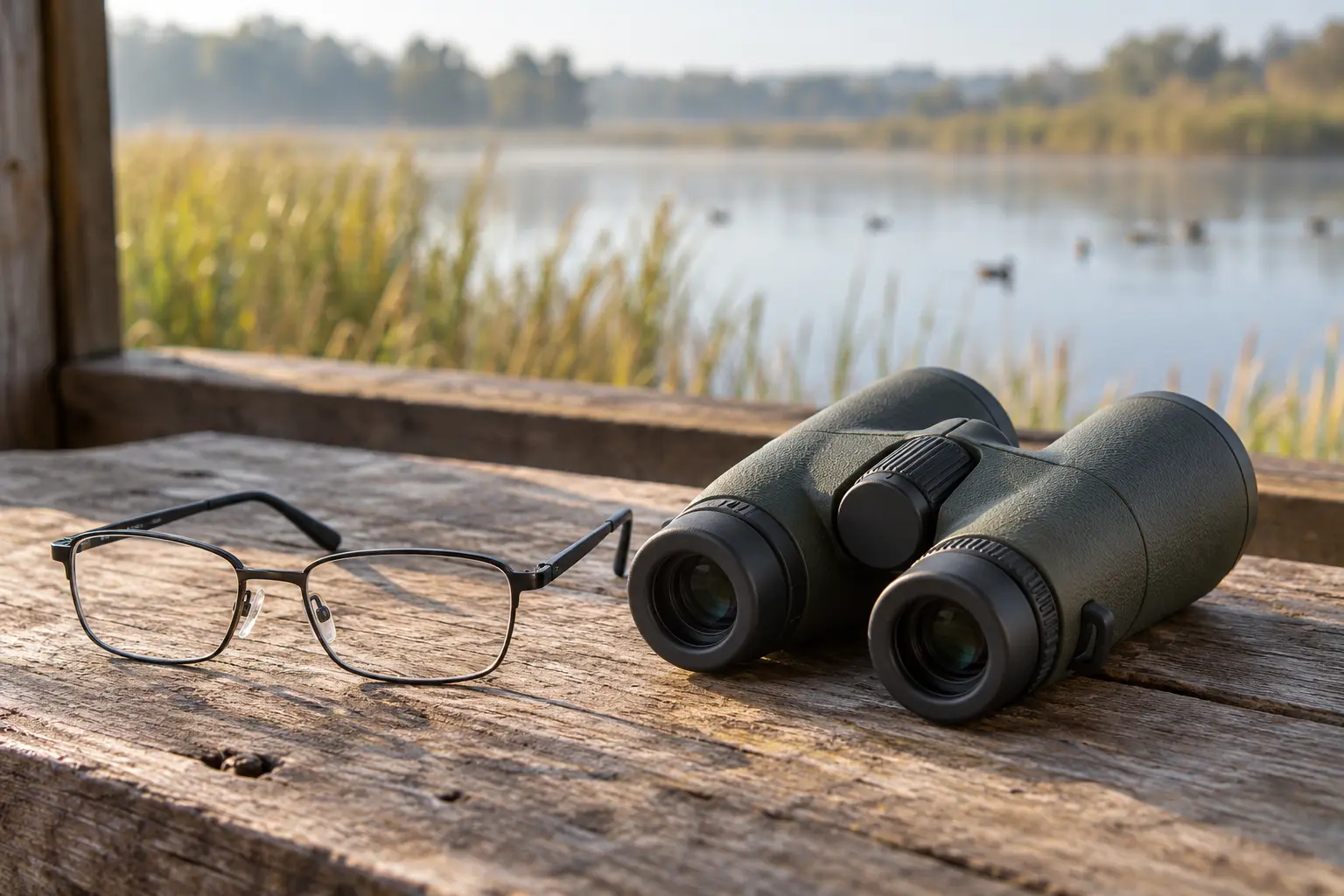
The best binoculars for glasses wearers let you see the whole scene without pressing the eyepieces against your frames. A long eye-relief figure is a useful starting point, but the eyecup shape, your prescription lenses and how the binoculars sit on your face determine whether that view is comfortable. This guide compares five 8×42 models for birdwatchers who keep their glasses on, with attention to usable field of view, close focus, carrying weight and cost. Some favor generous eye relief; others offer closer focusing for feeders or a broader view for following birds through branches. Use the quick verdict to find the most promising starting point, then compare the specifications and practical compromises before arranging a fit check or choosing a retailer with suitable returns.
Affiliate Disclosure: We may earn a commission at no extra cost to you when you make a qualifying purchase through affiliate links in this guide. Buying buttons open Amazon.com. Read our full affiliate disclosure.
Best Binoculars for Glasses Wearers: quick comparison
On smaller screens, swipe across the table to compare all features and buying options.
| Image | Model | Eye relief | Field at 1,000 yd | Close focus | Best use | Where to buy |
|---|---|---|---|---|---|---|
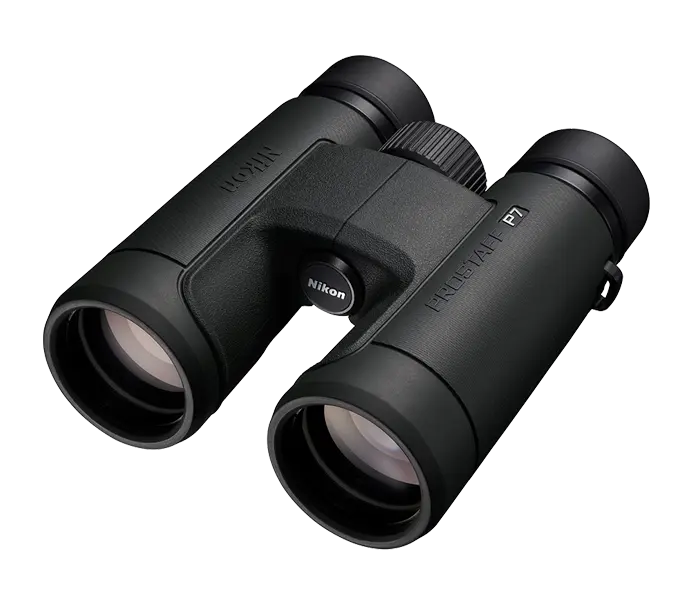 | Nikon PROSTAFF P7 8×42 | 20.2 mm | 377 ft | 9.8 ft | generous published eye relief | Check PriceAmazon |
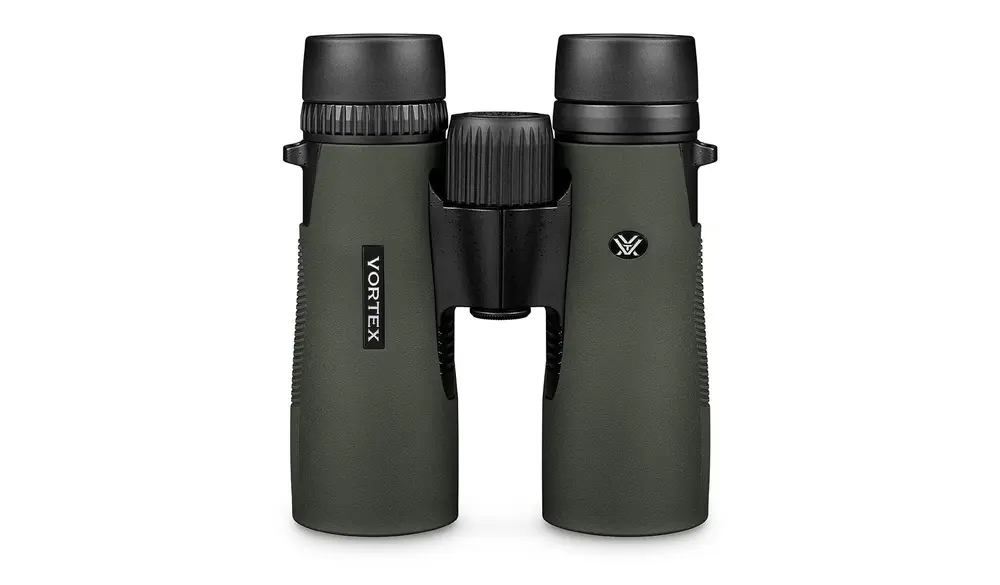 | Vortex Diamondback HD 8×42 | 17.0 mm | 393 ft | 5.0 ft | close-focus flexibility | Check PriceAmazon |
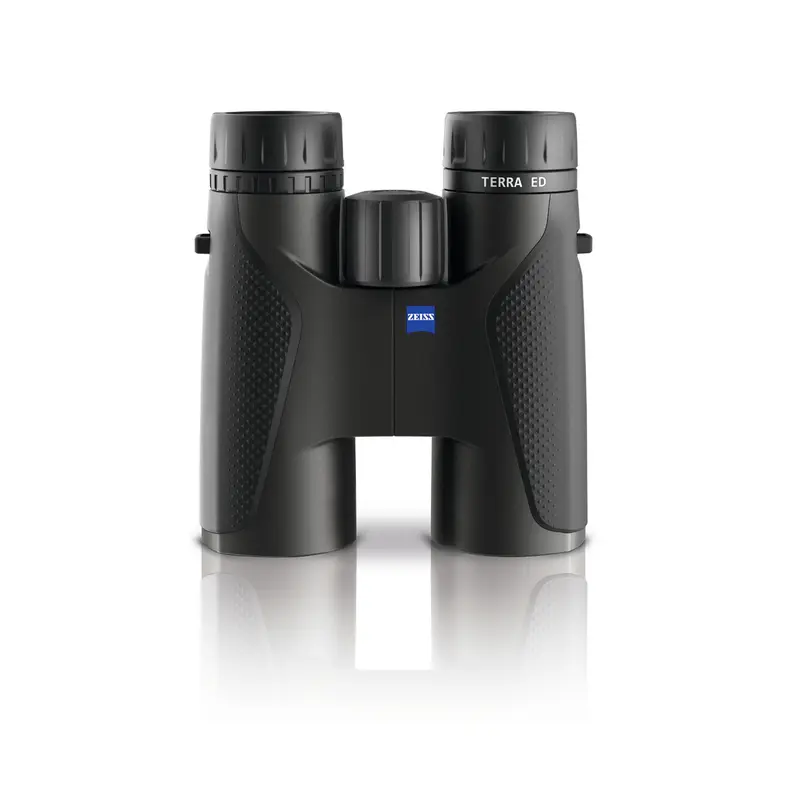 | ZEISS Terra ED 8×42 | 18.0 mm | 375 ft | 5.3 ft | premium all-round specifications | Check PriceAmazon |
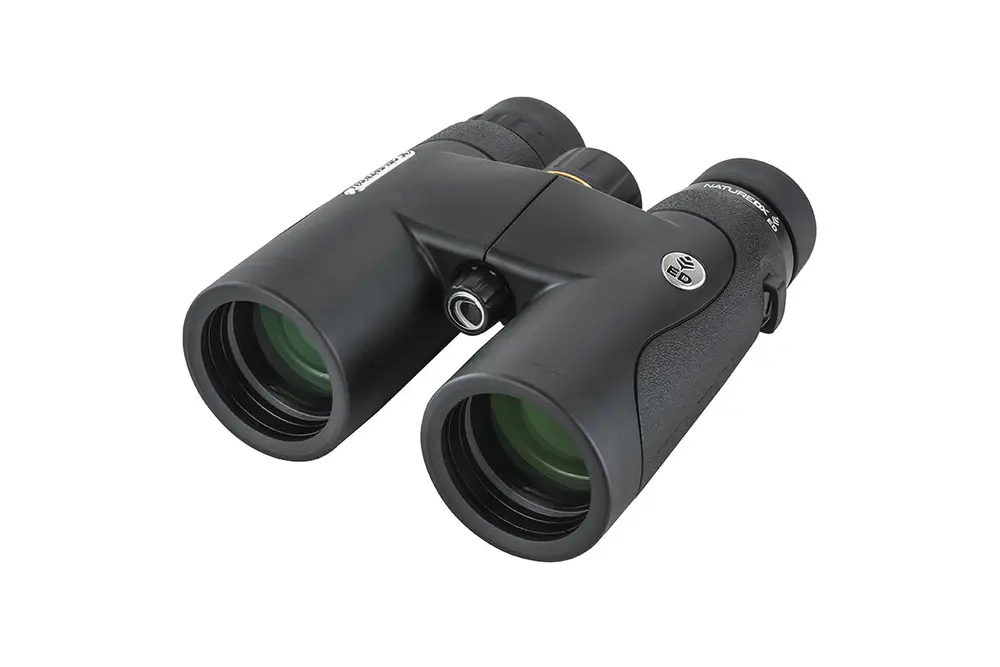 | Celestron Nature DX ED 8×42 | 17.8 mm | 393 ft | 6.5 ft | detailed nearby observation | Check PriceAmazon |
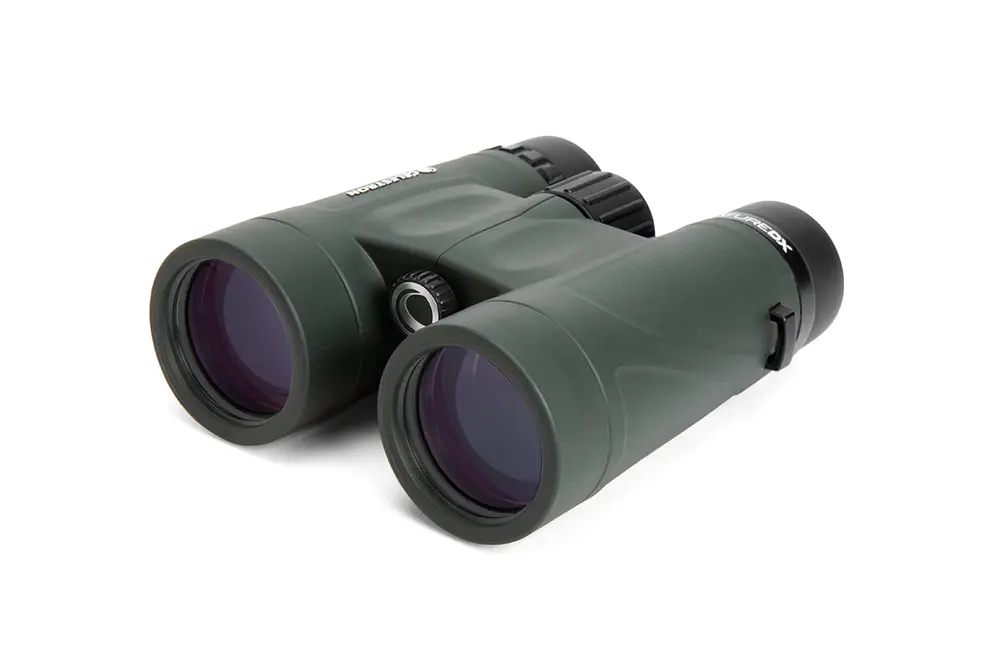 | Celestron Nature DX 8×42 | 17.5 mm | 388 ft | 6.5 ft | Best simpler entry-level alternative | Check PriceAmazon |
Open Amazon for the current price and availability. Confirm the exact model, condition and package contents, including any separately required eyepiece, tripod or accessories. Tax and shipping may affect the total.
How we chose these models
We kept the comparison to five 8×42 binoculars so magnification and objective size would not obscure the question of viewing with glasses. Published eye relief is the first screening value, followed by eyecup adjustment, field of view and close focus. The Nikon P7 supplies the longest listed eye relief here; the other choices show different compromises in nearby focusing, ED glass and cost.
- Compare the nominal eye-relief figures, then check whether your own frames allow the full field.
- Use close focus to distinguish feeder and garden needs from distant birding.
- Treat glasses compatibility as a personal fit check, not a guarantee made from one number.
These comparisons use manufacturer documentation and published model specifications. We have not conducted hands-on product tests. See how we review optics for the research and correction process.
01 / Best for generous published eye relief
Nikon PROSTAFF P7 8×42
The published 20.2 mm eye relief gives this Nikon an especially promising starting point for people whose glasses keep their eyes farther from the eyepieces. At 20.8 ounces it is also relatively manageable for a full-size 8×42. Nikon’s locking diopter is useful when multiple people handle the binoculars because it helps avoid unintentionally changing a carefully set prescription difference.
Amazon.com
Product image: Nikon.Nikon documents nitrogen filling, waterproofing, multilayer coatings and a lens surface treatment intended to repel oil and water.
Prioritize this if full-field visibility with glasses is your first concern and most subjects are at ordinary birdwatching distances.
The 9.8-foot minimum focus is considerably longer than the five- to six-and-a-half-foot specifications of several alternatives here. Anyone hoping to observe butterflies or feeder birds at very short range should take that limitation seriously.
For the PROSTAFF P7, the published long eye relief is the key reason to investigate the model. Retract the eyecups and check the full image circle with your normal glasses before comparing optical impressions. Its relatively narrow field is a meaningful tradeoff if you follow moving woodland birds. Someone observing mainly from a fixed hide may consider eye comfort more important than maximum field width.
Reasons to choose it
- 20.2 mm listed eye relief.
- Locking diopter and oil- and water-repellent lens coatings.
What to weigh up
- 9.8 ft minimum focus limits very nearby subjects.
- 377 ft field is narrower than several wide-field 8×42 alternatives.
02 / Best for close-focus flexibility
Vortex Diamondback HD 8×42
Its advertised five-foot minimum focus is the shortest of the five options selected. That creates a practical advantage for watching nearby birds, dragonflies and other garden subjects. The 393-foot field of view is another reason to consider the model for locating birds in foliage.
Amazon.com
Product image: Vortex.Vortex advertises its VIP warranty and a rugged outdoor-oriented design. Warranty eligibility and exclusions should always be reviewed from the current terms before purchase.
Consider it when you want one binocular for both general birding and nearby nature observation rather than predominantly distant sightings.
The 17 mm eye-relief figure is shorter than Nikon’s 20.2 mm. That does not prove it will be uncomfortable, but it gives shoppers with bulky spectacle frames a strong reason to test the eyecups carefully.
The Diamondback HD offers a different comparison point: its close-focus ability can help with nearby birds, but a glasses wearer still needs to judge actual eyecup clearance. Test a distant sign and nearby branch after setting the diopter correctly. If the usable field clips at the edge or the focus wheel feels awkward, the practical benefit may be smaller than the specification sheet suggests.
Reasons to choose it
- 5 ft close focus for nearby subjects.
- 393 ft field at 1,000 yards in an 8×42 format.
What to weigh up
- 21.8 oz body is bulkier than compact hiking formats.
- 17 mm eye relief still needs a personal glasses-on check.
03 / Best for premium all-round specifications
ZEISS Terra ED 8×42
ZEISS lists an 18 mm viewing distance, an accessible five-and-three-tenths-foot close-focus figure and a 375-foot field of view. The manufacturer identifies ED glass and publishes a light-transmission claim of 88 percent for this line, making it a useful specification-driven contender for people prepared to spend beyond basic entry-level pricing.
Amazon.com
Product image: ZEISS.ZEISS describes a water-resistant housing, nitrogen filling and hydrophobic coatings. Check the precise version because variants and generations can have different specifications.
Best suited to shoppers wanting a premium-brand option with versatile close focus who are comfortable carrying more weight.
At 25.6 ounces, it is noticeably heavier on paper than the Nikon PROSTAFF P7. The published 88-percent transmission is a manufacturer figure; it cannot be used to rank visual brightness against rivals whose transmission was not measured by the same independent method.
ZEISS Terra ED should be tested with the same glasses used outdoors, especially because its body and eyecups feel different from lightweight budget models. Its nominal eye relief is promising, but the fit of the eye socket against a retracted cup matters. Compare the complete visible scene and hand fatigue during a few minutes of observation, not merely the manufacturer name or lens-coating terminology.
Reasons to choose it
- 18 mm eye relief and 5.3 ft close focus.
- Full-size 8×42 format with nitrogen filling.
What to weigh up
- 25.6 oz adds weight on longer walks.
- 375 ft field is narrower than the widest alternatives here.
04 / Best for detailed nearby observation
Celestron Nature DX ED 8×42
The ED version of Celestron’s Nature DX combines a 393-foot published field, 6.5-foot minimum focus and 17.8 mm of advertised eye relief. Its extra-low-dispersion objective glass is intended to limit coloured fringing on contrast boundaries such as dark branches against a bright sky.
Amazon.com
Product image: Celestron.Celestron specifies fully multicoated optics, phase-coated prisms, adjustable eyecups and waterproof nitrogen-filled construction.
Good to shortlist if you value a relatively close viewing distance and want to investigate ED optics without jumping automatically to high-end pricing.
The 24.9-ounce listed weight is not ultralight, and its 17.8 mm eye relief still requires hands-on fit evaluation if you wear glasses with a large offset. The presence of ED glass is not an independent proof that this model outperforms all non-ED competitors.
For Nature DX ED, consider whether its close-focus range adds value to birdwatching from a window or permitted path. Wear your glasses and look at a stationary feeder and a distant tree in turn. Its ED objective design addresses some colour-fringing issues, but that specification alone cannot predict comfort or usable field at the eyepieces. Check the exact ED variant when comparing retailer listings.
Reasons to choose it
- ED optical design with 6.5 ft close focus.
- 393 ft field and 17.8 mm listed eye relief.
What to weigh up
- 24.9 oz manufacturer-listed weight adds to the carrying load.
- Do not confuse this ED version with standard Nature DX.
05 / Best simpler entry-level alternative
Celestron Nature DX 8×42
The standard Nature DX retains a useful 6.5-foot minimum focusing distance and a wide 388-foot published field. Its 17.5 mm eye-relief specification makes it a potential affordable alternative for eyeglass wearers rather than forcing buyers to choose only higher-priced ED products.
Amazon.com
Product image: Celestron.Celestron describes phase-coated BaK-4 prisms, multicoated lenses, adjustable eyecups and waterproof construction. It is a separate model from the Nature DX ED, not an interchangeable product listing.
Investigate this model if your budget is limited, garden viewing is important, and a comfortable trial with your glasses confirms sufficient usable eye relief.
It does not have the ED objective-glass specification of the similarly named Nature DX ED version. Some Celestron pages display inconsistent weight details for the standard model, so the exact SKU and current packaging data should be checked before quoting an absolute weight.
Nature DX is a simpler alternative rather than an interchangeable copy of Nature DX ED. When trying it on, prioritize correct hinge spacing, smoothly adjustable eyecups and a complete circular field through normal prescription frames. Compare real viewing comfort with the price difference, while recognizing that the two variants have different optical construction. A return policy is especially important if the exact non-ED model cannot be tried in person.
Reasons to choose it
- 6.5 ft close focus for garden subjects.
- 388 ft field for finding garden birds.
What to weigh up
- 17.5 mm eye relief requires a personal fit check.
- Standard Nature DX does not use the ED variant’s optical design.
What to consider before buying
What does usable eye relief mean?
Eye relief is the distance from the eyepiece to the intended eye position where the full image can be viewed. Wearing glasses increases the practical spacing between the eyepiece and the pupil. However, published relief is not the same as guaranteed usable clearance from the rim of the eyecup. A model listing 20 mm is promising for some glasses wearers but could still feel awkward, while a 17 or 18 mm model with well-designed eyecups might fit someone else perfectly. When shopping, use the figure to create a shortlist and then evaluate comfort rather than assuming that a single number predicts everyone’s experience.
How to test binoculars while wearing glasses
Put on the actual spectacles used for birdwatching. Turn the eyecups to their lowest position and set the binocular hinge until both images merge into one circle. Focus on a detailed object in the distance, covering each objective alternately while setting the diopter according to the manufacturer’s instructions. Look toward the left and right edge without moving the instrument. If the image cuts off, adjust how the eyecups touch the glasses and experiment with the next available stop. Persistent dark crescents, or a need to press the frames uncomfortably against your face, can indicate a poor fit.
How much eye relief should I choose?
Around 15 mm is a useful initial screening threshold in commonly published binocular guidance, but there is no universal point at which every model becomes glasses-friendly. If you have thick frames, lenses positioned farther from your eyes or strongly recessed eyepiece lenses, more advertised eye relief can create a better shortlist. Always assess the full field of view with your actual eyewear. For detailed fitting guidance, see how much eye relief you need with glasses, our separate informational guide.
Why we chose 8×42 models for this comparison
Eight-times magnification is often easier to hold steadily than ten-times magnification. A 42 mm objective is a versatile general-purpose size for birdwatching and wildlife observation, although the result is not necessarily lighter than a 32 mm design. Using one magnification/objective class here makes the field, weight and eye-relief figures easier to compare. It does not mean people wearing glasses should avoid 8×32 or 10×42 binoculars. If portability matters most, investigate 8×32 vs 8×42 binoculars before making a choice.
Field of view matters beyond eye relief
Published field of view shows how much of the scene fits within the binocular image at a specified distance. A wider view can help you locate a warbler within foliage or follow a bird as it moves across branches. But eyeglass wearers can lose that advantage if they cannot see the field’s edges. This is why eye relief and eyecup position are linked to practical subject acquisition. Compare fields in consistent units and test the full circle; the published number alone tells only part of the story.
Close focus matters for gardens
A short close-focus distance is valuable for butterflies, dragonflies, garden flowers and nearby bird feeders. The Vortex’s published five-foot distance is markedly shorter than the Nikon P7’s 9.8 feet, which may matter if you often observe subjects just outside a window. Conversely, someone who watches waterbirds across a lake may never need a close focus below ten feet. Read our close-focus explanation for how to interpret the number. Do not treat a shorter focus distance as a direct guarantee of greater image quality.
What does ED glass add?
ED means extra-low-dispersion glass. A well-executed ED design can help limit chromatic aberration, which can appear as coloured edges around a high-contrast subject. The effect depends on the full optical system rather than one glass label. The Celestron Nature DX ED and ZEISS Terra ED are appropriate examples to investigate, while the standard Nature DX provides a comparison at potentially lower expenditure. It would be inaccurate to claim that the ED models are definitely sharper without independently comparing samples under the same conditions.
Does exit pupil influence glasses compatibility?
Exit pupil is the illuminated circle of light emerging from an eyepiece, calculated approximately as objective diameter divided by magnification. Every nominal 8×42 format has a calculated exit pupil of 5.25 mm. That does not establish eye relief; a binocular could have a generous exit pupil yet place the intended eye position too close for a glasses wearer. Exit pupil may influence how forgiving the viewing alignment feels, particularly in dim conditions. For the full explanation, see what exit pupil means.
Do you need waterproofing?
Outdoor birdwatching can involve drizzle, humidity, temperature changes and dusty trails. Manufacturer-described waterproof and nitrogen-purged construction offers useful protection, but conditions and ratings differ. Check what the maker actually guarantees: resistance to rain is not permission to submerge equipment beyond the specified limit. Always dry the exterior before long-term storage and follow the cleaning guidance that came with the exact model. Weather resistance is a practical consideration, not proof of shock resistance or indefinite freedom from moisture problems.
How to think about weight and carrying comfort
A binocular that feels comfortable for thirty seconds can become inconvenient during an all-day walk. Review the weight with the strap and case in mind and try carrying the equipment in a harness if neck fatigue is a concern. A heavier instrument is not necessarily harder to hold steadily for everyone; grip shape and balance matter too. Compare not just weights but wheel placement, armour texture and whether your fingers can reach controls while wearing gloves. An instrument that stays in a bag because it is unpleasant to carry is of limited use.
Check the exact model generation and SKU
Brands often sell multiple binoculars with similar names, sometimes differing by one abbreviation. Nature DX and Nature DX ED are distinct variants, while Nikon’s PROSTAFF P7 should not be confused with older PROSTAFF generations. An Amazon search result may feature a different objective size or magnification even when the title looks similar. Verify the 8×42 designation, version, specification sheet and seller listing. Do not copy product specifications from a different model just because the photographs appear similar.
A practical decision process
Start by ruling out instruments that do not let you see the complete field with your prescription glasses. Next match the use case: Nikon P7 for its especially generous published eye relief, Vortex for short close focus, ZEISS for its particular mix of features, or either Celestron for the specific combination of field, focus and pricing available at purchase. Confirm your preferred model’s weight and fit before choosing a brand. Keep a short list of two options, then choose based on the difference that matters to your own observation habits rather than a generic total score.
Compare value and comfort
A worthwhile comparison includes purchase cost, warranty coverage, durability claims, included accessories and comfort. A lower-cost instrument that lets you see the complete image can be a much better purchase than a premium model that does not suit your glasses. Conversely, a more expensive model may justify its price through focusing behaviour or optical clarity if credible tests and personal observation confirm the improvement. Do not rely solely on marketing labels such as HD or premium.
Final verdict
For the most forgiving published eye-relief figure in this particular shortlist, begin your research with the Nikon PROSTAFF P7 8×42. If very close bird or butterfly viewing matters more, compare the Vortex Diamondback HD and ZEISS Terra ED specifications. Celestron’s standard and ED Nature DX versions provide additional alternatives with documented eyecup adjustment and practical fields of view. None is a universal winner for every eyeglass wearer. Try the actual model with your own frames whenever possible and verify the precise Amazon listing before purchasing.
Use your viewing routine to narrow the shortlist
A feeder about seven feet from your usual position
In this situation, first check minimum focus before comparing eye relief. The P7’s listed 9.8 ft minimum would put that feeder too close, even though its eyepoint is generous. The shorter-focusing Vortex, ZEISS and Celestron options deserve attention instead. Then check which one gives you a complete field with your frames. This sequence avoids choosing an otherwise comfortable pair that cannot focus on the birds you bought it to watch.
Long walks with occasional woodland sightings
Here, the immediate fit and carrying arrangement can matter more than the shortest close-focus figure. Raise each candidate several times from your normal strap position. Check whether it meets your glasses naturally, whether the hinge stays at the correct spacing and whether you find a full view without searching for eye position. If two models fit equally well, compare the useful field and carrying weight. Those are practical differences you will encounter repeatedly on a walking route.
One binocular shared by two people
Both users should check the view independently. A setting that suits one person’s frames may not suit the other, and hinge spacing or the diopter may need to change between users. Follow the manual for those adjustments rather than assuming that a shared focus setting is enough. If frequent changes become awkward, consider whether sharing one premium pair is more useful than having separate, comfortable binoculars within the same total household budget.
Two models fit, but their prices differ
At that point, decide which additional feature you will actually use. A shorter minimum focus can be valuable in a small garden; a different focus mechanism may matter during repeated distance changes. Compare the retailer’s final offer and return terms rather than treating manufacturer MSRP as the amount you must pay. A price difference alone does not tell you whether the more expensive binocular will improve your own observation routine.
Before you choose
Frequently asked questions
How much eye relief do I need with glasses?
Start by looking for a generous published figure, then check the actual view. Frames, lens thickness and recessed eyepiece glass can all affect usable eye relief. The right pair lets you see a complete circular field while holding the binoculars naturally, with no need to push your glasses toward your eyes.
Should I twist the eyecups down when wearing glasses?
Usually you begin with the eyecups retracted, following the model's instructions. Some people obtain a better view at an intermediate setting. Adjust the hinge to your eye spacing as well: poor spacing can cause blackouts that look like an eye-relief problem even when the eyecup position is suitable.
Can I take my glasses off and use the diopter instead?
That depends on your prescription and vision needs. A binocular's focus and diopter adjustments do not replace every function of prescription lenses, particularly correction for astigmatism. If you normally need glasses to see distant detail clearly, compare the view with them on before deciding to observe without them.
Does longer eye relief guarantee a wider usable view?
No. It gives your eyes more room behind the eyepiece, but field visibility also depends on eyecup geometry, frame position and correct eye spacing. Compare a distant scene with clear landmarks at the edges and check whether you can see both edges comfortably without repositioning the binoculars.
Can I use the same settings with sunglasses?
Check again with the sunglasses you actually wear outdoors. Wraparound frames and thick lenses can place your eyes differently from ordinary glasses. You may need to change the eyecup position or hinge spacing, and dark lenses will also reduce the light reaching your eyes in shaded conditions.
What should I check during a glasses-on fit trial?
Look for a full field, stable eye placement and easy focus adjustment. Spend several minutes moving between near and distant targets rather than judging one quick view. Check for pressure against the frames, repeated blackouts and whether you can use the binoculars comfortably with your normal strap or harness.
Sources and buying information
Product details come from manufacturer documentation for the models listed. Use the Amazon buying links for the current offer, seller, condition and package contents.
About the author
Simon Jack
Simon Jack is the named author of FieldLens Guide's research-based binocular, spotting scope and wildlife observation articles. His published editorial approach focuses on verifying model-specific manufacturer specifications, explaining optical tradeoffs in plain language, and matching equipment to real birdwatching, hiking and nature-observation needs. These articles do not claim hands-on product tests unless explicitly documented.