

The best binoculars for low light wildlife viewing help you make use of the natural light that remains at dawn, dusk or beneath a shaded canopy. Larger objectives and a generous exit pupil are relevant, but they do not establish which complete binocular will reveal the most detail. Magnification, image steadiness, eye comfort and how quickly you find a moving animal matter too. This guide compares five daylight binoculars with different approaches to those tradeoffs, including four 8×42 models and a larger-objective 10×50 alternative. We use published specifications to explain practical differences in field width, eye placement and carrying weight. These are not night-vision devices. Start with the quick verdict, then choose for your usual light conditions, viewing distance and ability to hold the image comfortably through a long observation session.
Affiliate Disclosure: We may earn a commission at no extra cost to you when you make a qualifying purchase through affiliate links in this guide. Buying buttons open Amazon.com. Read our full affiliate disclosure.
Best Binoculars for Low Light Wildlife Viewing: quick comparison
On smaller screens, swipe across the table to compare all features and buying options.
| Image | Model | Exit pupil (calculated) | Field / 1,000 yd | Primary role | Where to buy |
|---|---|---|---|---|---|
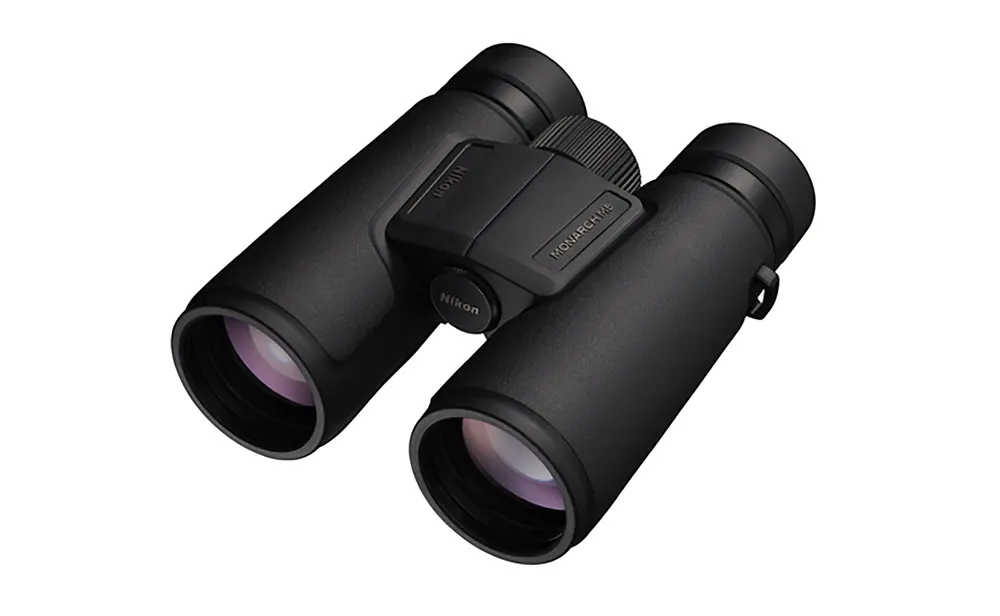 | Nikon MONARCH M5 8×42 | 5.25 mm | 335 ft | Long eye relief for dawn observation with glasses | Check PriceAmazon |
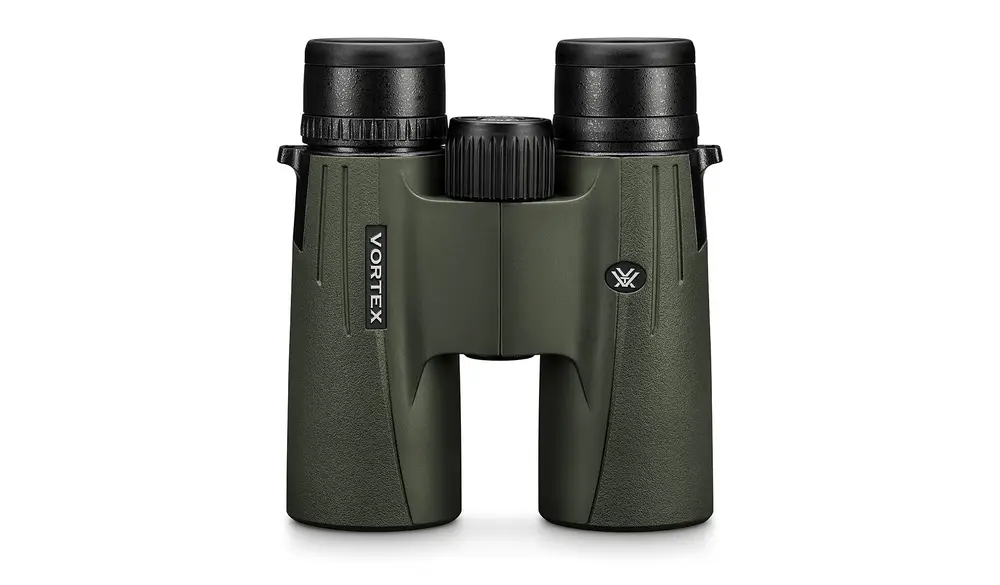 | Vortex Viper HD 8×42 | 5.25 mm | 409 ft | Wide-field premium 8×42 comparison | Check PriceAmazon |
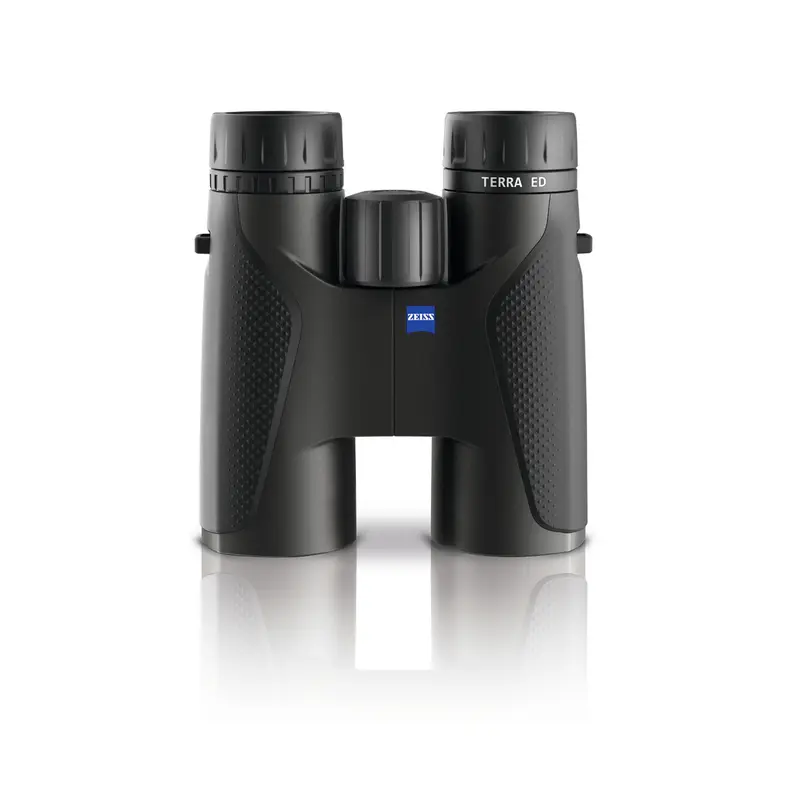 | ZEISS Terra ED 8×42 | 5.25 mm | 375 ft | Manufacturer-stated transmission and comfort | Check PriceAmazon |
 | Athlon Midas G2 UHD 10×50 | 5.0 mm | 341 ft | Larger objective with ten-times distant detail | Check PriceAmazon |
 | Nikon MONARCH M7 8×42 | 5.25 mm | 435 ft | Wide view for moving subjects at dawn | Check PriceAmazon |
Open Amazon for the current price and availability. Confirm the exact model, condition and package contents, including any separately required eyepiece, tripod or accessories. Tax and shipping may affect the total.
How we chose these models
Four 8×42 instruments and one 10×50 alternative show two ways to approach wildlife viewing in weak ambient light. The larger objective of the Athlon changes carrying weight and magnification as well as the calculated exit pupil; it is not included as an automatic brightness winner. The 8×42 options let readers compare fit, optical construction and field width without changing format.
- Separate calculated exit pupil from measured light transmission.
- Account for hand shake and how quickly moving wildlife must be found.
- Keep a safe observation position and realistic ambient-light limits ahead of a theoretical index.
These comparisons use manufacturer documentation and published model specifications. We have not conducted hands-on product tests. See how we review optics for the research and correction process.
01 / Long eye relief for dawn observation with glasses
Nikon MONARCH M5 8×42
The MONARCH M5 8×42 is a practical entry in a low-light shortlist not because Nikon publishes a comparative night-performance score, but because it combines a 5.25 mm geometric exit pupil with especially generous 19.5 mm eye relief. The manufacturer lists 335 feet of field at 1,000 yards, an 8.2-foot close-focus distance and a 22.2-ounce body. A glasses wearer observing wildlife from a safe hide at first light may find the viewing position more comfortable than shorter-relief eyepieces, although fit must be tested personally.
Amazon.com
Product image: Nikon.Nikon documents extra-low-dispersion objective glass, dielectric high-reflective roof-prism coatings, phase correction and waterproof nitrogen-filled construction. At modest eight-times magnification, hand movement is generally less evident than with higher powers. A stable comfortable view may help identify a deer or bird when visible contrast is already limited by weak ambient light.
Its narrower 335-foot field may make locating a moving animal harder than through the M7 or Viper. The long eye relief does not guarantee the entire image with every eyeglass frame, since eyecup design and recessed glass matter. The M5 is not night vision and does not create details in darkness; it needs available light. Nikon explicitly states that its published waterproof immersion tolerance is limited and that the binoculars are not designed for underwater viewing.
Choose the M5 if eyeglasses and comfortable prolonged observation are central, and most animals are located before you lift the binoculars. If fast-moving silhouettes at dawn are common, test a wider-field 8×42 before choosing. Verify the exact M5 8×42 rather than M5 10×42, whose exit pupil and eye relief differ.
Reasons to choose it
- 19.5 mm eye relief in a 22.2 oz 8×42 body.
- ED glass and nitrogen-filled waterproof construction.
What to weigh up
- 335 ft field is relatively narrow for following movement.
- 8.2 ft close focus is less flexible than the shortest-focusing options.
02 / Wide-field premium 8×42 comparison
Vortex Viper HD 8×42
The Vortex Viper HD 8×42 combines a wide 409-foot stated field at 1,000 yards with 18.0 mm eye relief. Its eight-times power and 42 mm objectives give a calculated 5.25 mm exit pupil, a useful geometry for retaining a comfortable image in changing light. The wide field is especially relevant when moving wildlife appears briefly against shaded branches, where reacquiring the target may be harder than resolving subtle feather detail. Vortex positions the model as an outdoor premium option with a current U.S.
Amazon.com
Product image: Vortex.The manufacturer describes an HD optical system, dielectric prism coatings, multicoated lenses and weather-resistant construction. Because the Viper has the same objective diameter and magnification as Nikon M5 and M7, differences in perceived dim-light performance cannot be inferred just from exit pupil; coatings, transmission and sample-specific optical quality would need careful evaluation.
The price is considerably higher than some basic 8×42 alternatives, so the value case should be assessed against real improvement you can perceive, not a high-end label. An 18.0 mm eyepiece figure is helpful but still requires a glasses fit test. A wider field can assist target acquisition, yet no published figure here proves that its field edge is equally sharp or that its image is brighter than every less expensive choice.
Consider the Viper for frequent wildlife watching when a wide usable field, extended viewing comfort and manufacturer support matter enough to justify a premium spend. Compare the fit with the Nikon M7 and Terra ED using the same shaded subject if possible. Verify Vortex SKU V200 and current retailer terms before purchase.
Reasons to choose it
- 409 ft field at 1,000 yards.
- 8×42 format with 18 mm eye relief.
What to weigh up
- A premium model whose total cost needs a current offer check.
- A full-size body still needs comfortable carrying and grip.
03 / Manufacturer-stated transmission and comfort
ZEISS Terra ED 8×42
ZEISS publishes an 88 percent light-transmission specification for the current Terra ED 8×42, alongside an 18 mm eyepiece distance, 375 feet of field at 1,000 yards and 25.6 ounces of body weight. The instrument has a 42 mm objective, giving the same nominal 5.25 mm exit pupil as other 8×42 candidates. The distinctive element is that ZEISS actually supplies a numerical transmission figure, although it must not be compared with an unstated and unmeasured figure for another manufacturer’s product.
Amazon.com
Product image: ZEISS.For wildlife observed during dim but usable dawn or evening light, contrast, optical transmission and the ability to hold the instrument steadily may be important. The Terra ED technical information describes nitrogen filling, exterior water resistance and 5.3-foot closest focus. Its eyepiece design is worth checking if you wear glasses; the published 18 mm distance is only the beginning of an individual fit assessment. This model offers a clear alternative from a different manufacturer’s optical and mechanical design.
The 25.6-ounce listed mass exceeds several comparable 8×42 models, which may matter during long walks between observation points. The field is narrower than Nikon M7’s 435 feet and Vortex Viper’s 409 feet, potentially complicating sudden target acquisition in foliage. ZEISS’s 88 percent transmission claim applies to its own published test context and should not be turned into a percentage advantage over another product without comparable measurements.
Choose the Terra when you want documented transmission data and are comfortable with its carrying weight. It is particularly relevant for someone who mostly watches from stable positions rather than moving rapidly all day. Confirm the Terra ED 8×42—not 8×32 or a pocket version—which carries different physical and optical specifications.
Reasons to choose it
- 18 mm eye relief and 5.3 ft close focus.
- Full-size 8×42 format with nitrogen filling.
What to weigh up
- 25.6 oz adds weight on longer walks.
- 375 ft field is narrower than the widest alternatives here.
04 / Larger objective with ten-times distant detail
Athlon Midas G2 UHD 10×50
Athlon’s Midas G2 UHD 10×50 has a 50 mm objective and ten-times magnification, producing a calculated 5.0 mm exit pupil. That is actually slightly smaller than the 5.25 mm value of an 8×42, an important correction to the assumption that a larger front lens automatically creates a bigger exit pupil. Athlon publishes 341 feet of field at 1,000 yards, 16.9 mm eye relief, a 9.8-foot close-focus distance and a weight of 28.5 ounces. It is a substantial instrument relative to the 8×42 models.
Amazon.com
Product image: Athlon.The maker describes UHD glass, dielectric prism coatings, magnesium chassis, protective exterior lens coatings and argon-purged construction. An observer who watches distant mammals at a fixed safe viewpoint may value the additional image scale of ten-times power in the last usable light. But that enlargement brings more visible hand shake and generally a narrower field. Actual twilight detail depends on transmission, contrast, atmospheric conditions and steadiness rather than objective diameter alone.
Its 28.5-ounce weight can be tiring to carry and hold through an extended session. The higher power means small motion may spoil precisely the faint detail being sought. The 16.9 mm relief may suit some spectacle wearers and not others. This model should not be described as objectively brighter than all 8×42 competitors; such a claim would need measurements and matched conditions.
Consider the 10×50 when your usual observation is distant and relatively stationary, such as mammals across an open field, and you can brace yourself or use an appropriate support. If wildlife appears unpredictably in dense trees, a wider-field eight-times model may produce more useful sightings. Verify SKU 113007 and distinguish it from Midas 10×42 and 12×50.
Reasons to choose it
- 10x magnification with 50 mm objectives.
- 341 ft field and a calculated 5 mm exit pupil.
What to weigh up
- More size and weight than compact hiking formats.
- Higher magnification also makes hand movement more apparent.
05 / Wide view for moving subjects at dawn
Nikon MONARCH M7 8×42
Nikon’s MONARCH M7 8×42 offers an 8.3-degree real field or 435 feet at 1,000 yards, one of the broadest views among these models. Its 17.1 mm eye relief, 8.2-foot minimum focus and 23.6-ounce weight define a conventional full-size but not excessively heavy observation format. At dawn, a wide view can help an observer locate a deer moving through shadowed grass or a bird crossing a dark canopy without repeatedly scanning an extremely narrow field. The nominal exit pupil is about 5.25 mm.
Amazon.com
Product image: Nikon.The official specification identifies ED glass, dielectric prism coatings, phase correction and waterproof nitrogen-filled construction. These details support a technically informed description, but not a claim that Nikon M7 always transmits more light than M5 or ZEISS Terra. More surrounding landscape is visible, giving a better chance of noticing motion during the brief period an animal crosses an opening.
The larger field comes with shorter published eye relief than the M5’s 19.5 mm. Some people wearing thick frames may prefer the M5 despite its considerably narrower view. The M7 is also higher priced in Nikon’s line and should not be chosen automatically on the basis of a wider specification. A manufacturer field value tells nothing about how the edges are rendered at low light or whether the particular observer finds focusing comfortable.
Choose M7 if moving wildlife in mixed cover is the dominant problem and you find its eyepieces comfortable. Compare it directly with M5 on a branch in shade and a distant subject while light remains safe to navigate. Verify Nikon product 16765 and the correct 8×42 body rather than a 10×42 or 8×30 version.
Reasons to choose it
- Broad 435 ft field at 1,000 yards.
- ED glass with a locking diopter and repellent lens coatings.
What to weigh up
- 23.6 oz is a full-size carrying commitment.
- 17.1 mm eye relief may fit differently from longer-eyepoint models.
What to consider before buying
What low light does and does not mean
This guide covers wildlife observation in fading natural daylight, shaded forest or dawn and dusk—conditions where a conventional optical binocular still has usable ambient light. It does not cover imaging in complete darkness. Ordinary binoculars cannot create light that is not present; they are not thermal or digital night-vision devices. No model here should be promoted as a way to identify animals safely in pitch-dark conditions. Plan your route and local access rules so you can return before visibility becomes unsafe. Good wildlife observation begins with adequate safety, not an attempt to stretch a twilight marketing claim into night vision.
Exit pupil is a geometric quantity
Divide objective diameter by magnification to estimate exit pupil. An 8×42 offers roughly 5.25 mm, while a 10×50 gives about 5.0 mm. A larger objective can produce a smaller exit pupil when paired with higher magnification. The diameter of the viewer’s own pupil changes with light and age, and coatings and transmission affect how much light actually reaches the eye. A published relative-brightness number is sometimes the square of exit pupil; it is not a laboratory measurement of real image luminance. Read our exit-pupil guide for interpretation.
Why transmission figures need caution
ZEISS publishes an 88 percent light-transmission figure for Terra ED 8×42, but most competitors in this shortlist do not publish directly comparable measurements under the same testing protocol. It is misleading to state that ZEISS is eight percent brighter or that one company’s coating is superior because another company’s number is absent. Complete optical transmission varies with wavelength and design. Independent matched laboratory data would be needed for a rigorous ranking.
Magnification versus steadiness in twilight
At weak light levels, the visible image may already have reduced contrast. Ten-times magnification can make a subject appear larger while also making involuntary hand movement more noticeable. If that shake smears subtle details, an eight-times model can be more useful. A supported ten-times view may offer advantages for a stationary distant animal, especially from a hide. Test both magnifications at realistic light levels without risking an unsafe position. Magnification should be selected for identifiable detail, not the assumption that a larger image must be clearer.
Field width helps catch brief movement
Wildlife at dawn may be visible only briefly when crossing a clearing or moving between shaded trees. A broader field gives the observer more context and may make it easier to locate the animal without excessive panning. Nikon M7’s field is substantially wider than M5’s, a genuine use-case distinction even though both are 8×42. Eye relief, edge image quality and fit remain relevant. The broadest nominal field is not automatically best for everyone, but it can solve a real target-acquisition problem in mixed cover.
Eye relief at the beginning and end of day
Prescription glasses can reduce how much of the field you see because the frames hold your eyes behind the eyecups. Longer published eye relief may help, but recessed lenses and eyecup geometry make fit personal. Nikon M5’s 19.5 mm and Vortex Viper’s 18 mm deserve attention among glasses wearers. Test with the exact spectacles used outdoors and verify the entire circular field while viewing a stationary subject. Losing the outer view can negate the advantage of expensive wide-field optics, especially when identifying motion at the edges.
The role of contrast and colour fringing
Good optical correction can help make the outline of a bird or mammal easier to recognize against difficult backgrounds. ED and UHD glass, prism phase correction and multicoatings are intended to improve aspects of image performance, but they are not sufficient evidence of an absolute winner. Contrast depends on optical design, lens cleanliness, stray-light handling and actual lighting. If comparing two binoculars in person, focus on the same shaded target and note usable central detail rather than relying on colour-rich product photography.
Why a bigger lens can still be awkward
A 50 mm model may provide advantages in potential light gathering at equal magnification, but typically adds weight and bulk. Athlon’s 28.5-ounce 10×50 is heavier than most 8×42 options in this shortlist. Carrying fatigue and hand shake can reduce the benefit of an otherwise capable optical design. If most viewing follows a lengthy hike, a lighter 8×42 that you hold steadily may perform better for your particular use. For a vehicle-based hide with a stable rail or rest, the tradeoff can be different.
Prepare the viewing site before dusk
Arrive with enough time to choose safe ground, identify landmarks, set up any tripod and understand access restrictions. Do not attempt to observe from unstable banks, closed trails or dangerous wildlife corridors as daylight fades. If using a vehicle, stop only in permitted safe places and do not operate binoculars while driving. Carry appropriate navigation and safety equipment according to local rules. Magnification reduces awareness of the immediate surroundings, so lower the binoculars frequently and reassess the landscape. An observation should end when conditions make navigation or wildlife safety uncertain.
Do not approach animals to compensate for poor light
A fading image does not justify moving closer to a potentially dangerous mammal or disturbing a resting or feeding animal. The National Park Service recommends keeping distance and using optics, and stresses that local rules can vary by species and site. If an animal changes behaviour when you appear, it may already be too close. Avoid flashlights directed at animals solely to create a clearer binocular view unless a permitted wildlife program explicitly supports that practice. Treat ethics and safety as higher priorities than obtaining a dramatic twilight sighting.
An effective dawn observation method
From a secure established viewpoint, begin by scanning without magnification and looking for movement at woodland edges or along a shoreline. Raise binoculars toward a known landmark, focus gently and pause to let your arms settle. Use the lower-power model if shake makes outlines difficult to resolve. Record broad visible features such as silhouette, posture and movement before attempting tiny markings. If identification remains uncertain, leave it at the most defensible level. Continuing safely to observe behaviour may teach more than forcing a species name from an indistinct silhouette.
What an indoor store comparison cannot show
A brightly lit retail display may make an expensive optic look impressive without revealing how it behaves in true low contrast. Test instruments outside or through a retailer’s permitted sample-viewing area when possible, using the same stationary shaded subject. Do not compare one model in bright sunlight with another from a dim corner. Low-light testing should control the viewing position, target, time and optical setup. Without those conditions, assertions that one binocular is brighter from memory alone are unreliable.
When stabilization matters more than aperture
A steady view can reveal more usable detail than a larger but shaking image. Brace elbows against the torso, use a secure railing where permitted, or consider a stable seat at a hide. Tripod-capable binoculars may benefit from supported viewing for extended distant observation. Our steadiness guide covers safe techniques. These methods do not change the optic’s actual light transmission, but can make the information that is present in the image easier for the brain to interpret.
A practical buying framework
Start by deciding whether your main low-light difficulty is detecting moving animals, seeing detail at a distant static viewpoint or wearing glasses comfortably. Wide-field 8×42 models address the first, higher apparent magnification with a stable support may help the second, and eye-relief fit is central to the third. Check current model-specific specifications and the exact merchant offer. Do not let the largest objective or boldest low-light advertising label decide alone. The best instrument is the one that delivers the most recognizable real detail in your intended legal and safe viewing conditions.
Final low-light shortlist advice
Nikon M5 is worth comparing if generous eye relief is crucial; Vortex Viper and Nikon M7 offer relatively broad fields for moving subjects in shade. ZEISS Terra is distinctive for publishing a numerical transmission specification, while Athlon Midas 10×50 is a heavier high-power option for distant stationary wildlife. None is a scientifically established winner from the data gathered here. Choose a model that you can hold steadily, fit comfortably and use safely under the light conditions in which you normally observe wildlife.
Before you choose
Frequently asked questions
Are low-light binoculars the same as night vision?
No. Conventional binoculars use the light available in the scene and do not create a useful image in complete darkness. Night-vision and thermal devices use different technologies. Decide whether you want daylight optics for dawn and dusk or equipment for a different kind of observation before comparing specifications.
Is 10×50 always brighter than 8×42?
No. The formats have similar calculated exit pupils: 5 mm for 10×50 and 5.25 mm for 8×42. Transmission, optical design and your eyes also matter, and the extra magnification can make hand movement more noticeable. Compare complete models in the conditions and at the distances you expect to use.
Does a high twilight factor prove better dusk performance?
It is a calculation based on magnification and objective size, rather than a measurement of the finished binocular's light transmission, contrast or handling. It can describe part of the format, but should not be used alone to rank low-light image quality. Comfort and a stable view remain important. A high calculated number cannot compensate for a view that is difficult to hold steady or eyepieces that do not fit.
Should glasses wearers prioritize eye relief at dawn?
A comfortable full field is important in any light. Check eye relief and eyecup fit with your normal glasses, because repeated blackouts or awkward head position make observation harder. Dark sunglasses will also reduce the light reaching your eyes, so compare with the eyewear you will actually use at dawn.
How can I improve a dim, shaky view?
Stop moving, find stable footing and support your posture without disturbing wildlife. Adjust eyecups and focus carefully, and consider whether less magnification or a more comfortable binocular would help. When natural light becomes too limited for useful identification, avoid forcing a conclusion from an indistinct shape.
Can I compare manufacturer transmission percentages directly?
Only with care, because the published figure and measurement method may differ between products. A transmission percentage is not the same as a calculated exit pupil or relative-brightness number. Use documented specifications to shortlist models, and avoid turning unlike claims into a precise comparative brightness ranking.
Sources and buying information
Product details come from manufacturer documentation for the models listed. Use the Amazon buying links for the current offer, seller, condition and package contents.
About the author
Simon Jack
Simon Jack is the named author of FieldLens Guide's research-based binocular, spotting scope and wildlife observation articles. His published editorial approach focuses on verifying model-specific manufacturer specifications, explaining optical tradeoffs in plain language, and matching equipment to real birdwatching, hiking and nature-observation needs. These articles do not claim hands-on product tests unless explicitly documented.