
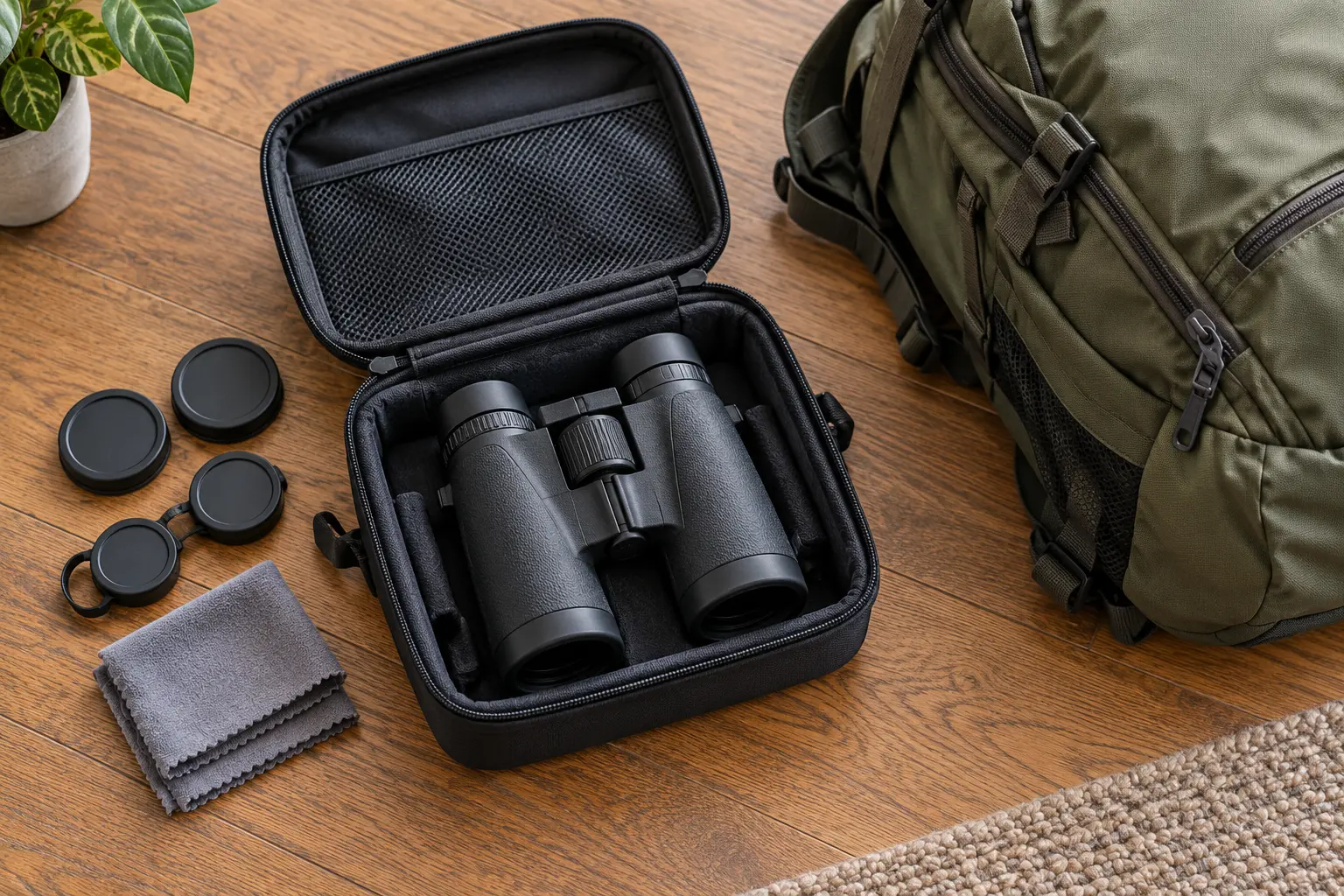
How to pack binoculars for travel involves protecting precision optics against impact, grit, moisture and pressure on delicate adjustments. These methods apply to pocket travel binoculars, conventional birding 8×42 models and larger nature-observation equipment, with adjustments for the luggage, weather and transport conditions of each journey. If wildlife viewing is the purpose of the trip, compare safari binocular choices before deciding how much equipment to pack.
Protect the instrument before packing
Begin by checking that objective and eyepiece caps fit securely, strap attachments are sound and the focusing and diopter controls move normally. A loose hinge or damaged lens cap should be addressed before travel. Binoculars contain precisely aligned optical elements, so cushioning the instrument against impacts matters more than making the case look attractive. Do not place hard metal accessories next to exposed lenses. If cleaning is needed, follow the exact manufacturer’s procedure and remove grit before touching coated glass. Repeated rubbing for cosmetic perfection can increase abrasion risk without improving an already clear view.
Use a correctly sized padded case
An effective case supports the binocular housing without pressing tightly against twist-up eyecups, central focus wheels or the diopter adjustment. A long full-size 8×42 and a folding pocket 8×25 may need very different case shapes. Test the actual binocular with caps installed rather than relying on a generic capacity label. A case that allows the instrument to rattle can expose it to impacts, while one that is excessively tight can load delicate controls. Packing it securely in a clean compartment also keeps grit away from the glass during transport.

Separate keys, cables and chargers
Hard loose objects can strike the housing or scratch coated objectives when a bag moves. Keep keys, chargers, metal adapters and spare camera plates in separate pockets. A lens cloth should be stored clean rather than rolling around among crumbs or sand. If you carry cleaning fluid, ensure its container is sealed and does not leak near optics. Compartmentalization is a basic but valuable approach to protecting equipment. It is usually better to carry fewer carefully organized accessories than a large collection that rattles against one another during a rough journey.
Consider cabin baggage for fragile optics
Airline policies differ by route and operator, so confirm current baggage allowances and restrictions. When permitted, a padded case in hand luggage may be a practical way to keep valuable binoculars with you. Avoid making universal claims that airlines require optics in the cabin or forbid checked baggage; actual rules vary. Protect the equipment from compression under other bags, and ensure the case can be removed for inspection if requested. An 8×25 may fit an accessible carry-on compartment, while a heavier 10×50 may require more space and careful packing.
Before a hiking trip, compare the carried weight and case size of different binocular formats in our hiking binoculars buying guide. This packing article focuses on protecting equipment after a model has already been selected.
Manage weight and pack accessibility
On a hiking trip the best binocular is the one you can carry and reach safely when wildlife appears. An instrument buried under clothing may not be available before a bird flies away. Position its case near an accessible section of the bag or use a secure harness if appropriate. Balance easy access with protection from impacts during movement. Never look through binoculars while walking over rough terrain or crossing roads. Stop, plant your feet and then raise the instrument. This avoids letting a narrow magnified field hide immediate hazards.
Do not compress eyecups and focus wheels
Twist-up eyecups and diopter rings are intended to adjust smoothly, not bear the weight of heavy luggage. If a padded compartment presses directly against these controls, reposition the binocular or use a case with more clearance. Secure any manufacturer-provided locking diopter ring before transit. Avoid forcing both barrels together more tightly than their normal interpupillary adjustment range. A mechanical problem after travel may be caused by impact or stress rather than poor glass. Test the controls gently before the first observation session at the destination.
Keep a dry case truly dry
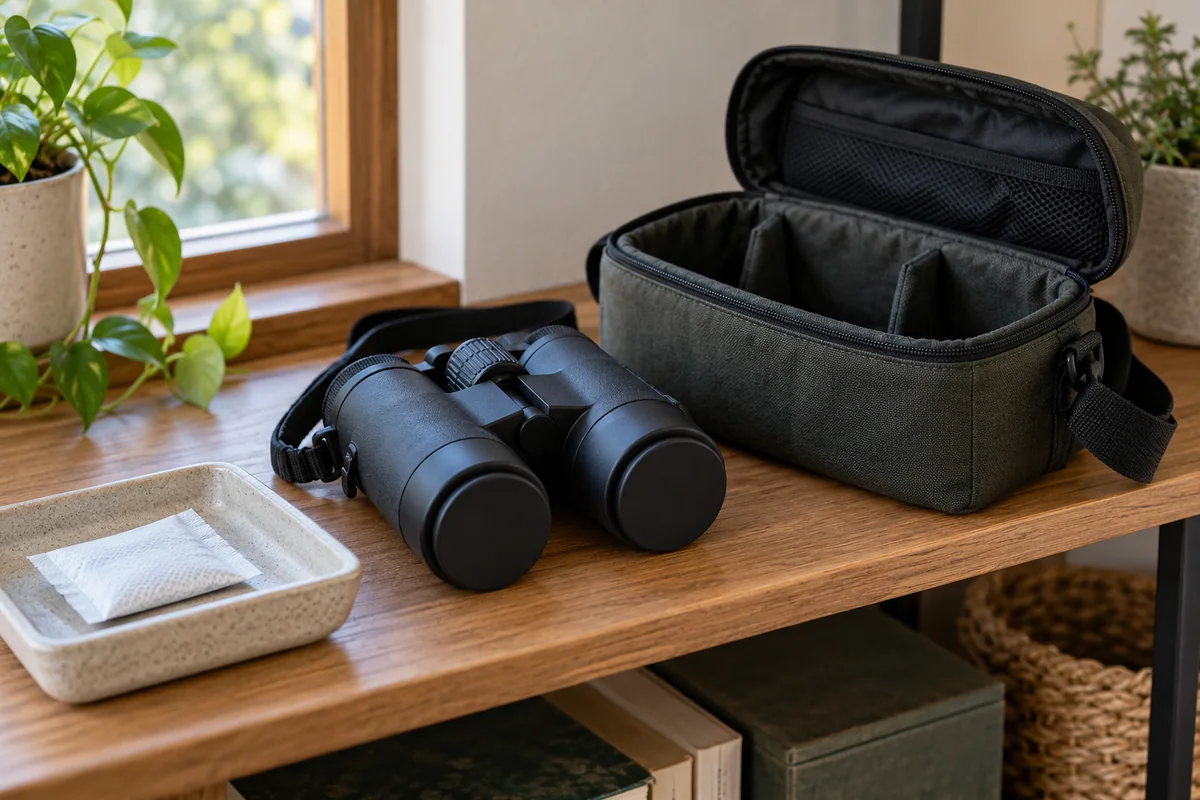
A damp fabric case can hold moisture against the housing long after rain ends. After a wet field outing, follow the manufacturer’s directions for drying the exterior and allow the case lining to dry as well. Nikon advises against long-term storage of optics in damp environments because of mould risk. Weather sealing does not make careless storage advisable. Do not tightly enclose wet equipment for days merely because the package says waterproof. In humid destinations, use an appropriate storage environment and avoid loose desiccant chemicals touching lenses or rubber.
Temperature changes can cause fog
Moving from an air-conditioned hotel into warm humid weather may fog external lenses even on nitrogen-purged waterproof binoculars. The condensation forms on the exposed cold glass and should not be confused automatically with an internal sealing problem. Let the equipment adapt naturally rather than applying direct heat from a hair dryer. Protect optics from extreme dashboard temperatures or prolonged direct sun in parked vehicles. If haze repeatedly appears behind the glass rather than on the surface, contact the manufacturer or qualified service provider instead of dismantling the housing.
Protect binoculars inside vehicles
A loose binocular on a vehicle seat may become a hazard during sudden braking or rough travel. Secure its case or use a suitable compartment and keep straps from tangling in doors or moving mechanisms. Do not leave equipment baking on a dashboard, where heat can affect rubber, seals and adhesives. During wildlife drives, follow the operator’s instructions and use binoculars only as a passenger from a safe position. Dust from unpaved tracks can reach objectives and eyepieces quickly, so replace caps while the instrument is not in use.
Coastal trips need extra care
Salt spray and wind-blown sand can leave abrasive contamination on glass and around focusing joints. Avoid wiping gritty objectives with a sleeve. Use only manufacturer-approved dry particle removal and cleaning methods, and determine whether the exact binocular’s environmental rating permits any rinsing procedure. An old water-resistant pair should not be treated like a modern waterproof model just because both have rubber armour. Clean the protective case after sandy outings, especially around its inner seams. Keeping grit out in the first place is generally safer than aggressive cleaning afterward.
Carry straps can reduce drops
Check strap anchors and clips before moving between observation points. A secure strap or harness can keep binoculars close to the body when you walk, but it must be adjusted so the instrument does not swing into rock faces or railings. When combined with a backpack, chest straps and binocular harnesses may interfere with each other; try the full arrangement before departure. Do not overload a connector or assume all clips fit all models. During strenuous walking, secure the optics before stepping over obstacles.
Pack useful accessories only
Lens caps, an appropriate protective case, a reliable strap and approved lens-care materials cover many ordinary trips. A phone adapter, tripod mount or additional eyepiece should be carried only when there is a realistic plan to use it and it can be transported safely. Separate small screws and plates in a marked pouch. Loose metal accessories may damage lenses or become lost during quick setup. A modest, well-organized pack frequently works better than a bulky collection of gear that delays each observation.
Check equipment after long transit
At your destination, inspect the housing, caps, hinge and focus wheel before a wildlife outing. Aim toward a safe distant stationary object, set the hinge width and focus to confirm the two optical images merge comfortably. An apparent double image after a fall may indicate misalignment and should be evaluated by a qualified service provider. Do not twist a stiff focusing wheel aggressively or disassemble the instrument. Discovering a fault early may allow a warranty or travel-insurance process rather than losing an entire birdwatching day.
Plan long-term storage on return
After the trip, remove exterior moisture and visible contamination according to the binocular maker’s instructions. Allow straps and padded cases to dry fully before enclosing the instrument for weeks. Choose a reasonably stable dry location away from excessive heat, dust and repeated condensation. Avoid storing optics indefinitely in a humid basement or hot attic. Check the manufacturer’s advice on desiccants, cases and care. A well-maintained binocular can serve for years, while neglecting storage conditions may lead to mould or mechanical damage.
Different trips require different packing
A short city trip with a folding 8×25 may call for a tiny case, whereas a coastal birding expedition with a 42 mm roof-prism binocular requires more protection from moisture and grit. Long vehicle safari days also need secure storage between observations. Consider the actual carrier, walking distance, weather and how fast you need access to the optics. A single generic packing list cannot solve every journey. The goal is a practical balance of protection and immediate usability rather than minimum volume at all costs.
The final pre-trip checklist
Confirm the exact carrying case, caps, dry lens materials, secure strap, manufacturer documentation and appropriate baggage placement. Separate hard objects, protect controls from compression, check local travel restrictions and keep the instrument safe during vehicle motion. After rain or salt exposure, use the correct cleaning process rather than improvised chemicals. Never view the sun through optics. Our lens-cleaning guide explains care in more detail. Thoughtful storage and handling prevent avoidable failures without adding unnecessary equipment.
Source
Nikon: cleaning, carrying and storage precautions
About the author
Simon Jack
Simon Jack is the named author of FieldLens Guide's research-based binocular, spotting scope and wildlife observation articles. His published editorial approach focuses on verifying model-specific manufacturer specifications, explaining optical tradeoffs in plain language, and matching equipment to real birdwatching, hiking and nature-observation needs. These articles do not claim hands-on product tests unless explicitly documented.