

Comparing 65mm vs 80mm spotting scopes means comparing complete birding systems, not just objective diameters. A larger 80 mm objective has greater theoretical light-collecting area and usually brings extra bulk. A smaller 65 mm can be easier to transport and may better suit people who hike between observation points. Neither is guaranteed to provide a sharper image, because coatings, eyepiece, alignment, atmospheric conditions and tripod stability affect the final experience. This guide explains the actual tradeoffs without attributing laboratory performance to models that have not been tested.
A 65 mm and an 80 mm scope also differ in the tripod they demand and the practical viewing locations where their size can be justified. Compare specific products in our under-$500 scope guide and investigate the support requirements in the spotting-scope tripod comparison.
Light collecting area
An ideal 80 mm objective has about 51 percent more geometric area than a 65 mm one: 80 squared divided by 65 squared gives approximately 1.51. That figure is not a measured increase in visible brightness. Internal stops, optical transmission, pupil size and magnification all influence what reaches the observer. It would be misleading to call any real 80 mm scope 51 percent brighter than any 65 mm model. Compare similar-quality systems under similar conditions and regard the calculation as a description of potential rather than a product rating.

What exit pupil does
Exit pupil is calculated approximately by dividing objective diameter by magnification. At 30x the results are roughly 2.17 mm for 65 mm and 2.67 mm for 80 mm. At 60x they decrease to approximately 1.08 and 1.33 mm. These small values explain why accurate eye position and adequate light become especially important at high power. Exit pupil does not determine contrast or optical resolution, and it cannot compensate for a poorly designed eyepiece. Use it alongside eye relief, actual transmission evidence and intended viewing conditions.
At dawn and dusk
When the light drops, a larger objective can offer more flexibility if the rest of the optical system is comparable. An 80 mm scope may therefore be attractive to people spending long periods studying distant shorebirds late in the day. However, coatings and construction also influence the image, and a well-made 65 mm ED instrument can be preferable to a poorly constructed larger unit. Audubon notes both the benefit of larger light gathering and its weight penalty. View actual models under similar fading light rather than judging an illuminated indoor display.
Atmosphere is a limiting factor
The air between your scope and distant birds is part of the viewing system. On warm mudflats or over heated water, shimmer may blur markings regardless of optical quality. Increasing magnification can enlarge the disturbance. Even a premium large objective cannot remove atmospheric turbulence. Begin at a moderate setting, increase zoom gradually and back off when extra power stops revealing detail. A user who frequently observes at midday may find that excellent contrast at 30x matters more than the ability to select 60x.
Carrying the complete equipment
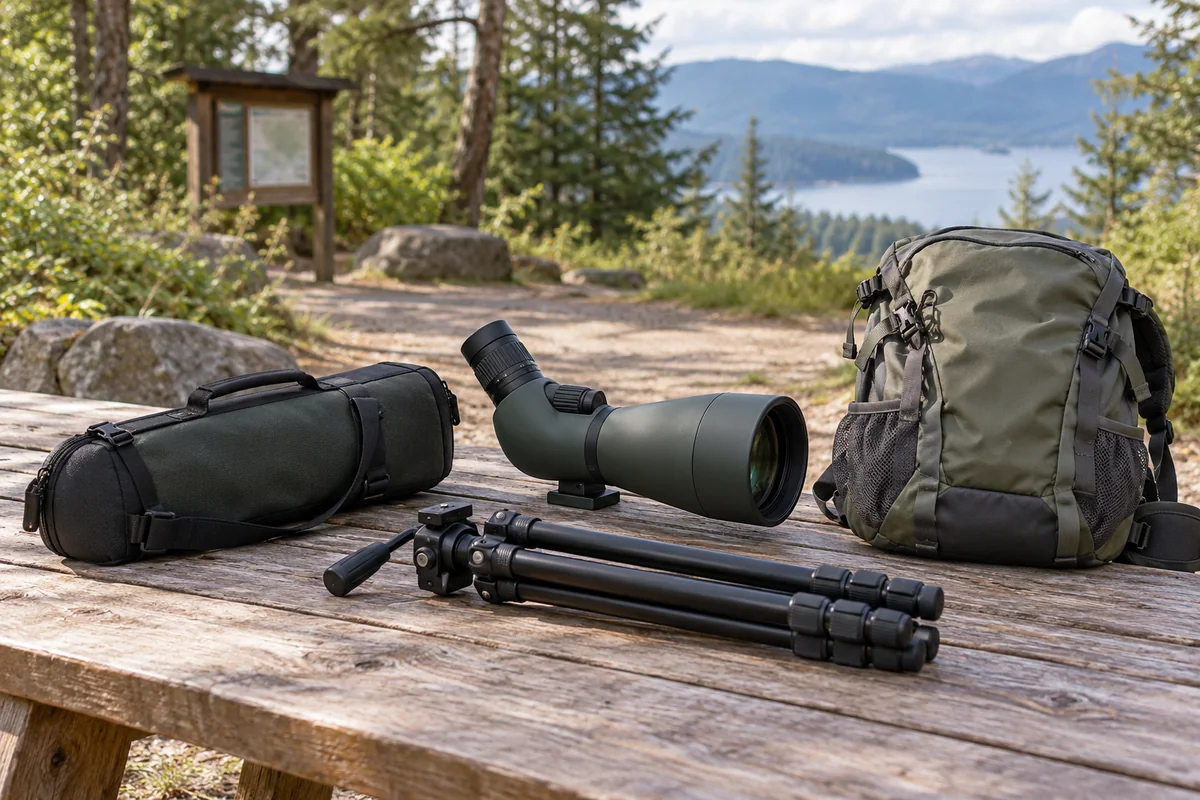
The optical body is not the whole weight of a spotting scope setup. A tripod, head, eyepiece, protective case and phone adapter can contribute substantially. The 80 mm body may demand a heavier support or occupy more of a backpack. For an observer walking several kilometres between viewing platforms, the easier-to-carry 65 mm can be a better everyday choice. For an accessible hide where the instrument remains set up, the extra bulk may be a minor disadvantage. Compare total carried weight before choosing. If portability determines whether you bring the instrument, compare compact birding spotting scopes with their required support.
Tripod load and balance
Spotting scopes magnify vibration, and a heavier objective can shift the centre of gravity forward. Check that the tripod head safely carries the assembled setup and keeps it balanced when tilted. Wind, touching the focusing controls and excessive leg extension can cause shaking even below the manufacturer’s load rating. A stable tripod and correctly secured plate often improve useful detail more than theoretical changes in aperture. Test the scope at the height and terrain where you will actually use it. Do not use an unstable support to save a little carrying weight.
Resolution is not guaranteed
A larger aperture can theoretically resolve finer angular detail in ideal conditions. Real scopes also have aberrations, manufacturing tolerances, coatings and focusing mechanisms, while external atmosphere adds further limits. That means an 80 mm scope is not inherently sharper than every 65 mm product on the market. Direct comparisons should use matching magnification and a controlled detailed subject. Good ED optics, contrast and eyepiece comfort may outweigh a size difference. An objective diameter is a design attribute, not a complete quality score.
Eyepieces change the comparison
Some scopes are sold body-only, while others include a zoom eyepiece. The eyepiece governs available magnification, field width and eye relief in many systems. A 65 mm scope with a premium eyepiece might cost more than a basic 80 mm package, so advertised prices should not be compared without checking the included parts. Confirm compatibility with the exact body generation. Spectacle wearers should examine usable field across the zoom range, because an incompatible eyepiece can make an otherwise excellent instrument uncomfortable.
Observing faraway wildlife
At a stationary coastal location, an 80 mm instrument can be useful when studying distant waterfowl or raptors over long sessions. The potential to maintain a usable image at higher zoom and lower light can justify its weight. But a bird still needs to be acquired inside the narrow field, and wind or heat shimmer can spoil high-power detail. Start with binoculars to locate a landmark, aim the scope at low power and increase zoom only if conditions remain clear. The resulting workflow matters as much as the aperture.
A hiking perspective
For birders who travel by foot, weight, case dimensions and setup time determine whether optics are carried regularly. A 65 mm scope with a sensible lightweight tripod can make a balanced travel kit. Some 80 mm models may still be manageable, especially for a strong hiker, but their total support demands should not be ignored. Consider how the case fits beside other outdoor essentials and whether the instrument can be attached securely on uneven ground. A theoretically better instrument left at home offers no advantage during a field trip.
Digiscoping tradeoffs
Taking pictures through a scope requires stable camera alignment, correct eyepiece compatibility and a support system that tolerates the extra adapter weight. An 80 mm objective might provide light-collection benefits, but that does not guarantee sharper photographs. Shutter speed, camera sensor, vibrations and atmospheric distortion also influence results. A portable 65 mm scope may be preferable for travel if photography is occasional. Before buying, confirm that your camera adapter physically fits the eyepiece and that the tripod remains balanced with everything attached.
Budget the entire system
Calculate the cost of the actual body, usable eyepiece, suitable tripod, head, case and any adapters. An apparently affordable 80 mm body can become costly once enough support is added. Warranty terms, regional service and replacement-parts availability are also important for a long-lasting purchase. If two complete systems fit your budget, prioritize viewing comfort and the performance benefits you can observe rather than assuming the bigger one is worth more. Avoid comparing a complete kit against a body-only offer.
How to test two candidates
Use the same distant detailed scene at the same magnification on both instruments. Ensure each has a stable tripod, adjust eye relief properly and focus carefully before comparing. Repeat in ordinary daylight and, if possible, when light begins to fade. Notice whether the larger scope actually reveals markings that remain unclear in the smaller one. Lift and carry the full setups for a short distance. Practical differences in weight and focusing can matter more than a modest optical advantage you see only under unusual conditions.
Choosing between them
Start with 65 mm if portability, travel and moderate daytime observation dominate your plans. Investigate 80 mm if you usually remain at a fixed viewpoint, work frequently in lower light or need a carefully supported digiscoping system. Neither specification should decide the purchase without considering the eyepiece and tripod. Audubon’s published guide recognizes the same basic tradeoff between larger objectives gathering more light and bringing additional bulk. A scope that fits your actual outings is more valuable than an aperture number selected in isolation.
Further reference
Birding guidance from specialist sources
About the author
Simon Jack
Simon Jack is the named author of FieldLens Guide's research-based binocular, spotting scope and wildlife observation articles. His published editorial approach focuses on verifying model-specific manufacturer specifications, explaining optical tradeoffs in plain language, and matching equipment to real birdwatching, hiking and nature-observation needs. These articles do not claim hands-on product tests unless explicitly documented.