

The best spotting scope tripods for bird watching hold the view steady while letting you follow a bird without fighting the head or changing your stance. A payload number is only the beginning: viewing height, plate compatibility, head movement and vibration all matter once magnification rises. A tripod that feels convenient beside a lake may be too long or heavy for a walk between hides, while a very small travel support may not reach a comfortable standing height. This guide compares five complete leg-and-head systems with different strengths in portability, fluid movement and price. We explain the practical limits of each, including the difference between maximum published height and a comfortable working setup. Start with the quick verdict, then compare the complete tripod with your scope, eyepiece and intended viewing position before buying.
Affiliate Disclosure: We may earn a commission at no extra cost to you when you make a qualifying purchase through affiliate links in this guide. Buying buttons open Amazon.com. Read our full affiliate disclosure.
Best Spotting Scope Tripods for Bird Watching: quick comparison
On smaller screens, swipe across the table to compare all features and buying options.
| Image | Tripod kit | Main reason to choose it | Notable limitation | Where to buy |
|---|---|---|---|---|
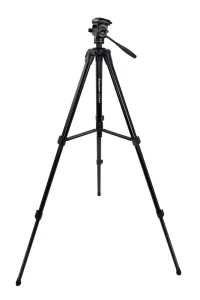 | Celestron Ultima Pan Tilt Head Tripod | Accessible general birding support | 2.12 kg is a noticeable hiking load. | Check PriceAmazon |
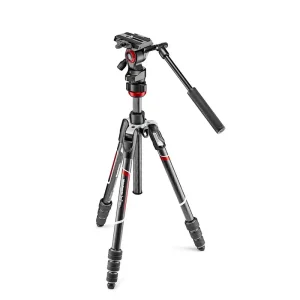 | Manfrotto Befree Live Carbon Video Tripod | Carbon travel fluid-head option | Carbon construction needs to justify its cost for your travel kit. | Check PriceAmazon |
 | SLIK PRO AL-323 SVH-520 Fluid Video Kit | Taller fluid control for fixed viewing | 64 cm folded length occupies more carrying space. | Check PriceAmazon model search |
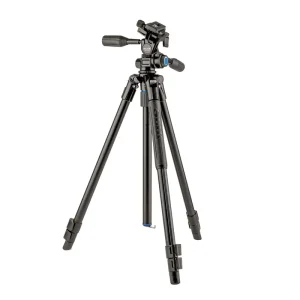 | SLIK PRO AL-323 3WFC with SH-747FC Pan Head | Separate-axis positioning and friction adjustment | Check the load rating for the exact kit before mounting. | Check PriceAmazon model search |
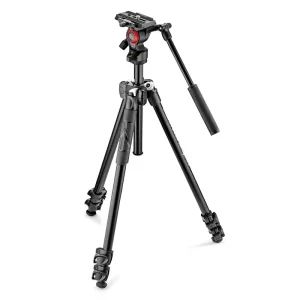 | Manfrotto 290 Light with Befree Live Video Head | Straightforward stable aluminium setup | 146 cm maximum height can limit standing use. | Check PriceAmazon |
Open Amazon for the current price and availability. Confirm the exact model, condition and package contents, including any separately required eyepiece, tripod or accessories. Tax and shipping may affect the total.
How we chose these accessories
These are five leg-and-head systems rather than an unqualified list of tripod legs. The Celestron and Manfrotto 290 provide conventional support choices, the Befree Carbon addresses portability, and the two SLIK kits distinguish fluid movement from three-way positioning. Published payload is considered alongside working height, head control and the exact plate connection.
- Compare complete kit mass, not a head-free leg specification.
- Check comfortable eyepiece height without relying on excessive center-column extension.
- Verify the scope foot, screw, plate and head as one mounting chain.
These comparisons use manufacturer documentation and published model specifications. We have not conducted hands-on product tests. See how we review optics for the research and correction process.
01 / Accessible general birding support
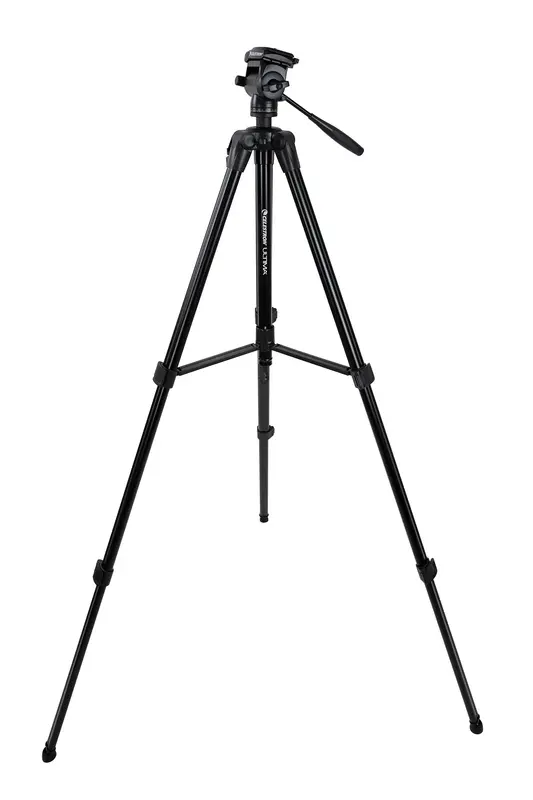
Celestron Ultima Pan Tilt Head Tripod
Celestron lists an aluminium body, a 4 kg maximum supported load, 2.12 kg tripod weight and maximum height of 1,720 mm. A quick-release plate with 1/4-20 attachment and a nearby locking pin is specified. The head has a panning handle, and the product includes a carrying case.
Amazon.com
Product image: Celestron.This is a relatively straightforward way to give a compact or mid-size spotting scope an actual standing-height platform. The quick-release plate can speed setup at a pond or hide, while the pan handle provides more deliberate control than a loose ball head when a bird walks along the shoreline.
Choose it for short walks from a car to a regular viewing position, or for a budget-conscious birder who prioritizes functional pan-and-tilt controls rather than compact travel engineering.
At 2.12 kg it is not particularly light for mountain hiking. Much of the maximum height comes from extended structure; real steadiness in wind needs testing with the actual scope and head. The presence of a 4 kg capacity does not guarantee that the view stays vibration-free at maximum zoom.
Reasons to choose it
- 1,720 mm maximum height for standing observation.
- Pan handle and quick-release mounting plate.
What to weigh up
- 2.12 kg is a noticeable hiking load.
- Full 1,720 mm height depends on center-column extension.
02 / Carbon travel fluid-head option
Manfrotto Befree Live Carbon Video Tripod
Manfrotto’s carbon Befree Live configuration weighs 1.38 kg and lists a 4 kg safety payload under UNI/PdR 105:2021. Maximum height is 150 cm, folded length 41 cm, and the included video head provides fluid pan and tilt with a 501PL sliding plate. Four-section carbon legs and a carrying bag are specified.

Amazon.com
Product image: Manfrotto.This model addresses the actual carrying burden of a hiking birder who still needs smoothly controlled movement across a lake. The fluid head can help track slowly moving waders, while the short folded length is useful for packing. A sliding plate offers scope-balancing flexibility absent from some very basic photo tripods.
A sensible shortlist candidate when the tripod accompanies day-long travel and the observer has a comparatively light scope that does not require a large professional head.
Carbon construction and fluid controls may command a higher price than conventional aluminium. The 150 cm height may be insufficient for a tall observer using a straight scope without stooping. Check the actual scope plate footprint and balance before assuming the 501PL system suits every optical tube.
Reasons to choose it
- 1.38 kg carbon kit with a fluid pan-and-tilt head.
- 41 cm folded length and a sliding 501PL plate.
What to weigh up
- Carbon construction needs to justify its cost for your travel kit.
- 150 cm maximum height may not suit every observer and scope.
03 / Taller fluid control for fixed viewing
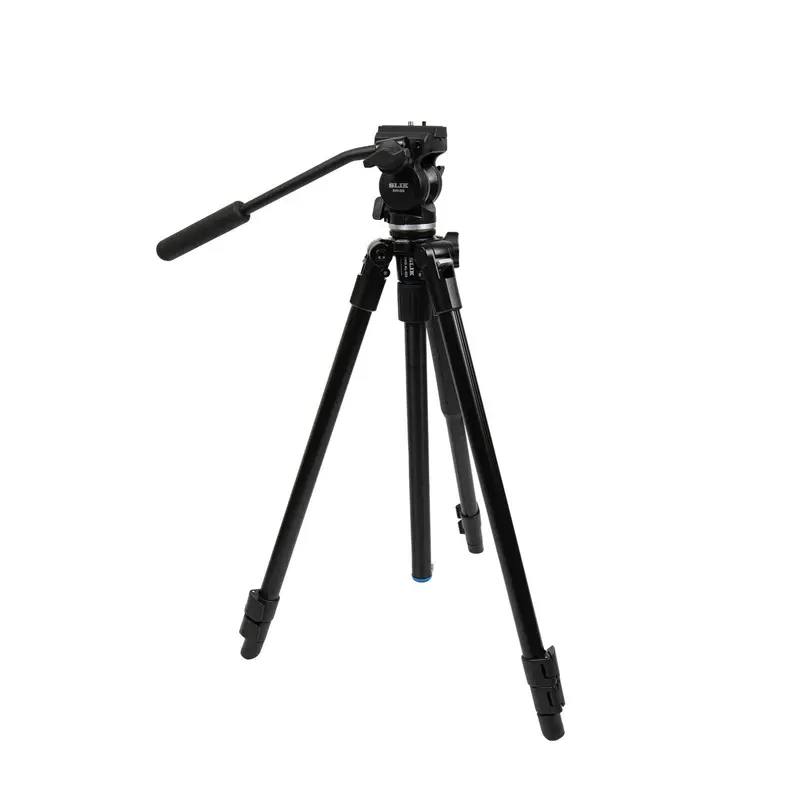
SLIK PRO AL-323 SVH-520 Fluid Video Kit
SLIK specifies a 1,590 mm maximum height, 1,875 g kit weight, 4 kg rated load and 640 mm folded length. The SVH-520 oil-fluid head has independently controlled pan and tilt movements and a detachable handle. SLIK explicitly says its fluid head can be useful with spotting scopes and binoculars.
Opens an Amazon search for this model.
Product image: SLIK.For a birding hide or relatively accessible wetland, the taller height and fluid head can be worthwhile even though the folded kit is long. Keeping one hand on the pan bar can help follow a bird’s slow movements across the field without repeatedly loosening a ball head. The kit is ready to assemble without shopping for a separate compatible head.
Compare it if your observation days involve standing at accessible locations and you favour deliberate, smooth tracking over the absolute shortest folded tripod.
Its 64 cm folded size takes more packing room than the Manfrotto carbon travel kit. It also weighs around 1.9 kg, so total carrying effort becomes noticeable when combined with a heavy 80 mm scope. Verify the exact replacement plate and load rating for the SVH-520 rather than treating different SLIK head families as interchangeable.
Reasons to choose it
- Fluid head with separate pan and tilt controls.
- 1,590 mm maximum height and a published 4 kg load rating.
What to weigh up
- 64 cm folded length occupies more carrying space.
- 1,875 g kit weight still belongs in the total gear budget.
04 / Separate-axis positioning and friction adjustment
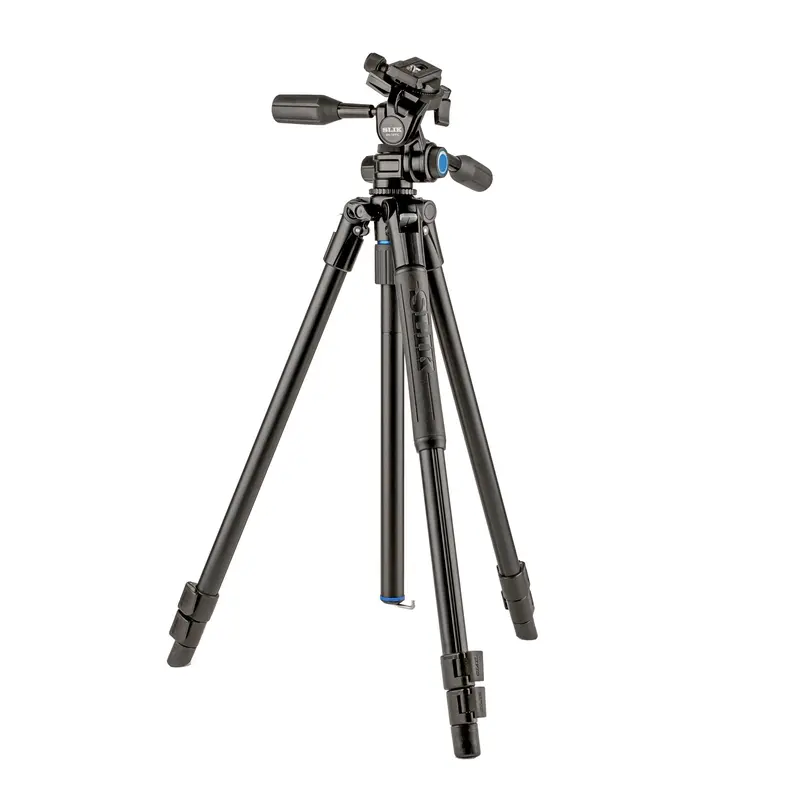
SLIK PRO AL-323 3WFC with SH-747FC Pan Head
The SLIK PRO AL-323 3WFC kit combines aluminium legs with the SH-747FC three-way head. Its official page lists a maximum height of 64.5 inches, folded length of 24.5 inches and weight around 4.31 pounds. The head provides independent pan, tilt and horizon controls, an Arca-type-compatible platform and friction adjustment.
Opens an Amazon search for this model.
Product image: SLIK.This setup differs from fluid video kits by allowing more deliberate independent-axis alignment, which can be useful when a scope is kept trained on a stationary bird or distant nest viewed responsibly. Friction adjustments allow the user to resist sudden shifts while fine-tuning the subject in frame. The Arca-style compatibility may also suit people who already use related camera plates.
Best investigated by an observer who values precise positioning, uses photo gear with compatible plates and studies mostly stationary subjects rather than rapidly tracking flight.
The SLIK page shows inconsistent load statements in different sections, with a header figure and detailed specifications that do not entirely agree. Check the manufacturer’s current kit documentation before relying on a load-capacity figure. Multiple separate controls can be slower than a pan bar for birds moving quickly.
Reasons to choose it
- Independent pan, tilt and horizon control.
- Arca-type platform and adjustable head friction.
What to weigh up
- Check the load rating for the exact kit before mounting.
- Three-way controls prioritize positioning over a simple fluid pan.
05 / Straightforward stable aluminium setup
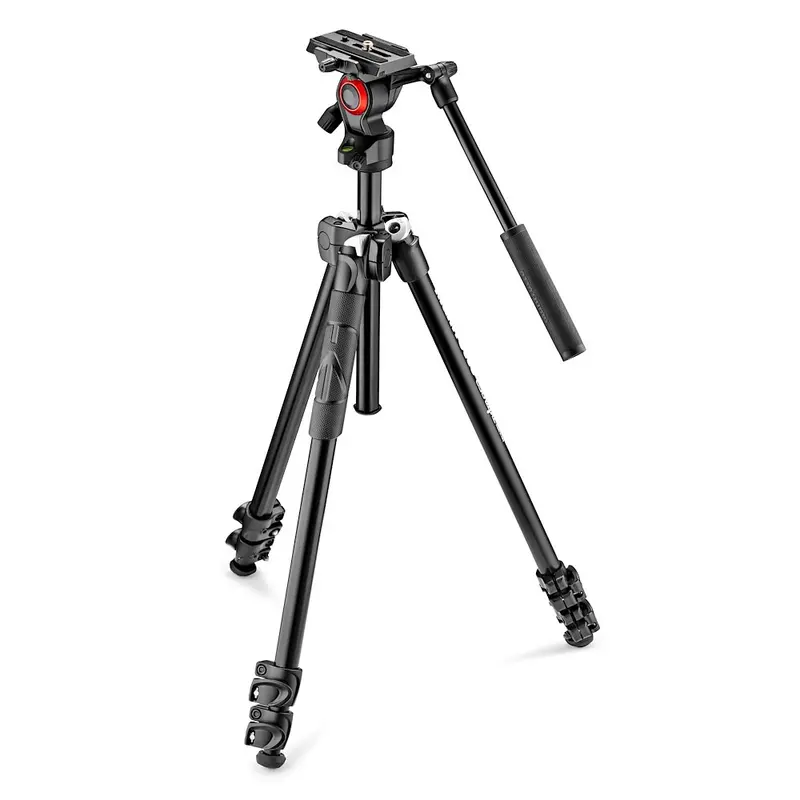
Manfrotto 290 Light with Befree Live Video Head
Manfrotto lists a 1.8 kg total weight, 4 kg safety payload, maximum height of 146 cm and folded length of 59.5 cm. The kit has three-section aluminium legs and a Befree Live fluid video head with a 501PL quick-release plate. The head offers fluid pan and tilt movement with a suitable sliding camera plate arrangement.
Amazon.com
Product image: Manfrotto.The 290 Light provides a conventional aluminium alternative for birders who prefer a fewer-section design and smooth panning at a fixed vantage point. It avoids some of the cost premium of specialized carbon systems while retaining a manufacturer-documented fluid head. For a moderately weighted scope it can be a practical benchmark against the Celestron and SLIK options.
Consider it for a regular birdwatcher visiting observation platforms, particularly when smooth panning and straightforward metal-leg construction matter more than extreme portability.
The 146 cm maximum height may be limiting for tall standing observers, especially with straight spotting scopes. Folded length is not particularly compact, and the complete 1.8 kg mass still matters on long hikes. The advertised payload is a structural specification; wind resistance and vibration performance require real assessment with the scope attached.
Reasons to choose it
- Aluminum legs with a Befree Live fluid video head.
- 501PL sliding plate and a 1.8 kg complete kit weight.
What to weigh up
- 146 cm maximum height can limit standing use.
- 59.5 cm folded length is longer than small travel kits.
What to consider before buying
Why the head matters more than the legs alone
A tripod with stiff legs but an awkward head may still be frustrating for birdwatching. Birds move horizontally and vertically, so the user needs controlled movement without sudden drops. A fluid video head often gives gentle resistance during panning and tilting, while a three-way head allows independent adjustment of several axes. A ball head can be quick for stationary framing but releases several directions together, which is sometimes inconvenient with a front-heavy spotting scope. Compare the actual operation with your scope mounted rather than assuming any photographically rated tripod will work well.
Tripod payload is only the first safety check
The manufacturer’s load rating should comfortably accommodate the assembled scope, eyepiece and adapter. But a tripod rated for four kilograms is not automatically steady under a four-kilogram instrument at 60x magnification. Wind, leg extension, head balance and vibration damping influence real performance. If a retailer gives conflicting capacity values, as on parts of the SLIK 3WFC listing, verify the specific documentation before relying on a number. Follow all safety instructions and never exceed the supported load to save money.
How high does your setup need to reach?
Straight spotting scopes typically require the eyepiece close to the observer’s eye level, while angled models can be comfortable on lower supports. Compare the height of the eyepiece after the actual scope is attached, not just the maximum tripod height in isolation. A tall observer might find a 146 cm tripod uncomfortable for prolonged standing observation, whereas an angled scope from a chair could work well at a much lower height. Raising a centre column to achieve extra reach can reduce rigidity in the wind. Comfort and stability should be balanced.
A shorter folded kit can improve field use
Tripods are carried far more often than they are moved while supporting a scope. Folded length determines how easily the support fits onto a backpack, into luggage or inside a car storage space. The carbon Befree Live is relatively short at 41 cm, while several aluminium alternatives exceed 59 cm. That difference can matter on a crowded trail. However, small folded dimensions may require additional leg sections and a more complex setup, so judge deployment speed and rigidity too. Do not confuse compactness with automatic superiority.
How much tripod weight is reasonable?
A 1.38 kg carbon tripod is noticeably different to carry from a 2.12 kg aluminium one, particularly alongside a scope, food and water. Yet carrying less mass has little value if the resulting support shakes excessively at the magnification you normally use. Choose the lightest system that remains acceptably steady for your actual optical load and terrain. A fixed bird hide may justify a heavier, more rigid support, while a hiker moving between distant viewpoints may prefer a more compact compromise. Total transport weight should include the tripod head and case.
Why fluid movement helps birdwatching
A fluid-style pan head resists abrupt starts and stops when following a slowly walking wader or panning across a line of reeds. That can help keep the subject in the frame while the observer changes direction gently. Video fluid heads were designed for smooth movement, but that does not mean each one is automatically perfect for scopes. Check balance range, usable friction, pan-handle position and whether the mounting plate secures the scope properly. For stationary birds, precise positioning may be more important than cinematic movement.
Quick-release compatibility is not universal
A spotting scope foot usually accepts a standard threaded mounting screw, but quick-release systems differ in plate width, safety latch shape and attachment orientation. Manfrotto’s 501PL platform is not the same as every Arca-type plate, and SLIK uses its own removable plate systems on some heads. Before ordering, identify the exact mounting foot of your scope and the head’s compatible plate. An unsecured improvised adapter is a serious dropping risk. Replacement plates should be sourced by the correct product code.
Balancing an 80 mm scope
A front-heavy 80 mm spotting scope may tilt forward when head friction is loosened. Some heads have sliding plates that allow the scope’s centre of mass to be positioned better. If you plan to add a phone for digiscoping, the weight distribution may change again. Test the head by supporting the scope with one hand while gently moving it through the intended tilt range. It should not suddenly drop or drift uncontrollably. A load rating alone cannot resolve bad fore-and-aft balance.
Wind and vibration
Tripod legs can vibrate even on stable ground, especially at long extensions. A head may also transmit movement when the focus wheel is touched. Choose a sheltered viewing location when possible, widen the leg stance and keep the centre column low if comfortable. Some manufacturers include a hook for additional ballast, but any attached weight must be secure, supported and not swinging. At very high zoom, reducing magnification may reveal more usable detail than fighting the wind. No maker specification fully replaces a field test.
Three-section versus four-section legs
Three-section tripods may require less time to extend and have fewer joints, but can fold to a greater length. Four-section travel legs often pack smaller while creating more locks and thinner lower sections. The exact outcome depends on material, diameter and engineering. SLIK’s three-section AL-323 and Manfrotto’s four-section Befree illustrate different priorities. Choose based on how frequently you deploy the support, whether you travel by air and the rigidity you need at actual working height. Leg count by itself does not guarantee stability.
When a tabletop tripod is insufficient
Some spotting scopes arrive with a small tabletop stand. Such a support can be convenient from a sturdy bench or viewing platform, but does not solve every outdoor situation. In a marsh or on a hillside there may be no rigid raised surface at the right position. Standing observers usually need a full-height tripod that keeps the eyepiece comfortable and the tube above vegetation. If your first scope kit includes a compact stand, test its normal field setup before assuming you can skip a separate support purchase.
Angled scopes change the support decision
An angled spotting scope can often work with a lower tripod because viewers look down into the eyepiece. This can reduce the amount of leg extension needed and allow observers of different height to share the scope more readily. A straight scope may benefit from extra height, particularly for tall standing users. Therefore the same tripod can feel ideal with one tube and awkward with another. Read our angled-versus-straight guide before choosing a support solely from a maximum-height specification.
Head choice for stationary versus moving birds
At a fixed coastal hide, an observer may spend minutes studying one mostly stationary bird. A pan head with accurate separate controls can make fine framing simple. On a shoreline where birds walk continuously, smooth panning becomes more important. For small rapid birds in flight, binoculars often remain the more practical instrument regardless of tripod quality. Choose the head for how the scope is actually operated, not the largest list of camera-oriented controls. A careful field trial can reveal whether pan movement or independent-axis adjustment feels natural.
Tripod feet and uneven terrain
Rubber feet can grip some paved observation platforms well, while other feet may work better on loose natural ground. The manufacturer’s safe usage guidance determines whether different feet or spikes are appropriate. Never place a tripod at the edge of an unstable bank or create a tripping hazard on a popular path. On a slope, adjust leg lengths individually and confirm the entire assembly remains level and secure. A tripod with strong specifications still requires thoughtful placement every time it is used.
Protect the tripod during transport
Secure pan handles and removable plates before packing. Check that twist or lever leg locks are closed and that the head cannot strike the scope inside a shared bag. A padded case reduces damage and helps prevent loose hardware from scratching coated lenses. Salt and grit can affect moving parts, so follow the tripod manufacturer’s cleaning recommendations after coastal or muddy trips. Never spray an unknown lubricant directly into a fluid head; service instructions vary by design.
How to compare the real total cost
Look at the complete tripod and head kit, not the price of bare legs. Some systems include a sliding quick-release plate, pan bar and bag, while others require accessories. A less expensive tripod can become costly if you need an upgraded head to operate the scope smoothly. Compare warranty coverage, replacement-plate availability, service and the size of the assembled optical load. The cheapest stand is not automatically the best value if it makes every high-power observation difficult or introduces mounting risk.
A realistic tripod test
Mount the actual spotting scope with its eyepiece and any camera adapter. Set the tripod to the height you normally use and look at a distant detailed scene at moderate and high power. Touch the focus control, release it and notice how long the image takes to settle. Try a slow horizontal pan and a small vertical adjustment. Then fold the whole system and lift it as though preparing for a walk. This test is more informative than a simple payload number or a marketing description of extreme stability.
How these five options differ
Celestron’s Ultima is a simpler general-purpose budget stand. Manfrotto’s carbon Befree prioritizes folded compactness and lower mass, while its 290 Light emphasises a conventional aluminium fluid kit. SLIK’s SVH-520 video head supports smooth motion on a taller platform, and the three-way friction model is oriented toward precise independent positioning. These are different user priorities rather than independently measured winners.
Safety and maintenance checklist
Before each birding session, inspect leg locks, feet, head attachment and quick-release plate. Confirm the total load does not exceed manufacturer limits and that the scope is balanced. Keep legs clear of public pathways and protect equipment from falls. After wet trips, dry the structure and check that joints still work smoothly. If a safety latch is worn or head movement becomes uncontrolled, stop using the tripod until it can be repaired or replaced. Good support is both an optical-performance requirement and a safety measure.
Final buying advice
A birder should choose tripod height, head movement and stability based on the specific scope and field conditions. For a short walk with a relatively light optical tube, the compact Manfrotto carbon system is worth evaluating. For an accessible hide, the taller SLIK fluid kit or the straightforward Celestron may suit different budgets. If deliberate stationary positioning matters, the SLIK three-way friction head offers another approach.
Before you choose
Frequently asked questions
What load capacity does my spotting scope tripod need?
Check the rating of the legs, head and mounting components against the complete setup, including accessories. Do not choose from load capacity alone: a long scope can be awkward to balance even when its mass is within the rating. Assess stability and head control at the magnification you use.
Is a fluid video head useful for birdwatching?
It can make deliberate pan and tilt movement easier when following birds along a shoreline or moving across a distant scene. The benefit depends on the head's controls, balance and fit with your scope. Check that you can lock it securely and adjust focus without the view continually drifting.
How tall should the tripod be?
Choose a working height that lets you look through the eyepiece comfortably in your normal posture. Include the height of the head and scope, and account for an angled or straight eyepiece. A maximum height that relies heavily on extending the center column may be less stable in wind.
Will every quick-release plate fit my scope?
No. Check the screw, plate dimensions, available mounting area and any anti-rotation feature, as well as the interface with the head. A familiar-looking plate is not proof of compatibility. Confirm that the fitted scope cannot rotate or slide unexpectedly and that the release mechanism is secure.
Does carbon fiber automatically make a better birding tripod?
It can reduce carrying weight in a particular design, but material alone does not settle height, head quality, rigidity or value. Compare complete kits rather than carbon legs against an aluminum kit with a different head. Your walking distance and typical wind conditions help determine whether the weight saving is worth the cost.
How can I reduce vibration at higher magnification?
Set the legs securely, keep unnecessary column extension down and balance the scope on its plate. Use smooth controls and avoid leaning on the setup. If wind or vibration still obscures detail, reduce magnification or change position rather than assuming the advertised payload guarantees a steady image.
Sources and buying information
Product details come from manufacturer documentation for the models listed. Use the Amazon buying links for the current offer, seller, condition and package contents.
Related practical guides
About the author
Simon Jack
Simon Jack is the named author of FieldLens Guide's research-based binocular, spotting scope and wildlife observation articles. His published editorial approach focuses on verifying model-specific manufacturer specifications, explaining optical tradeoffs in plain language, and matching equipment to real birdwatching, hiking and nature-observation needs. These articles do not claim hands-on product tests unless explicitly documented.