
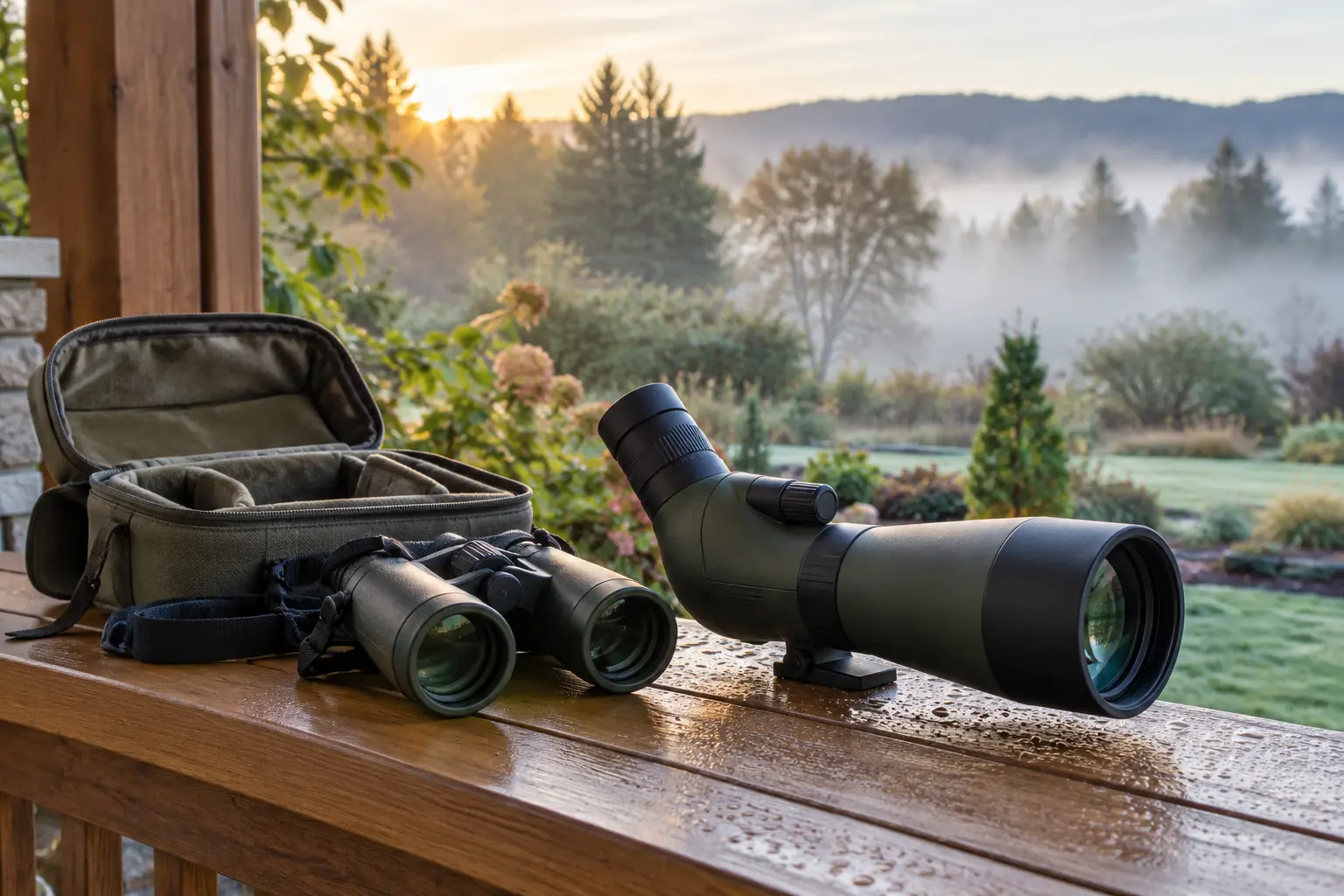
How to prevent fogging in binoculars and spotting scopes depends on whether condensation is forming outside the lens or moisture has entered the optical body. External fog can occur when a cold instrument meets humid air, even when it is advertised as waterproof or fogproof. Recurrent internal fog is different and may require service. The aim is to manage temperature changes, protect coatings and store equipment dry without using unapproved chemicals.
To understand when water protection ratings do—and do not—help prevent moisture problems, read waterproof versus water-resistant binoculars. Our travel storage guide covers drying cases and protecting optics after humid or rainy trips.
First identify where the moisture is
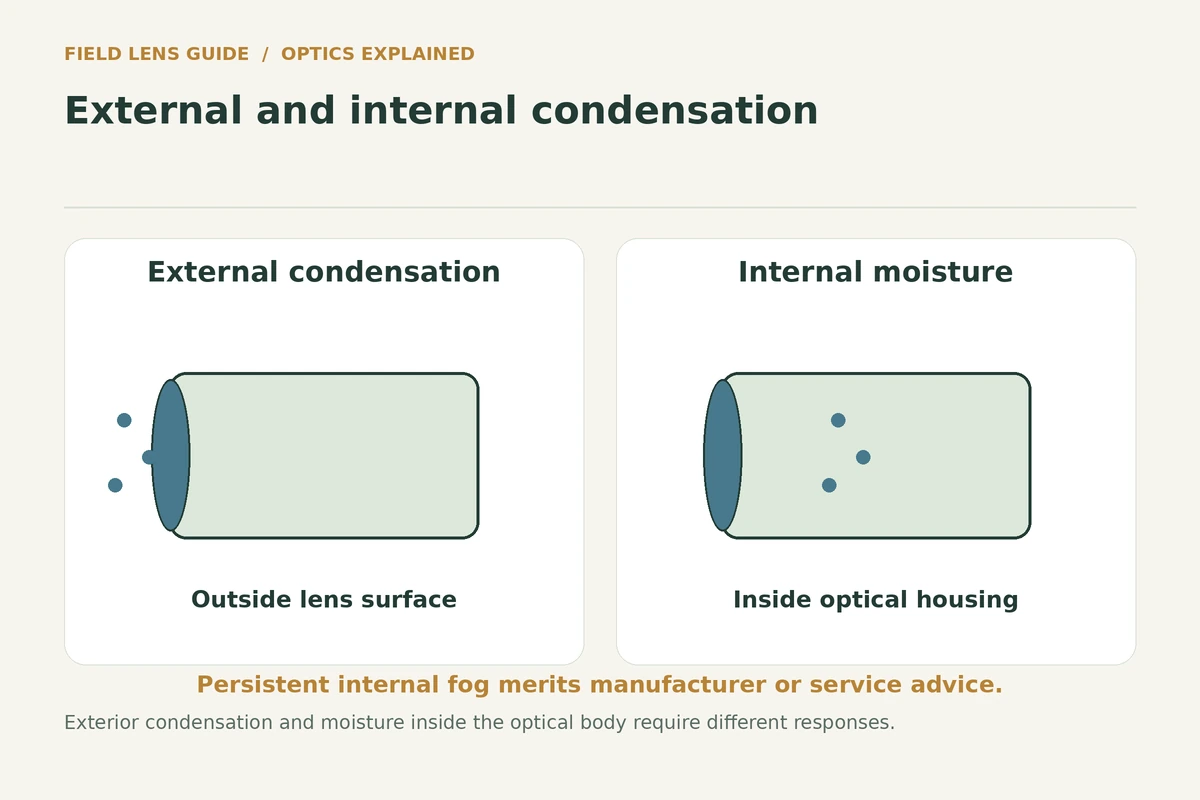
Preventing fogging in binoculars and spotting scopes begins by distinguishing condensation on the outside of the eyepiece from fog trapped inside a sealed optical housing. External fog can occur when warm humid air meets a colder lens, and it may clear as temperatures equalize. A persistent cloudy patch that appears to be between optical elements is different and may indicate internal moisture or contamination. Look at the instrument in safe ordinary light, never toward the sun, and avoid immediately rubbing the glass. The location of the haze determines whether gentle drying or manufacturer service is appropriate.
Why condensation forms
Air can hold moisture, and when a surface is sufficiently cold relative to the surrounding air, water vapour may condense onto it. Moving an instrument from an air-conditioned room into humid outdoor conditions can fog the outer glass. Breathing onto a cold eyepiece can create the same effect. The effect can occur on premium or inexpensive optics alike and does not by itself prove that a product’s internal seal failed. Understanding the temperature change lets you plan a smoother transition rather than repeatedly wiping lenses that will immediately fog again.
Allow equipment to acclimatize
A helpful preventive step is to keep the optics protected during a sudden temperature transition and allow their temperature to change gradually. The process depends on humidity, instrument size and how abruptly conditions shift. Avoid presenting any specific number of minutes as a universal cure. If the outside glass fogs when leaving an air-conditioned vehicle, place the instrument in a sheltered safe area and let the surface equilibrate naturally. Do not point a hot air source toward the lenses; rapid localized heating or excessive temperature can damage components.
Use a protective case thoughtfully
A case can buffer some abrupt changes and protect the instrument from dust and accidental impacts, but it should not trap moisture for long periods. If binoculars become wet during a rainy trip, dry the exterior according to the manufacturer’s instructions and avoid sealing a damp instrument into an enclosed fabric case for days. Good storage uses dry conditions with moderate temperatures rather than prolonged high humidity. Lens caps protect from contact but do not turn a wet case into a drying system. Inspect both the case lining and the optics before storage.
Understand nitrogen and argon purging
Some binoculars and spotting scopes are purged with dry gas and sealed to reduce the likelihood of internal fogging. Nikon, Vortex and other manufacturers publish such construction claims for specific models. The presence of a nitrogen or argon label does not make exterior lenses immune to condensation, nor does it guarantee that an old or damaged seal remains intact forever. Always check the exact model and warranty. Gas purging is about the internal environment, not a magic coating that prevents a cold eyepiece from fogging when a user breathes on it.
Why external lens fog and internal fog differ
External fog may appear as a uniform film on the exposed glass and change as ambient conditions change. Internal moisture may appear behind the lens surface and persist even after the exterior is dry. Trying to clean an interior problem by rubbing outside optics will not help and can introduce scratches. Do not open a waterproof instrument to let it dry: that can disturb optical alignment and compromise remaining seals. If internal fogging recurs, document the conditions and contact the manufacturer or an appropriately qualified optical service provider.
Minimize breathing directly onto the eyepiece
In cold conditions, the warmth and moisture from your breath can fog an eyepiece repeatedly. Try positioning your face and clothing so exhaled air is not directed upward across the ocular glass. Scarves and face coverings may channel warm breath toward the optics depending on fit. Adjust your viewing posture without compromising comfort or safety, and take breaks when necessary. Avoid applying unapproved anti-fog chemicals to optical coatings. Products formulated for eyeglasses, vehicle glass or swim goggles are not automatically compatible with specialist optical lens surfaces.
Avoid rapid heat and direct sunlight
It may be tempting to clear moisture with a hair dryer, space heater or direct exposure to strong sunlight. These approaches can subject glass, adhesives, rubber and seals to temperatures that the manufacturer does not recommend. A controlled change toward ambient conditions is generally safer than localized heating. Do not place wet optics on a car dashboard that can become very hot. Never use binoculars or spotting scopes to view the sun, even while testing whether a lens has cleared, because serious eye injury may result.
What to do after rainfall
When equipment is wet from rain rather than condensation alone, inspect the housing and caps. Follow the maker’s cleaning and drying guidance, paying attention to whether the instrument is actually rated for the conditions experienced. Wipe exterior moisture gently where approved and allow the surface to dry before long-term storage. Remove grit before touching the lenses with an optical cloth. A waterproof label should not be interpreted as unlimited immersion protection or permission to store equipment wet. Repeated internal fogging after a rainy outing deserves professional assessment. If marks remain after exterior moisture clears, follow the safe lens-cleaning steps before wiping the glass.
Coastal humidity and salt
Birding near coasts exposes optics to humid air and possible salt spray. Salt deposits can become abrasive if wiped across a lens while dry, and a humid case may encourage long-term problems. After an outing, use the manufacturer’s approved cleaning method for the exact model. Some waterproof instruments may tolerate special rinsing procedures, but non-waterproof models may not. Do not copy cleaning directions from an unrelated product. Protect optics from direct spray whenever practical, even if the construction has a documented environmental rating.
How to prevent storage-related mould
Mould and fungus can develop when optics remain in warm damp storage, especially if humidity persists for extended periods. Keep gear in a suitable dry environment and inspect cases for moisture before closing them. Appropriate desiccants may be useful when recommended by the manufacturer, but do not place loose chemicals where they can touch glass or rubber. Avoid leaving equipment for months in a damp basement, hot attic or sealed wet bag. If suspected fungus is inside an optical body, do not attempt home disassembly or abrasive removal.
Eye relief and eyecup cleanliness
Fogging complaints sometimes involve spectacle lenses rather than the binocular eyepiece itself. Warm breath can reach glasses when facial coverings redirect air upward, while eyecup contact may change airflow around the eye. Check the actual surface where condensation forms before choosing a remedy. Adjust eyecup spacing for a complete field, but do not press hard enough to trap moisture against your glasses. Keep rubber surfaces clean and dry so they do not transfer skin oils that make a fogged view seem persistently smeared.
A practical cold-morning routine
Before leaving home, check weather and prepare a dry protective bag, lens caps and appropriate optical cleaning supplies. Let the instrument adapt gradually to the outside temperature, then inspect external surfaces before raising it to your eyes. Avoid exhaling directly onto cold oculars. If temporary fog appears, give the lens time to clear rather than rubbing repeatedly. After the session, protect it from rain and dry the exterior appropriately before storage. This routine does not eliminate every condensation event, but it reduces unnecessary contamination and risky cleaning.
What not to spray on optical glass
Common household products may contain solvents, surfactants or additives unsuitable for specialist lens coatings. Avoid applying automotive anti-fog treatments, soap, toothpaste or homemade mixtures unless the binocular manufacturer explicitly approves them. Likewise, avoid coating the lens with skin oils or repeatedly polishing fogged surfaces with a sleeve. When cleaning is necessary, use the material and procedure recommended for the exact product. A clean lens can still temporarily condense moisture; that does not mean you should intensify chemical treatment.
When warranty support is the right answer
If haze clearly originates inside the binocular, appears after modest temperature changes despite proper use, or remains for extended periods, consult the manufacturer. The scope may have a sealing or internal contamination issue, and repair can require specialized tools and realignment. Record the product code, purchase details, visible symptoms and conditions. Do not pry open armour or remove optical elements in an attempt to dry internal moisture. Warranty terms and regional service coverage vary, so check current documentation rather than assuming all moisture incidents qualify.
Choosing weather-ready optics
When buying equipment for wetlands, evaluate specific sealing and purging claims, environmental ratings where supplied, warranty coverage and the availability of service. It is still necessary to maintain the equipment sensibly. A well-sealed housing reduces internal fog risk but does not stop condensation on an exposed lens when temperature and humidity favour it. Do not pay extra solely for a fogproof label without checking whether the entire product is designed for your expected conditions. Optical clarity, comfort and handling remain part of the selection.
Final preventive checklist
Know whether the problem is external or internal, avoid abrupt heat changes when possible, reduce direct breathing on cold glass, and protect equipment from prolonged damp storage. Dry the exterior appropriately after rain, never rub loose grit into a coating, and use only approved cleaning materials. If the fog is inside the housing or repeatedly returns without an obvious environmental cause, seek manufacturer advice. Prevention depends on moisture management and handling rather than a universal chemical spray. These habits apply to binoculars and spotting scopes used for birdwatching or other nature observation.
Manufacturer care reference
About the author
Simon Jack
Simon Jack is the named author of FieldLens Guide's research-based binocular, spotting scope and wildlife observation articles. His published editorial approach focuses on verifying model-specific manufacturer specifications, explaining optical tradeoffs in plain language, and matching equipment to real birdwatching, hiking and nature-observation needs. These articles do not claim hands-on product tests unless explicitly documented.