

The best compact spotting scopes for birding make distant observation possible without filling your bag with a full-size scope system. Compact can mean a very short body, low carrying weight or a lower starting magnification that is easier to use on day trips; those advantages do not always come together in the same model. This guide compares five small scopes for travel, nature reserves and walks between viewpoints. We consider the complete scope and eyepiece configuration, field of view, close focus, eye relief, packed size and buying options. The tripod still belongs in that calculation, because a small scope on unsuitable support can be frustrating at higher power. Start with the quick verdict to identify the right kind of compact setup, then compare the table and individual tradeoffs against how far you expect to carry it.
Affiliate Disclosure: We may earn a commission at no extra cost to you when you make a qualifying purchase through affiliate links in this guide. Buying buttons open Amazon.com. Read our full affiliate disclosure.
Best Compact Spotting Scopes for Birding: quick comparison
On smaller screens, swipe across the table to compare all features and buying options.
| Image | Model | Most useful for | Tradeoff | Where to buy |
|---|---|---|---|---|
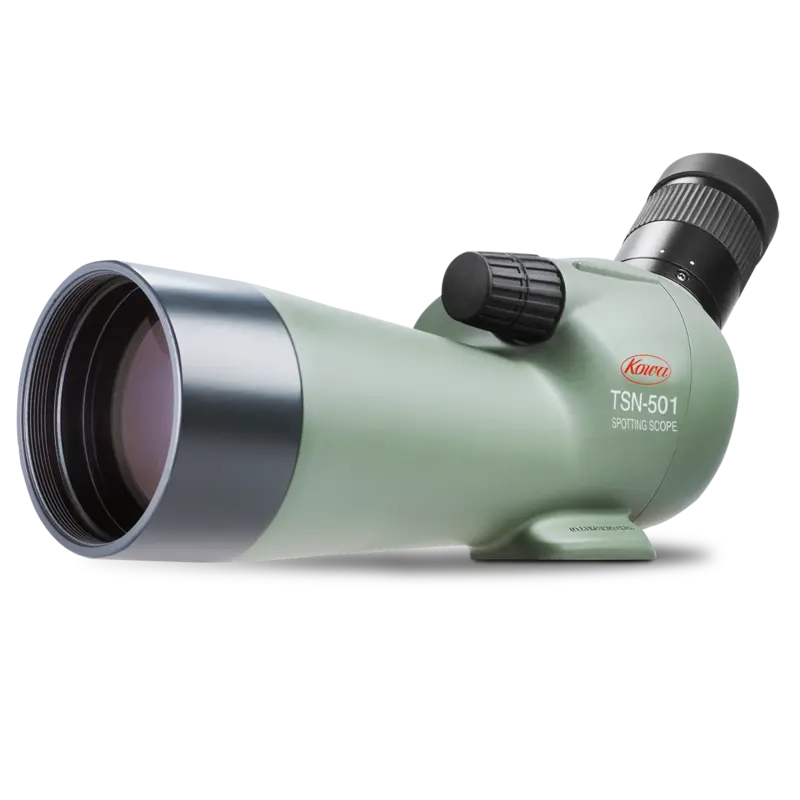 | Kowa TSN-501 20–40×50 | Shortest practical angled starter | 14–12.5 mm eye relief can be restrictive with glasses. | Check PriceAmazon |
 | Nikon ED50 13–30×50 | Compact premium daylight scope | The eyepiece and support must fit your complete setup budget. | Check PriceAmazon |
 | Celestron Hummingbird ED 9–27×56 | Hybrid low-power travel option | 27x maximum is limited for very distant subjects. | Check PriceAmazon |
 | Opticron MM4 50 GA ED with HR3 13–39x | Modular 50 mm travel system | 837 g complete outfit is heavier than very small integrated scopes. | Check PriceAmazon |
 | Vortex Razor HD 13–39×56 Straight | High-budget compact design | Premium construction calls for a careful budget comparison. | Check PriceAmazon |
Open Amazon for the current price and availability. Confirm the exact model, condition and package contents, including any separately required eyepiece, tripod or accessories. Tax and shipping may affect the total.
How we chose these models
All five choices use 50–56 mm objectives, keeping this comparison centered on small fieldscopes. Kowa provides a simple integrated zoom choice, Nikon and Opticron require attention to the named eyepiece configuration, and the Hummingbird and Razor offer different low-power ranges. We retain those configuration distinctions instead of ranking compactness from tube length alone.
- Compare the scope with its working eyepiece, caps and mounting foot.
- Check packed size together with the tripod and head.
- Match the starting magnification and eye relief to short observation stops.
These comparisons use manufacturer documentation and published model specifications. We have not conducted hands-on product tests. See how we review optics for the research and correction process.
01 / Shortest practical angled starter
Kowa TSN-501 20–40×50
Kowa documents a 50 mm objective, 239 mm length, 400 g weight, 2.5 m close focus and integrated 20–40x eyepiece. At 20x it lists a 40 m field at 1,000 metres. These measurable dimensions make the TSN-501 a realistic choice for travel rather than simply a product carrying the word compact.
Amazon.com
Product image: Kowa.Choose this for short daytime walks and a pack where every centimetre matters. The angled eyepiece can suit viewing from a low tripod and the close-focus range can be useful for parks and garden birds.
Its 14–12.5 mm eyepiece relief may be restrictive for glasses wearers.
Reasons to choose it
- 400 g integrated 20–40×50 scope.
- Angled body with 2.5 m close focus.
What to weigh up
- 14–12.5 mm eye relief can be restrictive with glasses.
- 50 mm objective changes low-light flexibility.
02 / Compact premium daylight scope
Nikon ED50 13–30×50
Nikon currently describes its ED50 13–30×50 as ultra-compact, with ED glass, multilayer-coated optics, wide viewing angles and straight or angled variants. The thirteen-times starting magnification provides a different viewing experience from compact scopes that begin at twenty-times.
Amazon.com
Product image: Nikon.Investigate the ED50 when you have a small travel bag and want to acquire moving daylight subjects before zooming for more detail. Its value is convenience and optical design, not an unfounded claim that every ED scope is sharper.
It is priced in a premium category compared with basic 50 mm instruments. Product packages differ; verify whether a complete eyepiece combination or a separate body is being sold.
Reasons to choose it
- ED 50 mm design with a low 13x starting setting.
- Compact angled configuration for supported daylight observation.
What to weigh up
- The eyepiece and support must fit your complete setup budget.
- Confirm that the offer includes the stated 13–30x eyepiece.
03 / Hybrid low-power travel option
Celestron Hummingbird 9–27×56 ED
Celestron lists a 56 mm objective with a 9–27x zoom, a 20.8-ounce weight, roughly 8.2-inch length and 9.8-foot close focus. Its full field at 1,000 yards is specified as 216–98 feet. The manufacturer identifies nitrogen-filled waterproof construction and an included carrying case.
Amazon.com
Product image: Celestron.A traveller who moves between a garden, nature reserve and scenic lookout may use the unusually low nine-times setting more frequently than maximum power. It is valuable because it fills a different role from full-size 60x scopes.
A 27x maximum is not suited to someone requiring extensive high-power shorebird observation. Its 15 mm eye relief should be checked carefully with spectacles.
Reasons to choose it
- Unusually low 9x starting power for subject acquisition.
- ED design in a compact 56 mm angled scope.
What to weigh up
- 27x maximum is limited for very distant subjects.
- 15 mm eye relief needs checking with glasses.
04 / Modular 50 mm travel system
Opticron MM4 50 GA ED with HR3 13–39x
The complete straight MM4 50 GA ED/HR3 combination has a 50 mm objective, 13–39x zoom, 2.5 m minimum focus and manufacturer-listed 837 g kit weight. The maker provides 20–16 mm eye relief for this eyepiece. That is not interchangeable with the body-only page, which correctly has no eyepiece eye-relief specification.
Amazon.com
Product image: Opticron.Consider it when interchangeable eyepieces, dual-speed focus and a short 50 mm body are important. Compare total dimensions with the attached eyepiece before deciding whether it fits your desired carrying case.
Check that the offer includes the stated HR3 eyepiece; a body-only offer has a different total cost. Buyers must verify the exact complete kit instead of inadvertently ordering a body with no eyepiece. The 837 g outfit is heavier than Kowa’s 400 g integrated scope.
Reasons to choose it
- Complete 13–39x HR3 configuration with dual-speed focus.
- Published 20–16 mm eye relief and 2.5 m close focus.
What to weigh up
- 837 g complete outfit is heavier than very small integrated scopes.
- Compare the full kit with body-only offers carefully.
05 / High-budget compact design
Vortex Razor HD 13–39×56 Straight
Vortex publishes a 56 mm objective, 13–39x zoom, 11.1-inch body length, 29.5-ounce weight, 9.2-foot close focus and 15–17.8 mm eye relief. The manufacturer describes specialized HD, APO and prism coatings and a gas-purged weather-resistant housing.
Amazon.com
Product image: Vortex.This is worth considering only for a frequent travelling observer prepared to invest in optical construction, warranty support and a stable support. For casual sightseeing the additional cost may have little practical return.
That cost belongs to a completely different budget from micro starter scopes and cannot be justified from manufacturer claims alone. Although relatively compact, it is much heavier than Kowa’s 50 mm model. Check full-field comfort and actual independent evaluations before spending heavily.
Reasons to choose it
- 13–39x integrated zoom with a 56 mm objective.
- 9.2 ft close focus in a straight scope.
What to weigh up
- Premium construction calls for a careful budget comparison.
- 29.5 oz body still needs a suitable tripod and head.
What to consider before buying
What compact means in practice
Compactness is a combination of length, diameter, shape, mass and the size of the complete viewing kit. A manufacturer’s claim that a scope is micro or pocket-sized does not tell you whether it fits in your particular bag. Measure the compartment where you plan to carry it, allowing room for lens caps and any padded cover. A short eyepiece projection may fit differently from a straight elongated body. Body measurements should be compared on equal terms, with attached eyepieces clearly distinguished from bare optical tubes.
Integrated eyepieces versus body-only purchases
Kowa’s TSN-501 has an integrated eyepiece, making the magnification range and weight relatively straightforward to compare. Opticron sells modular bodies and several eyepiece kits, which can lead to misleading price and weight claims if a bare body is compared with a complete instrument. Nikon ED50 arrangements also warrant careful product-page checking. The full eyepiece must be included before a scope can be viewed as ready to use. When shopping, record the exact part code, included zoom and whether a tripod adapter or case is supplied.
The importance of low starting power
A compact scope that begins at nine or thirteen times magnification can be easier to aim at nearby or moderately distant subjects than one beginning at twenty-times. The Hummingbird and Nikon ED50 make a deliberate compromise in favour of wider framing before extra magnification. This may suit a travelling birder who repeatedly raises the instrument toward changing viewpoints. However, the actual field is determined by the eyepiece and optical design, not simply by zoom numbers. Compare published field widths under common units for a fair picture.
Why a small objective is not automatically worse
A 50 or 56 mm lens has less ideal geometric collecting area than an 80 mm front lens, but practical image quality also depends on coatings, transmission, lens design and magnification. A high-quality small optic can provide attractive daytime viewing despite its size. The tradeoff becomes more serious at high zoom or in falling light. Do not automatically assume that an inexpensive 80 mm scope must be visually better than a compact premium model, or that an expensive micro scope must beat every large alternative.
Close focus makes compact scopes versatile
Several of these compact scopes can focus on subjects just a few metres away. That is valuable for garden birds, flowers and butterflies, or for viewing from a balcony. The Kowa and Opticron list about 2.5 metres, while the Hummingbird and Vortex figures are around three metres or less. A much larger scope may focus only at substantially greater distance. Measure the actual subject distance from your own viewing position before treating close focus as decisive. Someone studying distant shorebirds may almost never use the nearest focusing setting.
Glasses fit is a buying priority
Compact eyepieces can present a restricted viewing position, particularly with thick prescription frames. Kowa’s eye relief specification of 14–12.5 mm deserves extra scrutiny compared with Opticron’s 20–16 mm for the exact HR3 kit. Published eye relief does not guarantee comfort because eyecup depth and lens recess also matter. Try every model with your actual glasses, retract the eyecups and check the whole circular image. A nominally wide field becomes less useful if the eye position cuts off its outer edge.
Magnification for ordinary travel
A zoom reaching 27x may be entirely sufficient for birds in a city park or along a well-managed nature trail. For distant shorebirds across a broad estuary, a 39x or 40x ceiling offers extra apparent image scale when supported properly. At high zoom, however, wind and atmospheric shimmer can destroy the expected improvement. Learn to begin low, find the bird and increase only while additional detail remains visible. It is wasteful to choose an unwieldy instrument solely because its maximum number is larger.
The tripod is part of the pack
Even a small spotting scope benefits from stable support at higher magnification. A tabletop tripod requires a suitably solid raised surface, which may not exist on a muddy shoreline. A compact travel tripod offers more positioning flexibility but changes the total carried dimensions dramatically. Compare the mass and folded length of the head and legs alongside the optical tube. A small scope on an unsuitable wobbly tripod can be less useful than a heavier but stable combination. Our setup guide explains mounting and stability checks.
A case should protect without burying equipment
A pocket-sized scope loses its convenience if you must unload your entire backpack to reach it. Choose a case or bag pocket that protects eyepieces from keys and grit while allowing quick access when a bird is seen. Keep lens caps attached when transporting the instrument. Angled eyepiece projections can require different cases from straight designs even when optical body lengths are similar. Make sure the carrying system accommodates any attached collar or adapter. Secure straps matter near rocky viewpoints and steep paths.
The role of premium coatings
Words like HD, ED and APO describe aspects of optical construction, not standardized user-perceived clarity rankings. Vortex, Nikon and Opticron promote specialized designs that may matter to experienced observers, but proper comparison requires consistent light, focus and independent testing of the actual samples. For a casual observer, a suitable eye position and quick targeting may bring more practical satisfaction than advanced glass terminology. When paying a large premium, demand evidence of a visible benefit for your intended subjects.
Angled versus straight in a small package
Angled eyepieces can allow a lower tripod and make sharing among viewers of different heights convenient. Straight bodies can simplify direct sighting and fit within long narrow storage spaces. Body shape does not itself determine image brightness or sharpness. Decide whether your typical viewing happens seated at a bench, standing on a path, or through restricted windows. A phone digiscoping attachment may also change which orientation permits better access to its screen. A comfortable posture is a meaningful part of portable equipment.
Coastal travel and moisture
Travelling scopes encounter drizzle, sea spray and temperature changes, so weather sealing deserves attention. Check the actual manufacturer ratings and warranty terms rather than inferring unlimited immersion from a waterproof label. After a damp outing, dry the exterior before placing the instrument in its closed case. Remove grit with a proper blower or soft brush before touching the glass. Do not assume cleaning guidance for one sealed model applies to an older or nonsealed optic. Responsible maintenance is particularly important when the instrument travels frequently.
How to compare weights accurately
One maker may list body-only weight while another lists a complete scope with integrated eyepiece. The difference can exceed the optical size advantage you are trying to measure. Kowa’s TSN-501 figure includes its integrated viewing arrangement; Opticron reports separate bare-body and HR3 kit weights. Convert units and identify exactly what each number describes. For your own trip, add case, head and tripod to create a real carried total. A small reduction in tube weight means little if the support system is disproportionately heavy.
A fair in-person comparison
If possible, compare small scopes at a moderate zoom on the same distant sign or stationary bird. Adjust eyecups for your eyes, mount them on adequately stable supports and observe the scene under similar light. Look for actual detail rather than the size of the image alone. Then pack both instruments with their cases and carry them briefly. Check whether the focusing controls are accessible when using gloves or from a seated position. This test assesses the convenience that compact buyers value, rather than attributing everything to objective diameter.
Who should choose which
For very small day bags, the Kowa TSN-501 has unusually straightforward size and weight credentials. The Celestron Hummingbird ED supports short-distance and low-power viewing, while Nikon ED50 provides a compact premium choice. The Opticron MM4 kit appeals to modular-eyepiece buyers; the Vortex Razor addresses those prepared to pay for an advanced short-body design. Choose the one that matches your available packing space, eyewear and dominant observation distances.
Why the hiking guide is separate
This guide is about compact shape, packed length and how conveniently a scope fits into limited luggage. The hiking guide will put more weight on full trail load, support-system choices, durability and how long equipment is carried. Some scopes naturally appear in both categories because small and light often overlap. The recommendation criteria are not identical, however: a compact premium tube on a heavy tripod can work for travel storage while being a less attractive choice for a long mountain walk.
Check the compact kit in its packed and working forms
List what you need to remove from the bag before the first view: the scope, eyepiece if carried separately, plate, support and covers. A very short body does not necessarily produce the quickest setup if several pieces need assembling each time. Conversely, leaving a complete scope assembled may be convenient if it fits securely in your chosen case. Compare those two arrangements against the length of the observation stops you normally make.
Check the working setup at your normal height before deciding that the lightest scope is the best travel choice. A short body can place controls differently, and the eyepiece may sit farther from the tripod head than expected. Make sure you can focus without an awkward change of grip and that the mounting plate gives enough room for secure attachment. Include any phone adapter you intend to use in the balance check.
Finally, compare the complete offer with the parts you already own. The Opticron HR3 configuration in this guide is a scope-and-eyepiece combination; the Nikon entry refers to its stated 13–30x configuration. A lower-priced body-only listing is a different purchase. Decide whether your existing head, plate and case are suitable before treating a cheaper scope offer as the lower-cost complete system.
Before you choose
Frequently asked questions
What counts as a compact spotting scope?
Consider packed dimensions and complete working weight rather than a product label. A short body with a separate eyepiece can occupy more space than expected once assembled. Check whether the quoted weight includes the eyepiece, and add the head, tripod and case you will actually carry.
Can I handhold a compact scope?
A low starting magnification may make a brief supported glance easier, but a stable tripod is normally the practical way to use a spotting scope for detailed bird observation. As magnification rises, hand movement becomes more apparent. Plan around the supported use you want rather than treating a small scope as ordinary binoculars.
Is a 50 mm scope bright enough for birding?
It can suit daylight observation, especially when portability is the priority. A small objective changes low-light flexibility and the exit pupil at higher power, so it may be less suitable for extended twilight viewing. Compare it at the magnifications and times of day you expect to use.
Why does the included eyepiece matter?
It determines magnification, eye relief and field of view, as well as the assembled size and price. A body-only offer cannot be compared directly with a complete zoom kit. Confirm the exact eyepiece in the listing, particularly when a manufacturer offers several compatible choices for the same body.
Should a travel scope start below 20x?
A lower starting setting can help you find an unexpected bird and follow landmarks before zooming in. A 20x start can still work well for prepared observation from a fixed viewpoint. Compare the low-power field rather than assuming that every compact scope is equally easy to aim.
Are compact scopes comfortable with glasses?
Some are, but check the eye relief of the exact eyepiece throughout its zoom range. A comfortable view at minimum power does not guarantee the same full field at maximum power. Try your own glasses and normal viewing posture before making a premium compact purchase.
Sources and buying information
Product details come from manufacturer documentation for the models listed. Use the Amazon buying links for the current offer, seller, condition and package contents.
Related practical guides
About the author
Simon Jack
Simon Jack is the named author of FieldLens Guide's research-based binocular, spotting scope and wildlife observation articles. His published editorial approach focuses on verifying model-specific manufacturer specifications, explaining optical tradeoffs in plain language, and matching equipment to real birdwatching, hiking and nature-observation needs. These articles do not claim hands-on product tests unless explicitly documented.