

Watch wildlife from a stable, permitted viewpoint and keep enough distance for the animals to continue their normal behavior. Use binoculars to inspect detail while staying back, then increase your distance if an animal changes what it is doing because of you. The techniques below cover finding subjects, choosing a viewing position and recognizing when to stop an encounter.
Observing large mammals from guided vehicles introduces travel and safety considerations beyond a normal nature walk. Our safari binocular guide compares field of view, day-bag size and comfort during authorized vehicle stops while retaining a strong emphasis on respectful viewing distances.
Why distance is part of good wildlife observation
How to watch wildlife with binoculars starts with giving animals room to behave naturally. The best view is not necessarily the closest physical approach. Binoculars and spotting scopes let an observer inspect movement, posture and feeding activity from a distance without pushing an animal away from cover. The U.S. National Park Service recommends optical aids precisely because they allow people to watch safely while minimizing interference. Treat distance as a fieldcraft decision rather than a numerical challenge. If an animal notices you and changes its behaviour, you may already be too close. Follow specific local regulations and the instructions of wildlife staff rather than applying one general distance rule everywhere.
Learn an animal’s normal behaviour
An animal standing quietly is not always comfortable, and its response to a human can differ by species, season and environment. Observe from your established position before adjusting your own distance. Look for routine feeding, grooming, resting and social behaviour and notice whether the animal stops those activities when people arrive. Repeatedly turning toward you, retreating, vocalizing or interrupting care of young may be reasons to move farther away. Do not treat a single behaviour as a definitive diagnostic signal; consult local expert guidance when observing potentially dangerous species. A longer, calm observation often reveals more natural history than a quick approach made only for a dramatic image.
Check the rules for the specific area
Protected parks and wildlife reserves can set species-specific minimum viewing distances, restricted roads, seasonal closures or rules about vehicle positioning. The National Park Service notes that rules vary among sites and that visitors should review a park’s information before arriving. Do not carry a U.S. park rule over to another country, private reserve or safari concession without verification. Use designated viewpoints, respect temporary closures and stay with your authorized guide when required. Rules may also prohibit feeding or attracting wildlife. Binoculars are useful equipment, but they do not give permission to leave trails or approach a nesting site. Responsible bird and mammal observation means complying with location-specific requirements.
Choose a stable vantage point first
An observation area with clear sight lines and secure footing usually produces better results than walking continuously toward a subject. Consider a marked trail, lookout, vehicle pullout or established hide where you can remain safely without blocking other visitors. Avoid standing at an unstable bank edge or in traffic. If the subject is partially obscured by vegetation, wait for a natural movement rather than trampling plants to open a view. A safe and patient position reduces shaking in binoculars and lets your eyes learn the surrounding landscape. It also limits abrupt human motion that may disturb nearby wildlife.

Scan with unaided eyes before raising binoculars
First examine the habitat broadly and find likely movement, colour contrast or an outline against a tree or ridge. Note an unmistakable landmark such as a branch fork, rock or shoreline bend. Keep your eyes on that spot while bringing the binoculars up to your face. This prevents wasting time sweeping through an unfamiliar magnified scene. Begin with an eight-times view if you have that option, since its field can be easier to manage than higher power. The skill becomes especially useful in woodland where a small animal can disappear among similar branches. Practising on stationary objects is an excellent way to improve subject acquisition without pursuing wildlife.
Adjust binoculars before approaching the habitat
An uncomfortable instrument encourages repeated movements, frustration and missed sightings. Set the interpupillary distance so the two circular views merge, then adjust eyecups for your spectacles. Follow the manufacturer’s method for the central focus and diopter. Practise moving focus between nearby bushes and distant trees while still at home or at an empty viewpoint. When an animal appears, you should only need to raise and focus the binoculars. Our binocular adjustment guide gives the complete sequence. Equipment familiarity makes it easier to remain quiet and still while observing animals.
Use cover without hiding in unsafe places
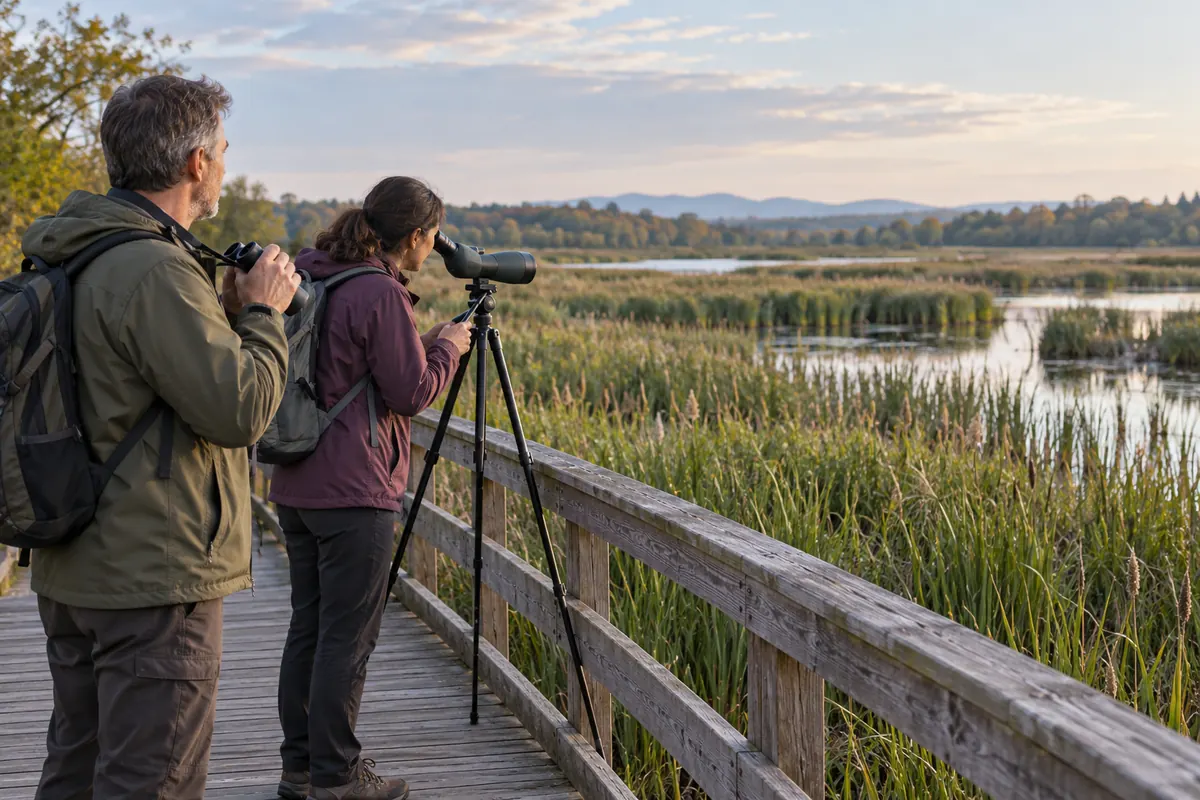
Natural visual cover, shade and a permitted observation hide can reduce your apparent movement from an animal’s perspective. However, do not climb unstable trees, enter closed vegetation or approach dangerous wildlife to obtain concealment. A position behind an existing railing or within a designated hide may work well. Avoid blocking public paths or positioning yourself where an approaching animal could trap you. The objective is to be unobtrusive from an authorized location, not to stalk wildlife at progressively shorter distances. If conditions make the position unsafe or an animal approaches, move away calmly and follow site staff instructions.
Recognize the limits of magnification
More magnification makes an animal look larger, but it can narrow the field and reveal more hand movement. Eight-times binoculars often suit general wildlife viewing because they provide a manageable balance between apparent size and subject acquisition. Ten-times can be valuable on open terrain where the animal remains relatively still, but it does not allow unlimited useful detail. Warm air over grassland or a shoreline may introduce heat shimmer. If you cannot identify a distant subject from a steady optical view, do not infer that walking closer is automatically safe. Use a tripod-mounted spotting scope at an authorized viewpoint when appropriate.
Avoid following animals into sensitive spaces
A moving animal may lead toward nests, dens, resting sites or young. Do not follow it across a protected boundary or into vegetation simply because your binocular view becomes obstructed. During nesting or breeding seasons, disturbance can have consequences disproportionate to a visitor’s desire for a better photograph. Use established tracks and follow guidance about seasonal sensitive sites. If an animal retreats or changes direction to avoid you, allow it to leave. A useful field note can document its behaviour and approximate location without identifying or publishing a sensitive den or nest location.
Never use feeding to force a sighting
Feeding wild animals can alter normal behaviour, expose them to unhealthy food, increase dependence on people and create risks around roads or camps. The National Park Service advises visitors not to feed, touch or harass wildlife. This applies even when a person hopes to attract animals into binocular or camera range. Keep food secured according to local rules and remove litter. Do not use artificial calls, bait or other attraction methods when prohibited or likely to disturb a sensitive species. The goal of nature observation is to encounter animals engaged in their own activities, not to manipulate them for convenience.
Stay alert near large mammals and predators
Binoculars are a viewing tool, not a safety barrier. Large wild animals may move unpredictably, particularly when young are present or during breeding activity. Remain at the distance required for that site and never position yourself between animals and their route away. If an animal approaches your location, follow the park’s safety instructions and retreat as appropriate rather than standing still to obtain a closer look. Rules for bears, big cats, elephants, bison or other species cannot be reduced to one universal procedure. Use the advice of professional guides or rangers familiar with the local animals.
Vehicle-based wildlife viewing
A vehicle can be a convenient observation position, but stopping on an unsafe roadway is never justified by a sighting. Use designated pullouts and the driver’s or guide’s instructions. Do not lean far outside windows, place equipment in a driver’s sight line or ask the driver to turn suddenly while you are looking through binoculars. Keep optics secure so they cannot strike other passengers during movement. When parked in wildlife areas, remain aware of animals approaching from outside your viewing field. A narrow magnified view can reduce awareness of the surroundings, so lower the instrument frequently and reassess the entire scene.
Make field notes without disturbing the subject
Note the species or likely group, visible distinguishing features, weather, habitat and observed behaviour. A short timestamped record can be useful for learning and revisiting a site. Sketch posture or a recognizable movement rather than attempting to photograph every encounter. When sharing wildlife records, consider whether exact locations could expose a nesting colony or threatened animal to disturbance. Citizen-science services sometimes support obscuring sensitive sightings, but their rules vary. An identification can be left uncertain if the necessary features were not visible. There is no benefit in inventing detail that the binoculars did not actually resolve.
Use photography as a secondary activity
A zoom camera or phone attached to a spotting scope may document a distant subject, but the camera should not dictate unsafe approaches or prolonged disturbance. First confirm that the animal can be observed responsibly from the current position. Then assess whether the tripod and adapter can be set up without blocking access or making abrupt noise. Our phone digiscoping guide explains alignment and support. Images cropped heavily after the fact do not recover missing optical detail. It is better to record a modest but honest observation than to risk disturbing an animal for a larger frame.
Respect other observers and habitats
Share an established hide or lookout without monopolizing the best position or spreading tripod legs across the walkway. Speak quietly where requested and keep pets under the site’s rules. When another person is already watching an animal, ask before stepping into their view. Avoid removing branches, rocks or vegetation to create a new sight line. If you spot a sensitive nest or roost, be thoughtful about publicly broadcasting its exact position. Wildlife-watching etiquette helps protect both habitats and access for future visitors. It also often improves everyone’s chance of seeing natural animal behaviour.
Prepare for low light responsibly
Early morning and late afternoon may offer interesting activity, but fading light changes what can be seen clearly and where it is safe to walk. A larger objective or long-eye-relief binocular can help with viewing comfort in some conditions; it does not replace a light source, navigation plan or park closure rules. Do not continue into restricted terrain because you can still make out an animal through optics. Consider a stable legal viewpoint and return timing before the session. Use enough ambient light to move safely without shining unnecessary bright beams toward wildlife.
A practical low-impact observation routine
Before arriving, check access rules, weather and safe viewing areas. Once there, settle at an authorized vantage point, scan with unaided eyes and use binoculars to examine a distant subject. Watch whether the animal continues its normal activities, note behaviours and retreat if it reacts or approaches. Avoid feeding, touching or pursuing wildlife. Record observations without exaggerating identification certainty. Put the optics away before moving through rough ground or returning to a vehicle. This routine aligns good fieldcraft with the reason binoculars are useful: they let you experience wildlife at a distance instead of closing it.
Further reading
- National Park Service: Wildlife Watching Gear
- National Park Service: Respect Wildlife
- FieldLens: Wildlife Binoculars
About the author
Simon Jack
Simon Jack is the named author of FieldLens Guide's research-based binocular, spotting scope and wildlife observation articles. His published editorial approach focuses on verifying model-specific manufacturer specifications, explaining optical tradeoffs in plain language, and matching equipment to real birdwatching, hiking and nature-observation needs. These articles do not claim hands-on product tests unless explicitly documented.